
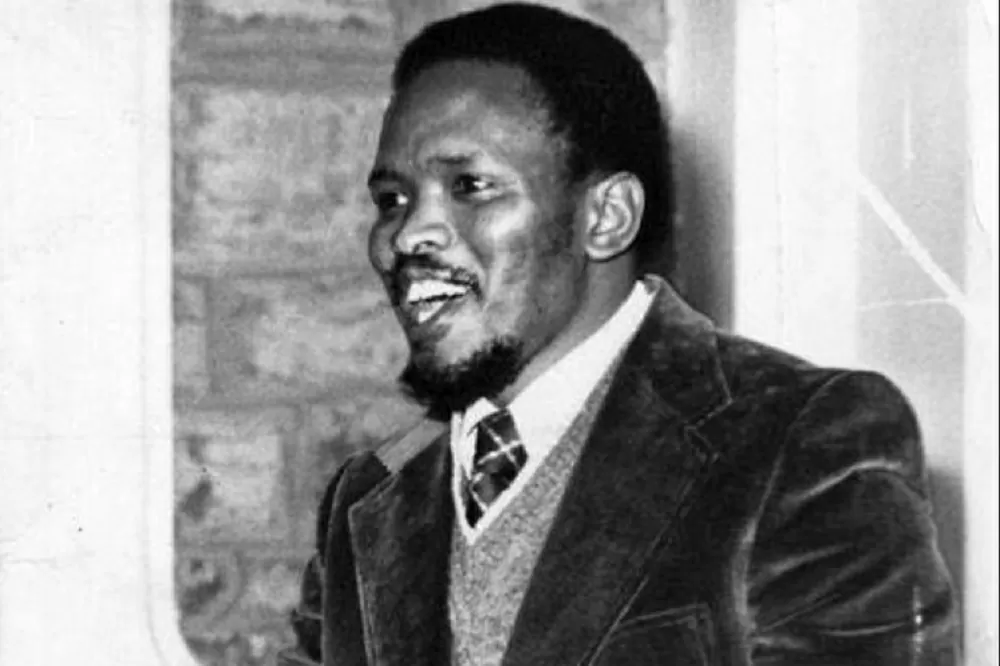
The death of Steve Biko, a prominent anti-apartheid activist, shook the world in 1977. His brutal killing at the hands of the South African police sparked international outrage and brought attention to the injustices of the apartheid regime. However, despite the overwhelming evidence of his murder, to this day, no one has been prosecuted for the death of Biko.
Biko, also known as the father of the Black Consciousness Movement, was a fearless leader who fought tirelessly for the rights of black South Africans. He was a vocal critic of the apartheid government and its policies of racial segregation and discrimination. His unwavering commitment to the cause made him a target of the authorities, who saw him as a threat to their power and control.
On August 18, 1977, Biko was arrested at a roadblock and taken to a police station in Port Elizabeth. During his detention, he was brutally beaten and tortured by the police. Despite his injuries, he was denied medical treatment and left to die in his cell. The official cause of death was listed as “severe head injuries” but it was clear to the world that Biko had been killed by the police.
The news of Biko’s death spread quickly and sparked widespread protests and condemnation from the international community. The United Nations Security Council even passed a resolution condemning the South African government for his death. However, despite the overwhelming evidence and outcry, no one has ever been held accountable for the murder of Steve Biko.
The lack of justice in Biko’s case is a reflection of the larger issue of impunity in South Africa during the apartheid era. The government and its security forces were able to operate above the law and commit human rights abuses without fear of consequences. This culture of impunity allowed them to get away with the murder of Biko and countless other activists who dared to speak out against the regime.
But even after the end of apartheid and the establishment of a democratic government in South Africa, justice for Biko has remained elusive. The Truth and Reconciliation Commission, which was set up to investigate human rights violations during apartheid, did not prosecute the perpetrators of Biko’s death. Many argue that this was a missed opportunity to hold those responsible accountable and bring closure to Biko’s family and the nation as a whole.
The lack of prosecution in Biko’s case also highlights the ongoing struggle for justice and accountability in South Africa. Despite the progress made since the end of apartheid, there is still a long way to go in addressing the legacy of human rights abuses and ensuring that those responsible are brought to justice. The families of victims like Biko continue to demand answers and justice for their loved ones.
Furthermore, the failure to prosecute those responsible for Biko’s death sends a dangerous message that human rights violations will go unpunished. It undermines the rule of law and perpetuates a culture of impunity, which can have serious consequences for the protection of human rights in the country.
In recent years, there have been renewed efforts to bring justice for Biko and other victims of apartheid-era atrocities. In 2019, the National Prosecuting Authority announced that it would reopen the inquest into Biko’s death, citing new evidence and witness testimonies. This decision has been welcomed by many as a step towards finally holding those responsible accountable.
In the words of Biko himself, “The most potent weapon in the hands of the oppressor is the mind of the oppressed.” The failure to prosecute those responsible for his death is a reminder of the power dynamics that existed during apartheid and the need for continued efforts to address the injustices of the past.
In conclusion, the fact that no one has been prosecuted for the death of Steve Biko is a stain on South Africa’s history. It is a reminder of the injustices of the past and the ongoing struggle for justice and accountability. However, with the recent decision to reopen the inquest into his death, there is hope that justice will finally be served for Biko and his family. Let us continue to honor his legacy by fighting for a world where human rights are respected and justice is served for all.
