
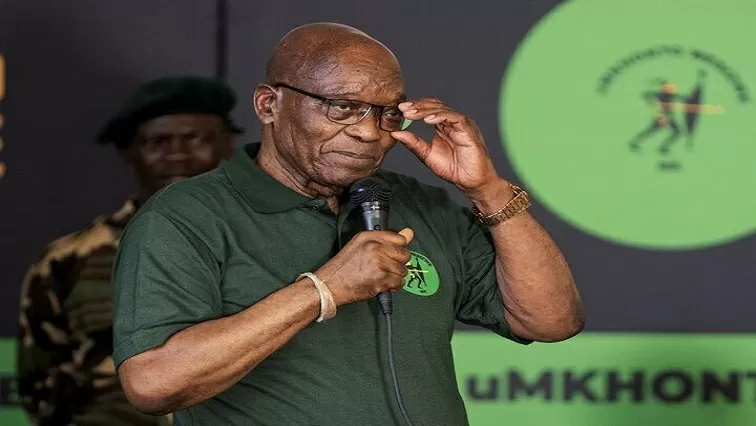
Former President Jacob Zuma accumulated R28 million legal fees which was paid by the State.
Former South African President Jacob Zuma has been at the center of a highly publicized legal battle for years, and it has recently come to light that the State has paid a staggering R28 million in legal fees on his behalf. This revelation has sparked controversy and raised concerns about the use of taxpayer’s money.
The legal fees in question date back to Zuma’s infamous corruption charges, dating back to 2005, which were dropped just before he became president in 2009. However, the charges were reinstated in 2018 and have been ongoing ever since, costing the State a total of R28 million in legal fees.
This is not the first time that Zuma has been embroiled in corruption allegations. In 2016, the former president was ordered to pay back R7.8 million of taxpayers money, which was used to upgrade his private residence. The Constitutional Court ruled that Zuma had violated the Constitution in failing to repay the money, causing his popularity and credibility to plummet.
The recent revelations about the R28 million legal fees have caused widespread outrage among South Africans, with many questioning why the State has had to foot the bill for a private individual’s legal battles. It is a valid question, as the State has its own pressing financial issues, and it is not fair for taxpayers’ money to be used to cover the legal fees of a former president who has been accused of corruption.
In response to the public outcry, the current president, Cyril Ramaphosa, has announced that the State will no longer fund Zuma’s legal fees. This is a significant step in the right direction, as it shows a commitment to upholding transparency and accountability. It is also a clear message that no one is above the law, regardless of their status.
However, it is essential to consider the legal implications of this decision. Zuma’s lawyers have argued that he was entitled to state-funded legal representation because he was a public servant at the time the charges were brought against him. This argument has been backed by a 2006 Cabinet resolution, which stated that the State would cover legal costs for current and former officials facing legal action related to their official duties.
While this may be a valid argument, it still raises concerns about the excessive amount of R28 million spent on legal fees. It is also worth noting that this is not the first time that public funds have been used to cover Zuma’s legal battles. In 2006, R3 million was spent on his corruption trial, and in 2018, R15.3 million was paid for his legal fees in the Spy Tapes case. This begs the question, how much more of taxpayers’ money will be used to cover Zuma’s legal battles in the future?
The issue of state-funded legal fees for public officials is a contentious one, and it is high time that it is revisited. The State has a responsibility to ensure that taxpayers’ money is used for the benefit of the country and its citizens, not for personal legal battles. It is crucial for measures to be put in place to prevent such mismanagement of public funds in the future.
In light of the recent developments, it is evident that there needs to be a more transparent and accountable system in place for the use of state-funded legal fees. The State should not bear the burden of covering legal costs for officials facing criminal charges, especially if there are doubts about their conduct while in office.
It is now up to the courts to decide the fate of Zuma’s legal fees and whether he will have to pay back the R28 million that has been spent on his behalf. Regardless of the outcome, one thing is clear – this issue has highlighted the need for stricter measures to be put in place to prevent corruption and misuse of public funds.
In conclusion, the revelation that the State has paid R28 million in legal fees for former President Jacob Zuma is a wake-up call for the country. It is a reminder that the use of taxpayer’s money should be carefully monitored and that those in positions of power should be held accountable for their actions. The decision to no longer fund Zuma’s legal fees is a step in the right direction, and it is a sign of a more transparent and accountable government. Let us hope that this marks the start of a new era in South Africa, where the rule of law and the proper use
