
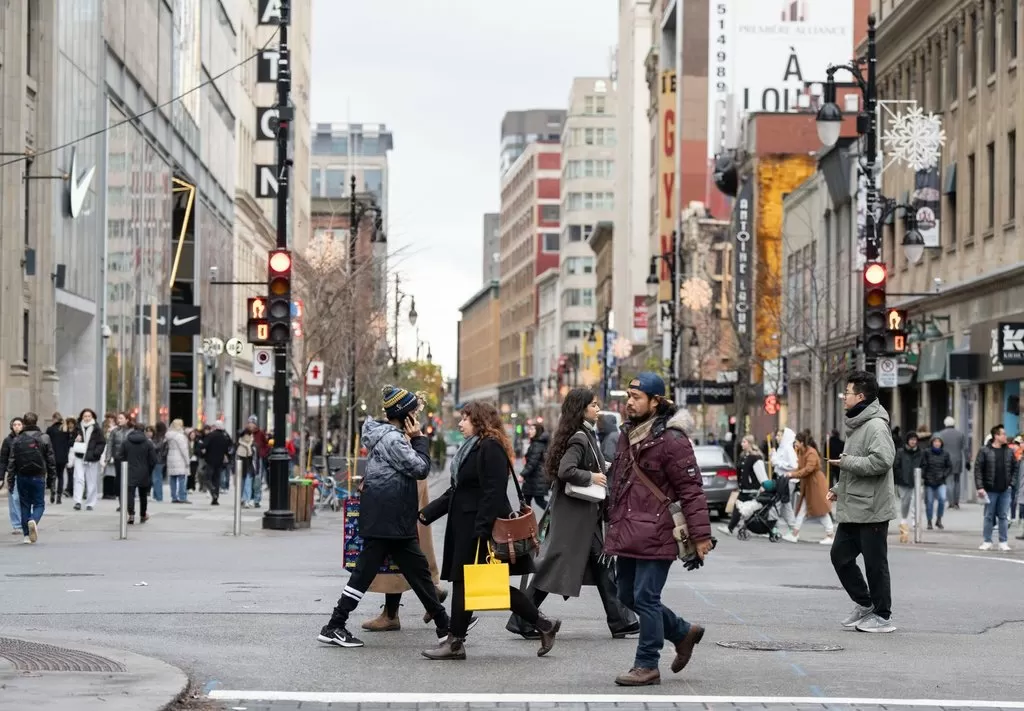
Holiday Shopping Amid Inflation and Tariffs: Canadians Prepare to Take on More Debt in a K-Shaped Economy
As the holiday season approaches, Canadians are gearing up for their annual shopping sprees. However, this year, the shopping experience may be a bit different. With inflation and tariffs on the rise, many Canadians are expecting to take on more debt in order to fulfill their holiday shopping needs. This trend, according to retail analysts, is a clear indication of the concerns surrounding the current state of the economy, which has been described as a ‘K-shaped economy’.
The term ‘K-shaped economy’ refers to an economic recovery that is uneven, with some sectors and individuals experiencing growth and prosperity, while others continue to struggle. This has been the case for Canada, where the pandemic has had a disproportionate impact on different industries and income groups. While some have been able to save money and increase their wealth during the pandemic, others have faced job losses and financial hardships.
The effects of this K-shaped economy are now being felt in the holiday shopping season. With inflation rates on the rise, the cost of goods and services has increased, making it more expensive for Canadians to purchase their holiday gifts. Additionally, the ongoing trade tensions between Canada and the United States have resulted in tariffs being imposed on certain goods, further driving up prices.
As a result, many Canadians are expecting to take on more debt in order to afford their holiday shopping. According to a recent survey by the Retail Council of Canada, 45% of Canadians plan to use credit cards to finance their holiday purchases, while 20% plan to take out loans or use their lines of credit. This is a significant increase from previous years, where only 35% of Canadians used credit cards and 10% took out loans for holiday shopping.
This trend is concerning, as it indicates that many Canadians are struggling to keep up with the rising cost of living. It also highlights the growing divide between those who have been able to save and those who have been hit hard by the pandemic. While some Canadians may be able to pay off their holiday debt quickly, others may find themselves in a cycle of debt that is difficult to break.
However, despite these challenges, there is still hope for a successful holiday shopping season. Retailers have been preparing for this busy time of year and are offering deals and promotions to entice shoppers. Many are also offering alternative payment options, such as layaway plans, to help Canadians manage their holiday expenses without relying on credit.
Moreover, the Canadian government has taken steps to support the economy and help Canadians during these challenging times. The recent announcement of the Canada Recovery Benefit extension and the new Canada Worker Lockdown Benefit will provide financial assistance to those who have been impacted by the pandemic. This will help alleviate some of the financial burden and allow Canadians to shop with more confidence.
In addition, the rise of e-commerce has made it easier for Canadians to shop from the comfort of their own homes. This not only provides a safer shopping experience during the pandemic but also allows for more price comparison and budgeting.
It is important to remember that the holiday season is not just about material gifts, but also about spending quality time with loved ones. This year, instead of focusing on extravagant gifts, Canadians can opt for more meaningful and budget-friendly options, such as homemade gifts or experiences.
In conclusion, while the current state of the economy may be concerning, Canadians can still have a successful and enjoyable holiday shopping season. By being mindful of their spending and taking advantage of deals and alternative payment options, Canadians can avoid falling into a cycle of debt. Let us remember the true spirit of the holidays and focus on what truly matters – spending time with loved ones and spreading joy and kindness. Happy holidays!
