
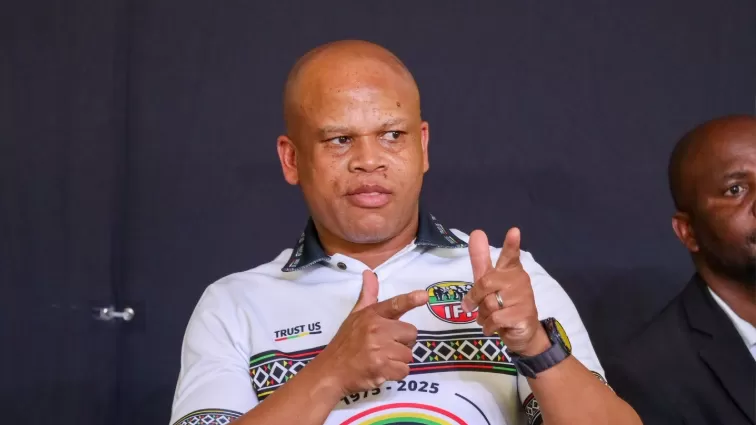
IFP Chief Whip Nhlanhla Hadebe says reconciliation can’t remain symbolic.
The concept of reconciliation has been at the forefront of South Africa’s political landscape since the end of apartheid. It has been a symbol of hope and unity, a promise of a better future for all citizens. However, as the years have passed, many have questioned whether reconciliation has truly been achieved or if it has simply become a symbolic gesture.
Recently, IFP Chief Whip Nhlanhla Hadebe spoke out about the need for reconciliation to go beyond symbolism and become a tangible reality. In a speech at the National Assembly, Hadebe emphasized the importance of taking action to truly reconcile the nation.
Hadebe’s words struck a chord with many, as he highlighted the fact that while South Africa has made significant progress in terms of reconciliation, there is still a long way to go. He acknowledged that while the country has come a long way since the dark days of apartheid, there are still deep-rooted divisions and inequalities that need to be addressed.
One of the main issues that Hadebe addressed was the economic disparities that still exist in South Africa. He pointed out that while the country has a growing economy, the benefits of this growth are not being shared equally among all citizens. This is a stark reminder that reconciliation cannot be achieved if there is still a large portion of the population living in poverty and struggling to make ends meet.
Hadebe also highlighted the need for reconciliation to extend beyond race and include other marginalized groups such as women, the LGBTQ+ community, and people with disabilities. He stressed that true reconciliation cannot be achieved if these groups continue to face discrimination and inequality.
Another important aspect that Hadebe touched on was the need for reconciliation to be a continuous process. He emphasized that it cannot be a one-time event, but rather an ongoing effort that requires constant attention and action. This sentiment is echoed by many who believe that reconciliation is not a destination, but a journey that requires commitment and dedication from all citizens.
Hadebe’s words serve as a reminder that reconciliation is not just a political slogan, but a call to action. It is not enough to simply talk about reconciliation, it is time for action. As Hadebe stated, “Reconciliation cannot remain a symbolic gesture, it must become a reality.”
The IFP Chief Whip also called on all political parties to work together towards achieving true reconciliation. He emphasized the importance of putting aside political differences and working towards a common goal of building a united and prosperous South Africa.
In conclusion, Hadebe’s words serve as a wake-up call for all South Africans. It is time to move beyond symbolism and take concrete steps towards achieving true reconciliation. As a nation, we must work together to address the economic disparities, social inequalities, and discrimination that still exist. Let us heed Hadebe’s call and make reconciliation a reality for all citizens.
