
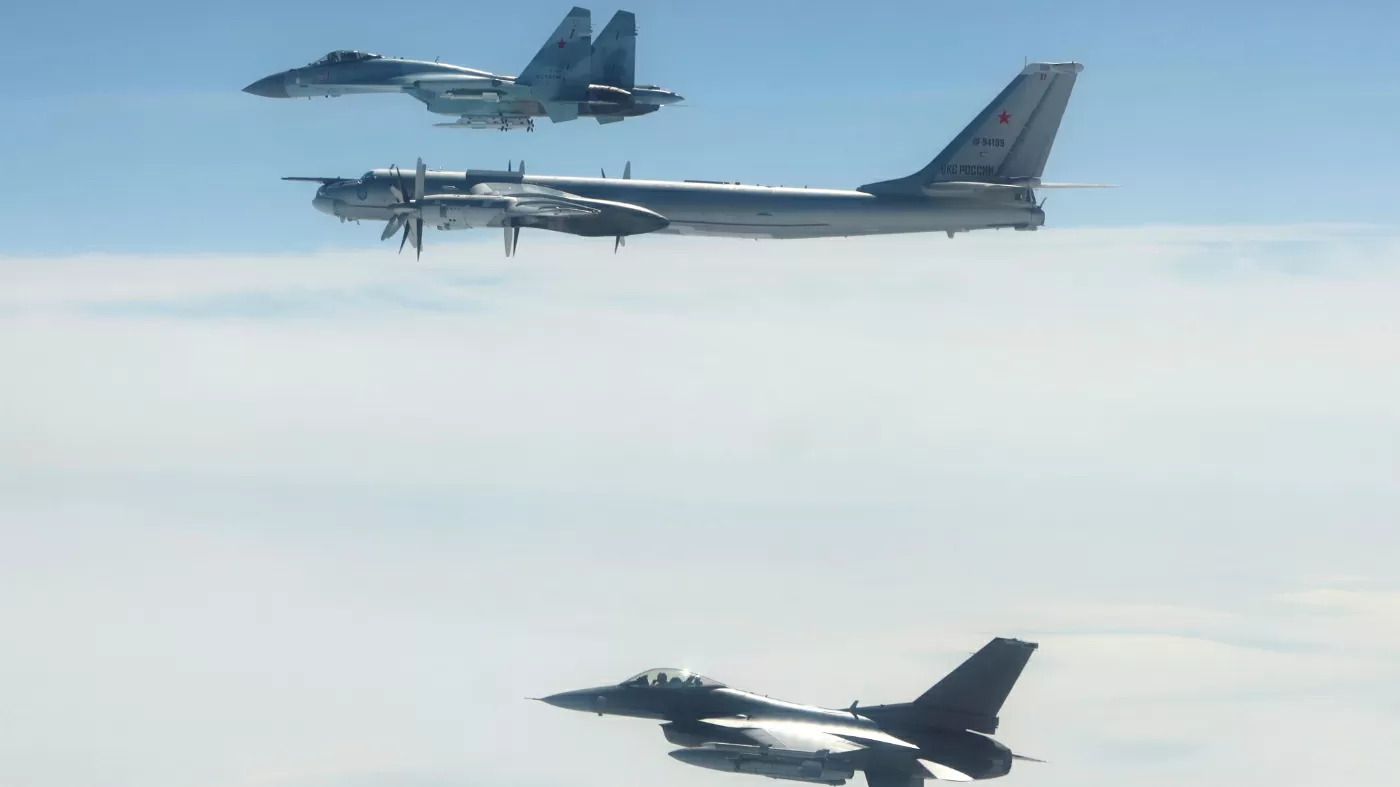
U.S. Fighter Jets Intercept Russian Warplanes over Alaska
The North American Aerospace Defense Command (NORAD) was put to the test on Thursday when it detected and tracked two Russian Tu-95s bomber planes, two Su-35s fighter planes, and one A-50 spy plane flying near Alaska. In an impressive display of strength and readiness, U.S. fighter jets were quickly deployed to intercept and escort the Russian warplanes until they left the Alaskan Air Defense Identification Zone (ADIZ).
According to NORAD officials, the Russian planes were first detected by radar before they entered the ADIZ. This triggered a swift response from the U.S. as the NORAD team scrambled to identify and monitor the potential threat. The quick and decisive actions of NORAD demonstrate the readiness and capability of the U.S. to protect its airspace and its citizens.
The Alaskan ADIZ, established in the aftermath of the Cold War, is a critical defense zone that extends hundreds of miles from the U.S. coastline. It serves as an early warning system for any potential threats, providing NORAD with the necessary time to respond. The recent incident is a reminder of the importance of this zone and the need to constantly be vigilant.
In a statement released late on Thursday, NORAD Commander, General Glen D. VanHerck, said, “NORAD’s top priority is defending North America. Our ability to deter and defeat threats to our citizens, vital infrastructure, and national institutions starts with successfully detecting, tracking, and positively identifying aircraft of interest approaching U.S. and Canadian airspace.”
The interception of the Russian warplanes over Alaska is not an isolated incident. In fact, it has become a routine occurrence in recent years as Russian military activity near U.S. airspace has increased. However, the professionalism and expertise displayed by NORAD and the U.S. fighter jets during these intercepts is a testament to the strong defense capabilities of the United States.
This is not the first time that the U.S. has intercepted Russian planes near Alaska. In 2019, U.S. F-22 fighter jets intercepted four Russian Tu-95 bombers along with Su-35 fighter jets and an A-50 airborne early warning and control aircraft. In the same year, Russian warplanes were intercepted by U.S. F-22s and Canadian CF-18s off the coast of Alaska. These routine intercepts serve as a reminder to Russia that the U.S. is always prepared to defend its airspace and its allies.
The interception of Russian warplanes also highlights the importance of cooperation between the U.S. and its allies. In this recent incident, Canadian CF-18 fighters also assisted in the escort of the Russian aircraft. This teamwork and coordination between the U.S. and its allies demonstrate the strong bond and trust between the two nations.
In the face of increased Russian military activity, the U.S. has also taken steps to enhance its defense capabilities. In 2019, the U.S. Air Force deployed F-22 fighter jets to its base in Alaska for the first time since 2016. The move was seen as a strategic show of force and a message to Russia that the U.S. is prepared to respond to any potential threat.
The interception of Russian warplanes over Alaska serves as a reminder that the U.S. must always be prepared to protect its airspace and its citizens. The quick and decisive response by NORAD and the U.S. fighter jets demonstrates the strength and capability of the U.S. military. It also sends a clear message to any potential adversaries that the U.S. is always ready to defend its sovereignty and the safety of its people.
In conclusion, the interception of Russian warplanes over Alaska by U.S. fighter jets is a testament to the strong defense capabilities of the United States. The successful intercept is a result of the constant vigilance and readiness of NORAD and its dedicated team. The U.S. remains committed to protecting its airspace and its allies, and this interception serves as a clear message to any potential threats that the U.S. is always prepared to defend itself.
