
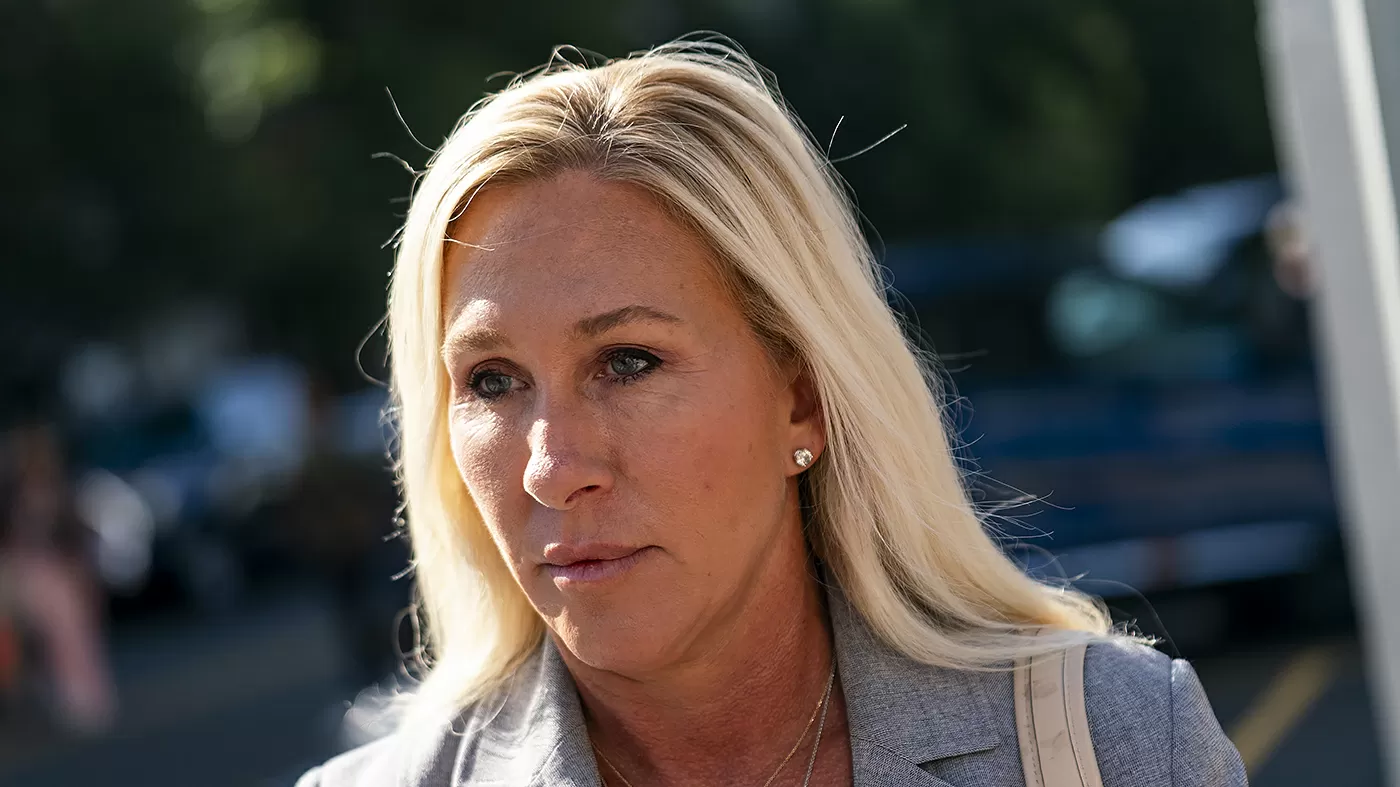
Former Rep. Marjorie Taylor Greene (R-Ga.) has recently taken aim at White House press secretary Karoline Leavitt for not ruling out the possibility of a military draft in response to the escalating tensions with Iran. In a tweet on Sunday, Greene criticized Leavitt, stating, “Karoline Leavitt doesn’t rule out a draft. How about the answer is NO DRAFT AND NO BOOTS ON THE GROUND because we campaigned on NO…”.
Greene’s statement comes after Leavitt’s appearance on Fox News, where she was asked about the possibility of a military draft in light of the recent events in Iran. Leavitt responded by saying, “I’m not going to get into hypotheticals, but what I will say is that the president has been clear that he does not want to engage in another endless war in the Middle East.” However, her answer did not satisfy Greene, who believes that the administration should unequivocally reject the idea of a draft.
Greene’s stance on the matter is not surprising, as she has been a vocal opponent of military intervention and has consistently advocated for a non-interventionist foreign policy. During her campaign, she made it clear that she was against sending American troops to fight in foreign wars and promised to prioritize the well-being of our service members and their families. So, it is understandable that she would be alarmed by the possibility of a draft.
The idea of a military draft has long been a contentious issue in American politics. The last time the United States had a draft was during the Vietnam War, and it was met with widespread opposition and protests. Since then, the country has relied on an all-volunteer military, and the idea of reinstating a draft has been met with strong resistance.
However, with the recent tensions between the US and Iran, the possibility of a draft has once again become a topic of discussion. Many fear that the current situation could escalate into a full-blown war, and a draft may be necessary to fill the ranks of the military. This has caused concern among politicians and citizens alike, with some calling for the government to take a firm stance against the draft.
Greene’s statement echoes the sentiment of many Americans who are against the idea of a draft. They believe that the government should prioritize finding diplomatic solutions to conflicts rather than resorting to military action. They also argue that a draft would disproportionately affect low-income individuals and communities of color, as they are more likely to enlist in the military.
Moreover, Greene’s criticism of Leavitt’s response also highlights the need for clear and consistent messaging from the administration. With tensions rising and the possibility of a draft looming, it is essential that the government provides reassurance to the American people that they will not be forced to fight in a war they do not support.
In her tweet, Greene also emphasized that the administration campaigned on a platform of no draft and no boots on the ground. This is a reminder that the American people have a right to hold their elected officials accountable to their promises. It is crucial for the government to listen to the concerns of its citizens and to act in their best interest.
In conclusion, Former Rep. Marjorie Taylor Greene’s criticism of White House press secretary Karoline Leavitt’s response regarding the possibility of a military draft in Iran is an important reminder of the need for a clear and consistent stance on the matter. The American people deserve to know that their government will not force them to fight in a war they do not support. It is time for the administration to prioritize finding diplomatic solutions to conflicts and to uphold their promise of no draft and no boots on the ground.
