
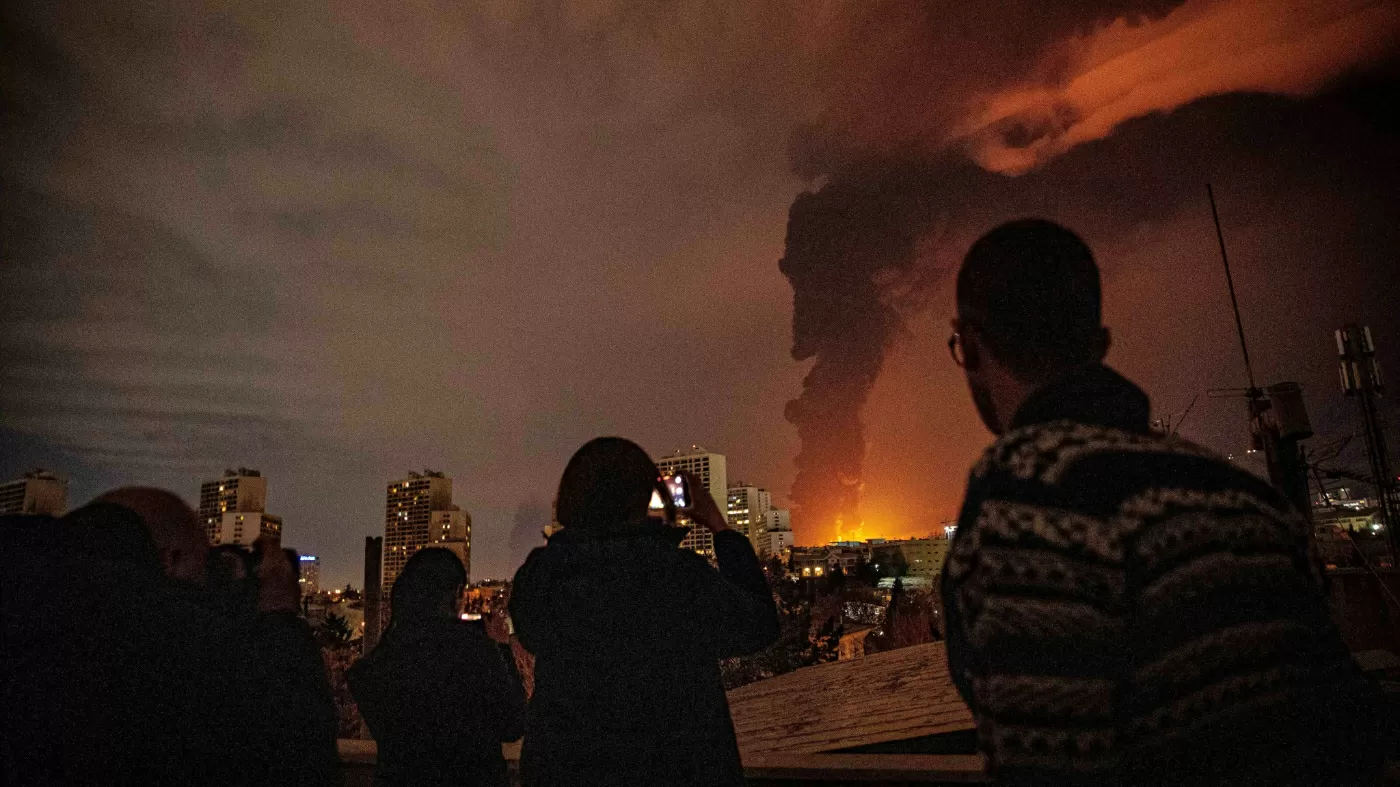
The World Health Organization (WHO) has issued a warning on Tuesday regarding the potential health hazards caused by strikes on Iranian oil depots that may lead to “black rain.” This phenomenon, also known as “acidic rain,” has the potential to cause respiratory problems as toxic pollutants spread through the air. Speaking to reporters in Geneva, WHO spokesperson Christian Lindmeier emphasized that the “black rain” falling over Tehran poses a significant danger to the city’s inhabitants.
The term “black rain” refers to the precipitation that occurs after a large-scale attack on industrial facilities. In this case, the Iranian oil depots were targeted by airstrikes, resulting in the release of toxic pollutants into the air. These pollutants can then mix with the moisture in the air, resulting in acidic rain that can have severe consequences for human health and the environment.
According to WHO, the “black rain” can cause serious respiratory problems, especially for vulnerable groups such as children, the elderly, and people with pre-existing respiratory conditions. The toxic pollutants present in the rain can irritate the lining of the lungs, leading to coughing, wheezing, and shortness of breath. Prolonged exposure to these pollutants can also increase the risk of developing chronic respiratory diseases, such as asthma, bronchitis, and emphysema.
The situation in Tehran is particularly worrying as the city has already been battling severe air pollution for many years. The high levels of pollution are primarily caused by the heavy traffic and industrial activities, but the recent strikes on the oil depots have further aggravated the problem. The “black rain” has now added another layer of danger, affecting the air quality and posing a significant threat to public health.
The WHO has urged the Iranian government to take immediate action to address the issue and protect its citizens from the harmful effects of the “black rain.” This includes implementing measures to mitigate the effects of the airstrikes and providing appropriate medical care for those who have been exposed to the toxic pollutants.
The organization has also called upon the international community to support Iran in dealing with this crisis. The devastating impact of the “black rain” goes beyond borders, and it is essential that all countries work together to find a solution. The WHO has offered its expertise and resources to assist Iran in managing the situation and minimizing the health risks for its citizens.
In the meantime, the WHO advises people living in Tehran to take precautions to protect themselves from the “black rain.” This includes avoiding outdoor activities, keeping doors and windows closed, and using masks when going outside. The organization also recommends seeking medical attention immediately if experiencing any symptoms related to respiratory problems.
The situation in Tehran serves as a reminder of the disastrous consequences of conflicts on human health and the environment. The recent strikes on the oil depots have only added to the challenges faced by the city, which was already struggling with high levels of pollution. The WHO calls for an end to such attacks and urges all parties involved to prioritize the health and well-being of civilians.
In the face of this crisis, the WHO remains committed to its mission of promoting health and well-being for all people. The organization will continue to monitor the situation and provide support to the Iranian government in addressing the health risks posed by the “black rain.” It is only through collaboration and collective efforts that we can protect our health and the environment, and the WHO is determined to do its part. Let us all work together to create a healthier and safer world for everyone.
