
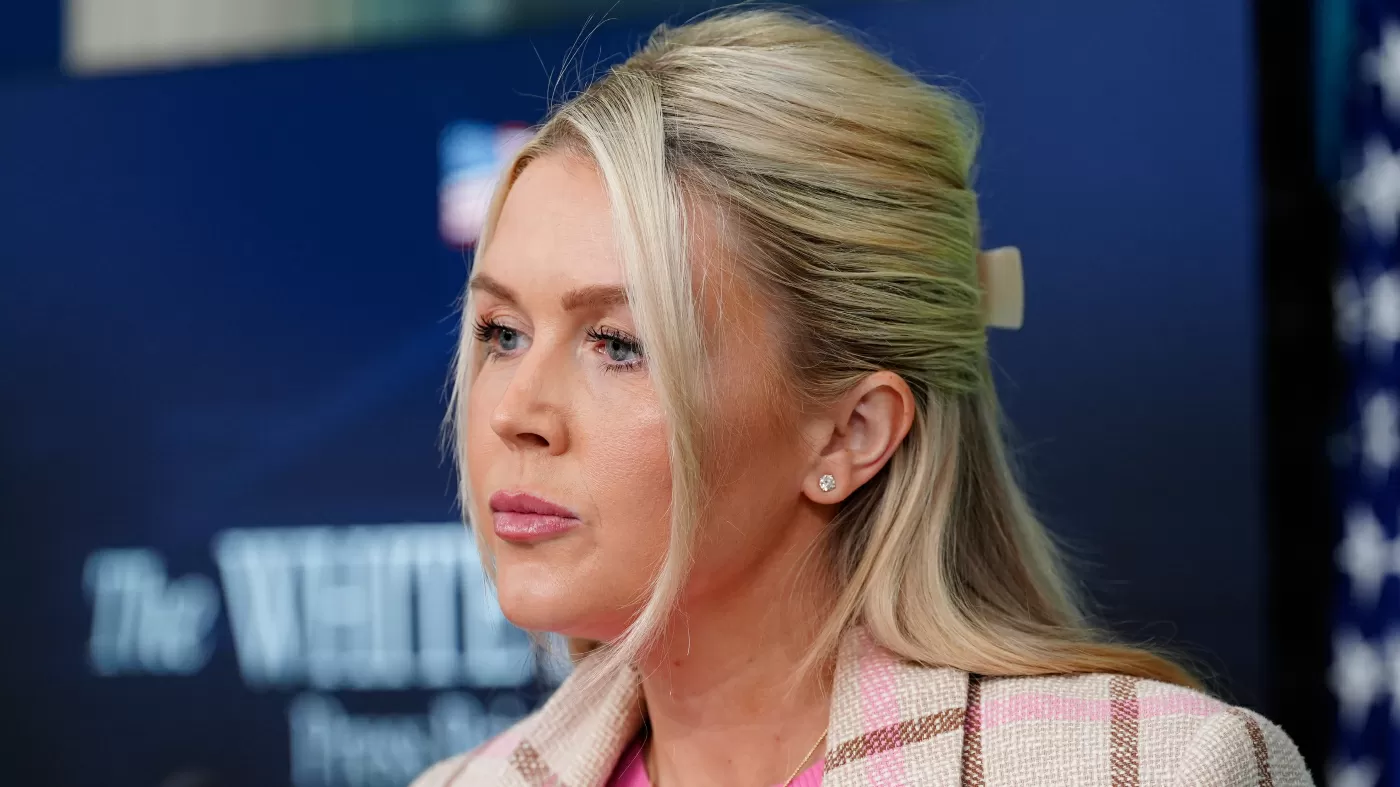
The United States has recently been facing increased tensions in the Middle East, particularly in the Gulf region and the Strait of Hormuz. With the rising tensions between the US and Iran, there has been much speculation about the role of the US military in escorting oil tankers through the Strait. However, there seems to be some confusion about this matter, as White House press secretary Karoline Leavitt stated on Tuesday that the US military has not yet escorted any oil tankers through the Strait of Hormuz, contradicting a now-deleted post from Energy Secretary Chris Wright.
“I was made aware of this post. I haven’t had a chance to talk to the Energy secretary about it directly, however, I want to clarify that the US military has not yet escorted any oil tankers through the Strait of Hormuz,” said Leavitt in a press briefing. This statement from the White House serves to clear the air and put an end to the confusion surrounding this issue.
The Strait of Hormuz is a crucial waterway, located between Iran and Oman, which connects the Persian Gulf with the Gulf of Oman and the Arabian Sea. It is one of the world’s most important shipping channels, with about 21 million barrels of oil passing through it every day. Therefore, any disruption in the flow of traffic through this narrow strait could have significant implications for the global economy.
Recently, there has been an escalation of tensions between the US and Iran, with both sides engaging in aggressive rhetoric and military posturing. The US has accused Iran of attacking oil tankers and a US drone in the Gulf region, while Iran claims to have shot down the drone because it violated its airspace. The situation has raised concerns about the safety of oil tankers passing through the Strait of Hormuz.
In response to these concerns, US Energy Secretary Chris Wright posted on social media that the US military has escorted oil tankers through the Strait of Hormuz. However, this post was subsequently deleted, and the White House has now clarified that the US military has not yet taken on this responsibility.
This clarification from the White House is significant, as it shows that the US is not looking for further escalation of tensions in the region. Contrary to what some may believe, the US is not actively seeking a military confrontation with Iran. The priority of the US government is to ensure the safety of its citizens and allies, as well as to protect the free flow of commerce through the Strait of Hormuz.
The US has consistently maintained that its presence in the Gulf region is to deter any potential threats from Iran, and not to engage in military action. The US government has also urged its allies and partners in the region to take more responsibility for the security of the Strait. This is not only in the interest of these countries but also in the interest of global stability and the free flow of trade.
It is worth noting that the US has a long-standing friendship with the Gulf countries, and has a vested interest in ensuring their security and stability. Therefore, any decision regarding the US military’s involvement in escorting oil tankers through the Strait of Hormuz would be made in close consultation with these allies and partners.
In conclusion, the US government has made it clear that the US military has not yet escorted any oil tankers through the Strait of Hormuz, contrary to a misleading post from the Energy Secretary. The statement from the White House serves to dispel any confusion and reiterate the US’s commitment to ensuring the safety and security of the Gulf region. The US remains committed to finding a peaceful resolution to the tensions in the region and urges all parties involved to exercise restraint and engage in diplomatic dialogue. Let us hope that these efforts will lead to a peaceful and stable Gulf region, benefiting not only the US, but the entire international community.
