
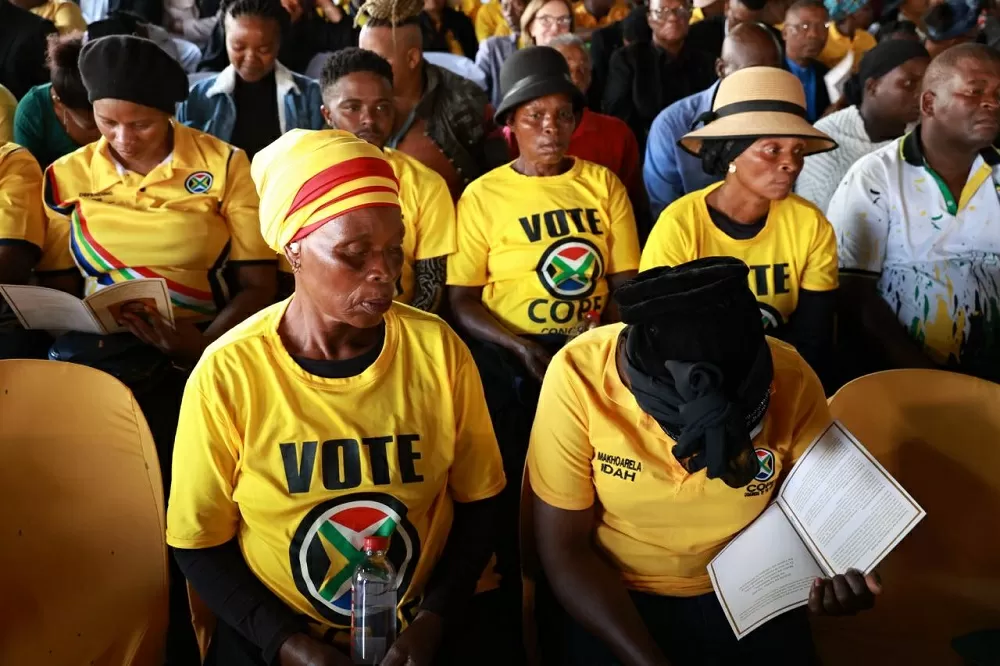
In the history of South Africa, the African National Congress (ANC) has always been known as the dominant political party, leading the fight against apartheid and ultimately bringing about democracy in the country. However, in 2008, a major event shook the political landscape as former ANC stalwart, Mosiuoa Lekota, broke away from the party to form the Congress of the People (COPE). This decision by Lekota marked a significant turning point in South African politics and sparked much debate and speculation among the public. In this article, we will explore the reasons behind Lekota’s breakaway and the impact it has had on the country’s political scene.
Mosiuoa Lekota, a long-standing member of the ANC, had been a prominent figure in the party for many years. He played a crucial role in the fight against apartheid and was a close ally of former president Nelson Mandela. However, in 2008, Lekota made the bold decision to leave the ANC and form a new political party, COPE. This move came as a surprise to many, as Lekota had been seen as a loyal member of the ANC and a potential successor to former president Thabo Mbeki.
So, what led Lekota to break away from the ANC? The main reason cited by Lekota was his disagreement with the ANC’s leadership and its handling of internal party issues. He felt that the party had strayed from its core values and had become increasingly corrupt and removed from the needs of the people. Lekota also expressed his disappointment with the removal of Thabo Mbeki as president of the country, which he believed was done for political reasons rather than for the good of the country.
In a press conference announcing the formation of COPE, Lekota stated, “The decision to form COPE was not taken lightly. It is a decision that has been made with a heavy heart, but with a clear conscience.” He went on to say that COPE would be a party that represents the will of the people and would work towards a better future for all South Africans.
The formation of COPE caused a major stir in the political arena, with many questioning the impact it would have on the ANC’s dominance. Some saw it as a threat to the ANC’s hold on power, while others believed it would bring about healthy competition and strengthen democracy in the country. The public’s response to COPE was overwhelming, with many showing their support for the new party and its ideals.
COPE’s first major test came in the 2009 general election, where they competed against the ANC and other political parties. While they did not win the election, they managed to secure 7.4% of the vote, making them the third-largest party in the country. This was a significant achievement for a newly formed party and showed that COPE had a strong base of support among the people.
Since then, COPE has faced its fair share of challenges, including internal divisions and leadership struggles. However, the party has continued to push forward, advocating for the rights of the people and holding the government accountable for its actions. COPE has also played a crucial role in exposing corruption within the ANC and has been a voice for the marginalized and oppressed in society.
Today, COPE remains a prominent political party in South Africa, with a strong presence in parliament and a dedicated support base. The party continues to work towards its goal of creating a more just and equal society for all South Africans. Lekota’s breakaway from the ANC may have been a shock to many, but it has ultimately led to a more diverse political landscape and has given the people a choice in who they want to lead them.
In conclusion, Lekota’s decision to break away from the ANC and form COPE was a significant moment in South African politics. It brought about healthy competition and gave the people a voice to express their dissatisfaction with the ruling party. COPE may not have achieved its ultimate goal of becoming the ruling party, but it has made a lasting impact on the country’s political scene. Lekota’s courage and determination to stand up for what he believed in will always be remembered and serves as a reminder that change is possible when one is willing to take a stand.
