
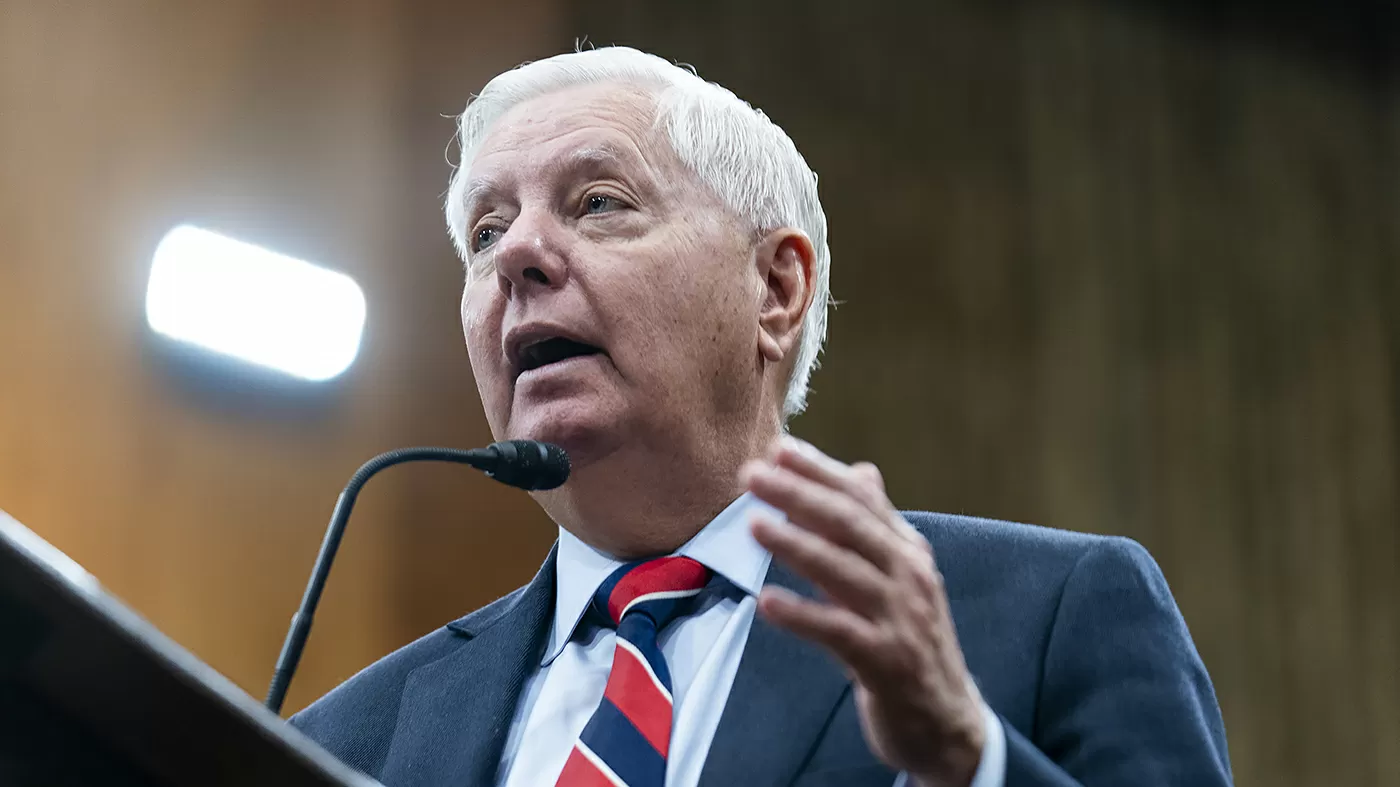
Senator Lindsey Graham of South Carolina recently expressed his disappointment with European allies for their reluctance to send military assets to reopen the Strait of Hormuz. In a post on social media, the Republican Senator stated that he had spoken with President Trump about the lack of support from European countries, and warned of potential repercussions for alliances.
The Strait of Hormuz is a narrow waterway located between Iran and Oman, connecting the Persian Gulf to the Gulf of Oman. It is a crucial route for global oil shipments, with approximately 21 million barrels of oil passing through it every day. However, tensions have been rising in the region as Iran has been accused of attacking oil tankers in the area and seizing a British-flagged tanker.
In response to these actions, the United States has been pushing for a coalition of international allies to join them in protecting the Strait of Hormuz and ensuring the safe passage of oil shipments. However, Senator Graham has expressed his frustration with the lack of support from European nations.
In his social media post, Senator Graham wrote, “I spoke with President Trump about our European allies’ unwillingness to provide assets to keep the Strait of Hormuz open for international commerce. This is a major threat to the world economy and requires a unified response.”
He also added that the lack of support from European allies could have “wide and deep” repercussions for alliances, implying that it could affect the overall relationship and cooperation between the United States and Europe.
Senator Graham’s criticism of European allies comes after several European countries, including Germany and France, have refused to join the U.S.-led coalition in protecting the Strait of Hormuz. Their reluctance stems from concerns about escalating tensions with Iran and the fear of getting drawn into a potential conflict.
The Senator’s remarks have sparked a debate about the level of commitment from European allies in maintaining global security and stability. While the United States has always been a leader in addressing international crises, it is crucial for other nations to step up and share the burden of maintaining global peace.
As a close ally of the United States, it is expected that European countries would support their efforts in ensuring the safety and security of global trade and commerce. However, their unwillingness to do so has raised questions about the strength of the transatlantic alliance.
Senator Graham’s comments serve as a wake-up call to European allies to take action and fulfill their responsibilities in promoting international stability. It is in their best interest to work together with the United States and other allies to address the tensions in the Strait of Hormuz and prevent any further escalation.
The Senator’s statement also highlights the importance of a united and cohesive response to global crises. In a world where threats and challenges are constantly evolving, it is essential for nations to join forces and stand together in the face of adversity.
In conclusion, Senator Lindsey Graham’s criticism of European allies for their reluctance to provide military assets to reopen the Strait of Hormuz sends a clear message that the United States expects its allies to fulfill their responsibilities in maintaining global peace and stability. It is crucial for European nations to step up and support their allies in addressing the current tensions in the region. Only through a united effort can we effectively ensure the safety and security of global trade and commerce.
