
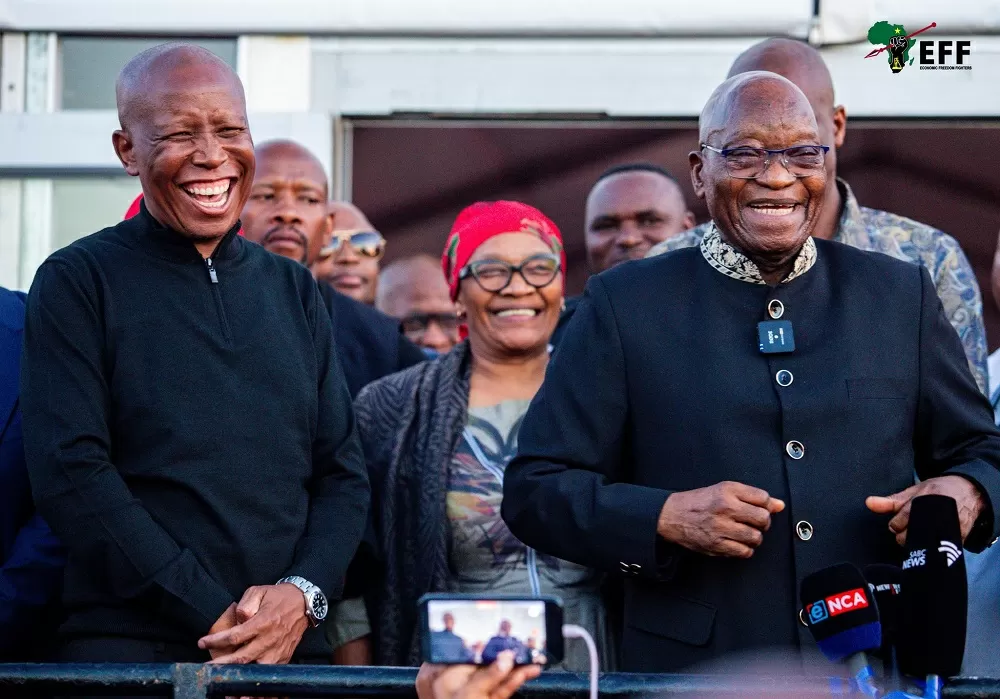
In a recent speech, former South African president Jacob Zuma made a bold statement about the state of human rights and freedom for the majority of black people in South Africa. He declared that these fundamental rights, which are enshrined in the country’s constitution, only exist on paper and are not being fully realized in the lives of the black population.
Zuma’s words have sparked a heated debate among South Africans, with some agreeing with his assessment while others vehemently disagree. However, one thing is clear – the issue of human rights and freedom for black people in South Africa is a complex and sensitive one that cannot be ignored.
It is a fact that South Africa has come a long way since the end of apartheid in 1994. The country has made significant strides in terms of political and economic transformation, and the constitution guarantees equal rights and opportunities for all citizens. However, the reality on the ground tells a different story.
Despite the progress made, the majority of black people in South Africa still face numerous challenges and injustices on a daily basis. They continue to bear the brunt of poverty, unemployment, and lack of access to basic services such as education and healthcare. These are all fundamental human rights that are supposed to be guaranteed to every citizen, regardless of race or social status.
Zuma’s statement is a wake-up call for all of us to acknowledge and address the harsh realities faced by the black population in South Africa. It is a call to action to ensure that the promises of the constitution are not just empty words, but are actually being implemented and experienced by all South Africans.
One of the key issues highlighted by Zuma is the economic inequality that still exists in the country. The majority of black people are still living in poverty, while a small minority enjoys immense wealth and privilege. This is a clear violation of the basic human right to a decent standard of living. It is time for the government and all sectors of society to work together to bridge this gap and create a more equitable society.
Another area of concern is the high levels of unemployment, especially among the youth. This not only denies young people the opportunity to earn a living and support themselves, but it also robs them of their dignity and sense of purpose. It is a violation of their right to work and contribute to the development of their country. The government must prioritize job creation and provide opportunities for skills development to empower the youth.
Education is another crucial aspect that needs to be addressed. While the constitution guarantees the right to education for all, the reality is that many black children still do not have access to quality education. This perpetuates the cycle of poverty and inequality, as education is the key to unlocking opportunities and breaking the cycle of poverty. The government must invest more in education and ensure that all children, regardless of their background, have access to quality education.
Zuma’s statement also brings to light the issue of corruption, which has been a major hindrance to the realization of human rights and freedom for black people in South Africa. Corruption not only robs the country of much-needed resources, but it also undermines the trust of the people in the government and institutions meant to serve them. It is time for a concerted effort to root out corruption and hold those responsible accountable.
In conclusion, Zuma’s words may have caused controversy, but they have also shed light on the harsh realities faced by the majority of black people in South Africa. It is time for all of us to take a hard look at ourselves and our society and work towards creating a more just and equal South Africa. The promises of the constitution must be more than just words on paper, they must be a reality for all South Africans, regardless of their race or social status. Let us all work together to make this a reality.
