
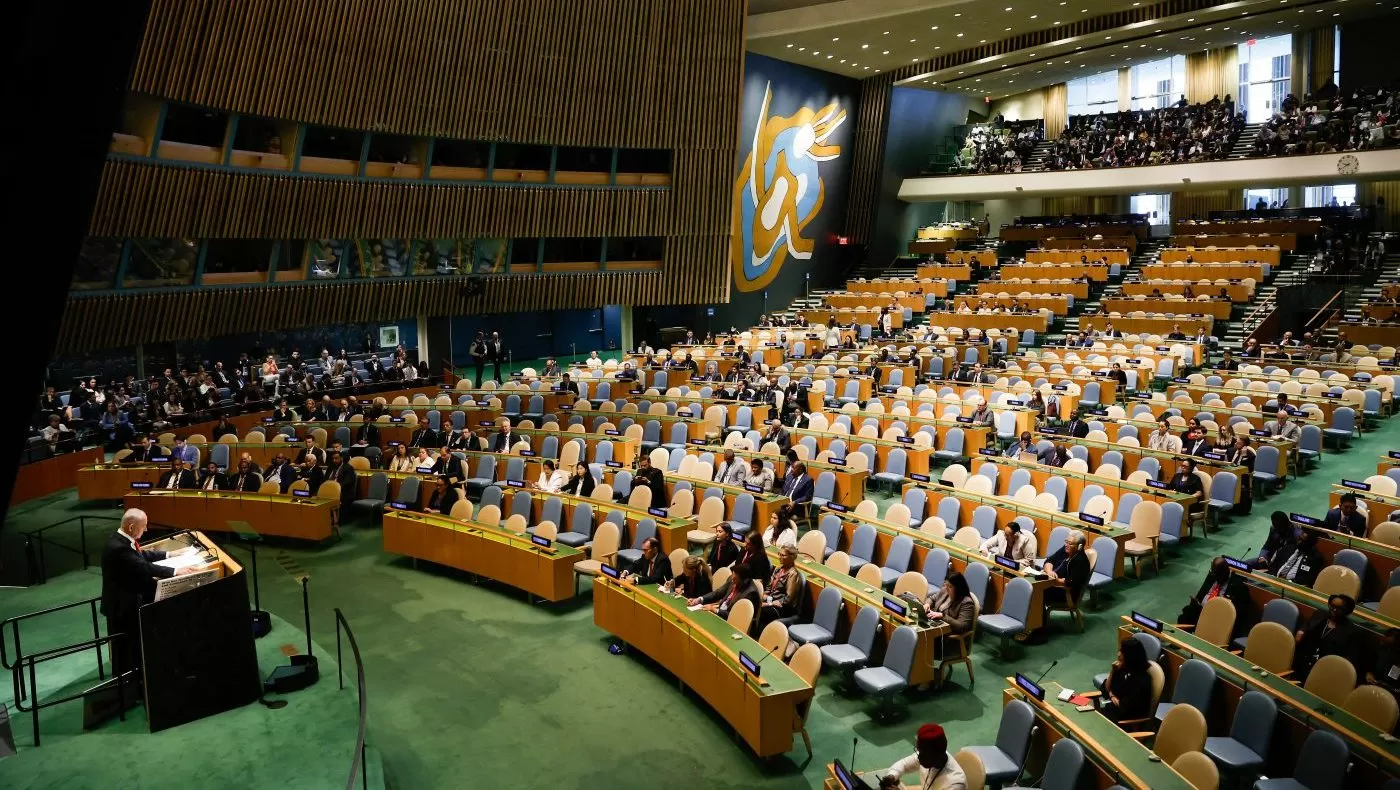
The United Nations General Assembly held a vote on Wednesday to label the international slave trade as the “gravest crime against humanity” and to urge for reparations to be made for the victims of this heinous practice. The resolution, led by Ghana, received overwhelming support with 123 countries voting in favor, while 52 countries, including the United States, Israel and Argentina, voted against it. Surprisingly, all 27 members of the European Union chose to abstain from the vote.
The passing of this resolution is a momentous step towards acknowledging and addressing the atrocities committed during the transatlantic slave trade. It is a powerful reminder of the importance of recognizing the human cost of this dark chapter in our collective history and taking steps towards reparations.
The transatlantic slave trade, which spanned over three centuries, resulted in the forceful capture and enslavement of over 12 million Africans and their forced transportation to the Americas. Millions of lives were lost during this brutal trade, with millions more enduring unimaginable suffering at the hands of their oppressors.
The fact that three nations, namely the United States, Israel, and Argentina, voted against this resolution is deeply concerning and disappointing. These countries have a responsibility to acknowledge their role in perpetuating this crime against humanity and to take steps towards rectifying it. The United States, in particular, has a long and troubled history with slavery and it is disheartening to see them not supporting this resolution.
The decision of the European Union to abstain from the vote is also disconcerting, especially considering their historical involvement in the international slave trade. This resolution is a crucial opportunity for them to take responsibility for their actions and to stand in solidarity with those who have suffered as a result of their past actions.
The passing of this resolution would not have been possible without the leadership of Ghana, a country that has endured its fair share of colonization and exploitation. By leading the charge in bringing attention to the international slave trade, Ghana has once again shown its commitment to human rights and justice.
Moreover, the overwhelming support from the international community for this resolution is a powerful message to the world that the victims of the transatlantic slave trade will not be forgotten and that steps must be taken to heal the wounds of the past.
The resolution also calls for reparations to be made for the descendants of those who were enslaved, recognizing that the effects of the transatlantic slave trade are still felt by many in the present day. This is an important step towards acknowledging and addressing the long-lasting impact of slavery and providing justice for those who have been wronged.
The passing of this resolution should serve as a reminder to all nations that history must not be forgotten or erased, but rather, learned from and used to create a better future for all. It is also a call to action for countries to take responsibility for their past actions and work towards reparations and reconciliation with those who have been oppressed.
In conclusion, the passing of the UN resolution to label the international slave trade as the “gravest crime against humanity” is a significant step towards acknowledging and addressing the atrocities committed during the transatlantic slave trade. It is a powerful message from the international community that the victims of this unforgivable crime must be remembered and reparations must be made. This resolution will go down in history as a symbol of our commitment to never forget the past and to work towards a better, more just future for all.
