
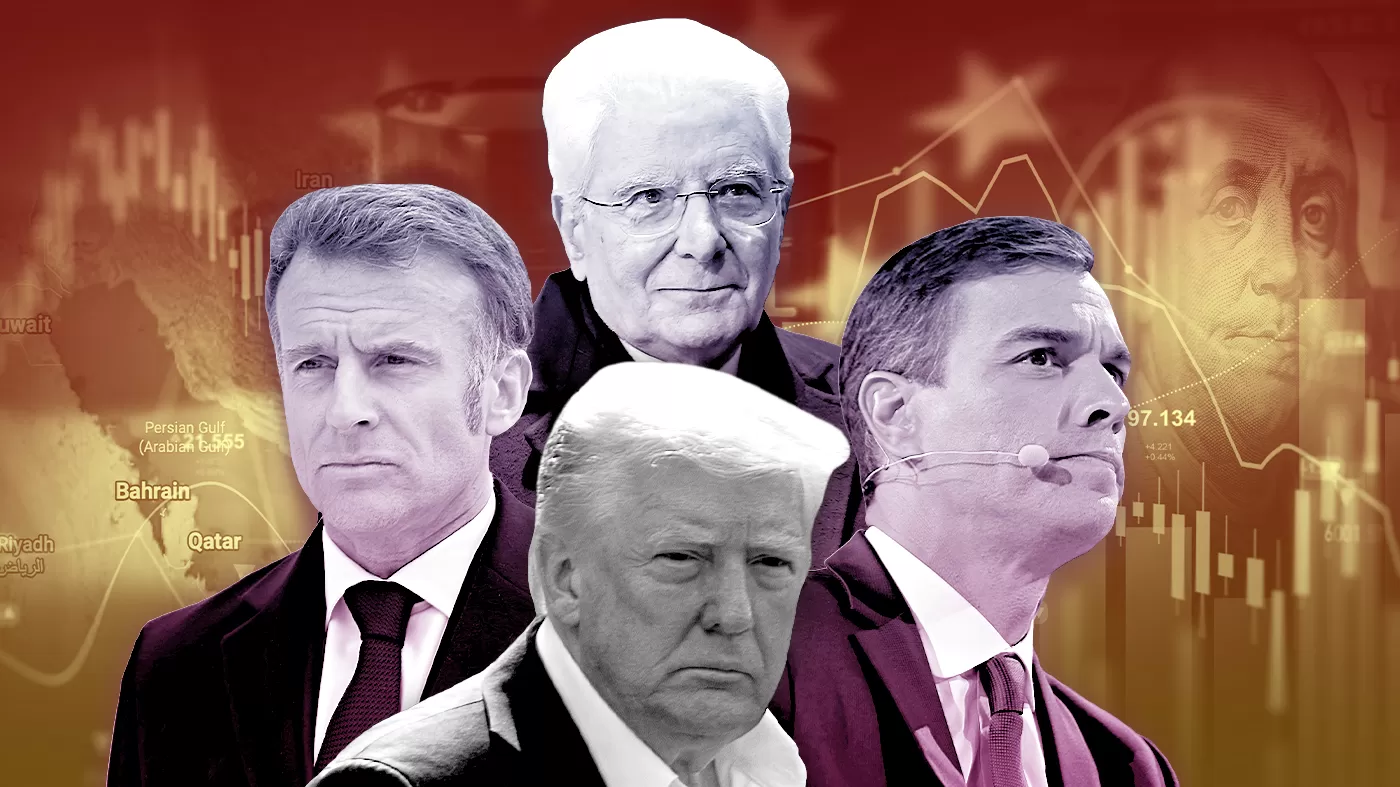
President Trump has once again made headlines with his latest move in the ongoing feud with longtime U.S. allies. This time, the focus is on the Strait of Hormuz, a critical shipping lane that has been at the center of tensions between the U.S. and Iran. In his latest attempt to pressure other countries to take responsibility for securing the strait, Trump has singled out the U.K. in a post on his new social media platform, Truth Social.
The Strait of Hormuz, located between Iran and Oman, is a narrow waterway that connects the Persian Gulf to the Gulf of Oman and is a vital route for global oil shipments. It is estimated that around 20% of the world’s oil passes through this strait, making it a crucial strategic location for international trade and commerce. However, in recent years, tensions have risen in the region, with Iran threatening to block the strait in response to U.S. sanctions.
President Trump has been vocal about his desire for other countries to take on a larger role in securing the strait, rather than relying solely on the U.S. Navy to protect the shipping lane. In his post on Truth Social, Trump called out countries that have been unable to contribute to this effort, specifically mentioning the U.K. This comes as a surprise, as the U.K. has been a longtime ally of the U.S. and has been actively involved in efforts to maintain stability in the region.
Trump’s post has sparked a new wave of controversy, with many questioning the motives behind his actions. Some have accused him of using the issue as a way to divert attention from domestic issues, while others believe it is a strategic move to put pressure on the U.K. and other allies to increase their involvement in the region.
However, regardless of the intentions behind Trump’s post, it has once again highlighted the importance of the Strait of Hormuz and the need for a collective effort to ensure its security. The U.K. has been a key player in maintaining stability in the region, with its Royal Navy regularly patrolling the strait and participating in joint exercises with the U.S. Navy. It is also worth noting that the U.K. has been a strong supporter of the U.S. in its efforts to curb Iran’s nuclear program.
The U.K. government has responded to Trump’s post, stating that they are committed to ensuring the safety and security of the strait and will continue to work closely with the U.S. and other allies to achieve this goal. This reaffirms the strong partnership between the two countries and their shared commitment to maintaining stability in the region.
It is important to note that the U.K. is not the only country that has been unable to contribute to the security of the Strait of Hormuz. Many other countries, including those in the European Union, have also been criticized for not doing enough to protect this critical shipping lane. Therefore, it is unfair to single out the U.K. and place the burden solely on their shoulders.
In conclusion, President Trump’s latest move in the ongoing feud with U.S. allies over the Strait of Hormuz has once again brought this issue to the forefront. While his post may have caused controversy, it has also highlighted the need for a collective effort to ensure the security of this critical shipping lane. The U.K. remains a strong ally of the U.S. and is committed to working together to maintain stability in the region. It is time for other countries to step up and take on their share of responsibility in securing the Strait of Hormuz. Only through a united effort can we ensure the safety and stability of this vital waterway.
