
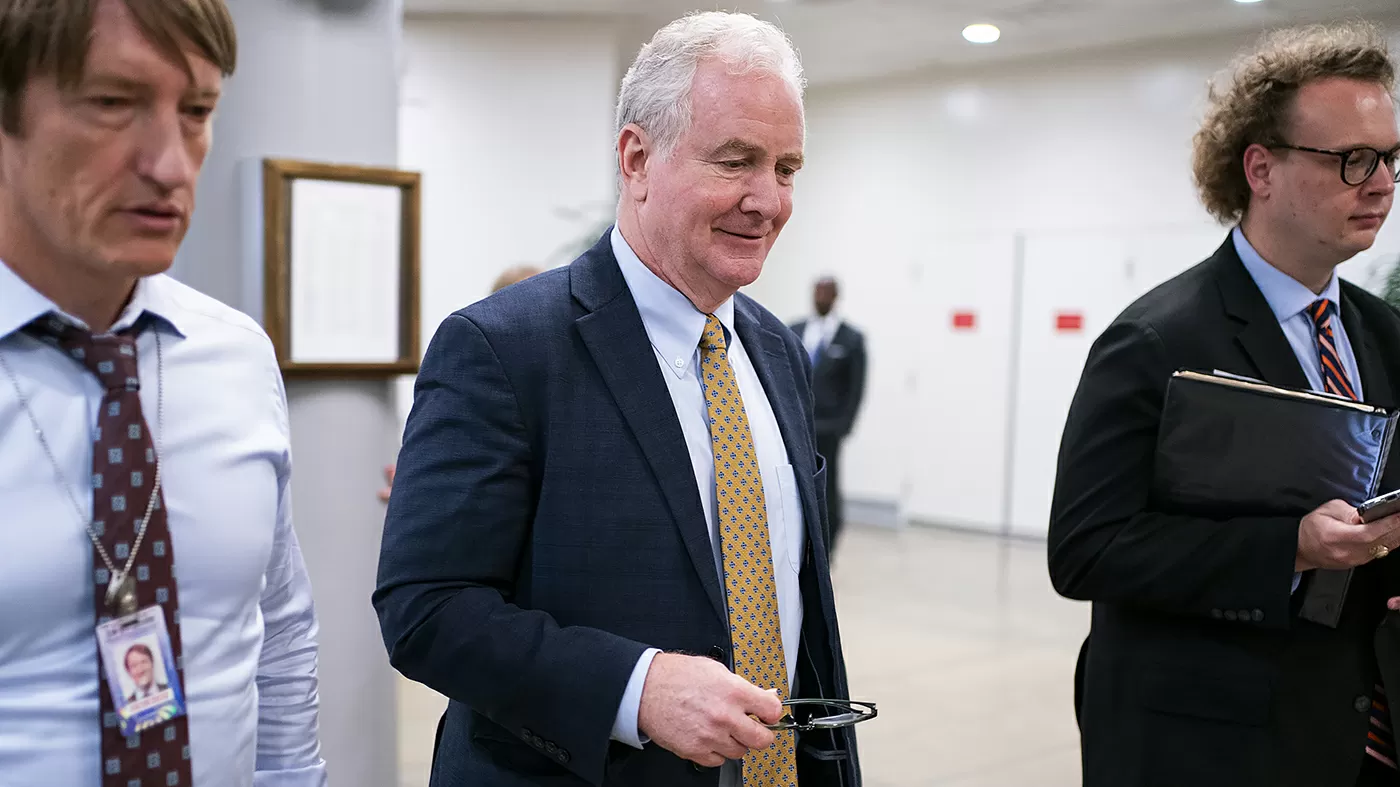
Senator Chris Van Hollen of Maryland has expressed concerns about the potential consequences of President Trump’s proposal for a “joint venture” between the United States and Iran to charge ships passing through the Strait of Hormuz. In a statement on Wednesday, the senator warned that Iran would score an “extraordinary win” if it is able to charge tolls upon reopening the key trade corridor.
The Strait of Hormuz is a vital waterway located between the Persian Gulf and the Gulf of Oman, connecting major oil-producing countries in the Middle East to the rest of the world. It is estimated that around 20% of the world’s oil supply passes through this narrow stretch of water, making it a crucial route for global trade and commerce.
In recent months, tensions have escalated between the United States and Iran, with the two countries engaging in a war of words and actions. The Trump administration has imposed crippling economic sanctions on Iran, while Iran has responded by threatening to disrupt oil shipments passing through the Strait of Hormuz.
In this context, President Trump’s proposal for a joint venture with Iran to charge tolls for ships passing through the strait has raised eyebrows and sparked debates. While some see it as a potential solution to ease tensions and ensure the safe passage of ships, others, like Senator Van Hollen, are concerned about the implications of such a partnership.
The senator, who is a member of the Senate Foreign Relations Committee, believes that Iran would benefit greatly from this joint venture. He stated, “Well, it would be an extraordinary win for Iran if they were able to charge tolls for ships passing through the Strait of Hormuz. It would essentially give them a new source of revenue and legitimacy, which could further empower their destabilizing activities in the region.”
Senator Van Hollen’s concerns are not unfounded. Iran has a history of using its control over the Strait of Hormuz as a bargaining chip in its dealings with the international community. In 2012, the country threatened to close the strait in response to sanctions imposed by the United States and its allies. This caused a temporary spike in oil prices and raised fears of a potential conflict.
Moreover, the senator also raised the issue of fairness and equity in this proposed joint venture. He questioned the legitimacy of charging tolls for a waterway that is considered an international shipping lane. He said, “The Strait of Hormuz is not owned by Iran. It is an international waterway, and any attempt to charge tolls for its use would be a violation of international law.”
While the Trump administration has not provided any details about how this joint venture would work, many experts believe that it would require significant cooperation and coordination between the two countries. This could potentially open the door for Iran to gain more influence and access to the global shipping industry, which could have serious implications for regional and global security.
It is also worth noting that Iran has a poor track record when it comes to transparency and accountability. The country has been accused of using its oil revenues to fund terrorist organizations and support proxy wars in the region. This raises concerns about how the revenue generated from the tolls would be used and whether it would contribute to further destabilization in the region.
In conclusion, Senator Van Hollen’s warning about the potential consequences of a joint venture between the United States and Iran to charge ships passing through the Strait of Hormuz is a valid concern. While the proposal may seem like a quick fix to ease tensions, it could have far-reaching implications that could ultimately benefit Iran and harm the interests of the international community. It is essential for all parties involved to carefully consider the implications of such a partnership before making any decisions. The safety and security of the Strait of Hormuz, as well as the global economy, depend on it.
