
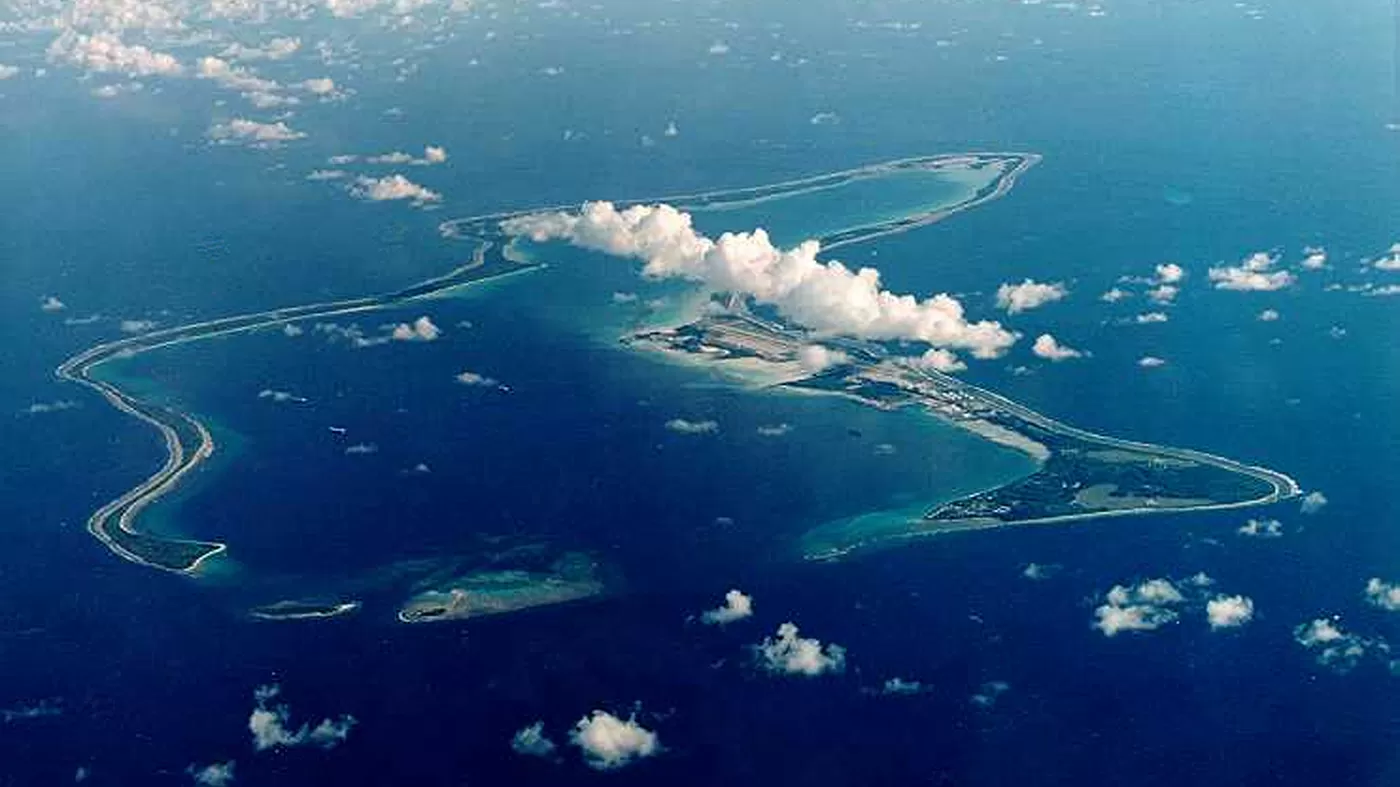
The United Kingdom’s plan to transfer the Chagos Islands to Mauritius has been put on hold after President Trump withdrew his cooperation for the 2024 agreement. This decision has raised concerns and sparked debates among political leaders and citizens alike.
The Chagos Islands, located in the Indian Ocean, have been a disputed territory between the U.K. and Mauritius for decades. The U.K. has maintained control over the islands since the 1960s, when it separated the Chagos from Mauritius and established a military base on the largest island, Diego Garcia. This base has been a key strategic location for both the U.K. and the U.S., who have shared it since the 1970s.
However, in 2019, the International Court of Justice (ICJ) ruled that the U.K.’s occupation of the Chagos Islands was illegal and that it must return the islands to Mauritius. The U.K. initially agreed to transfer the islands to Mauritius by 2024, but this recent development with President Trump has thrown a wrench in the plans.
The U.K. and the U.S. have a long-standing relationship, and the military base on Diego Garcia has been a symbol of their strong alliance. However, with President Trump’s decision to withdraw his cooperation for the transfer, the U.K. is now facing a difficult situation. The U.S. has been a key player in the defense of the Chagos Islands, and without their support, the U.K. will have to reassess its plans.
The U.K. government has expressed disappointment at President Trump’s decision, but they have also stated that they will continue to work towards a peaceful resolution with Mauritius. The U.K. has always maintained that the Chagos Islands are a British Overseas Territory, and they have the right to decide its future. However, the ICJ ruling has put pressure on the U.K. to reconsider its stance and work towards a fair and just solution.
The transfer of the Chagos Islands to Mauritius is not just a political issue, but it also has a significant impact on the lives of the Chagossians. When the U.K. separated the islands from Mauritius, they forcibly removed the Chagossian people from their homes and relocated them to other countries. This displacement has had a lasting effect on the Chagossian community, and the transfer of the islands to Mauritius could potentially allow them to return to their homeland.
Mauritius has welcomed the ICJ ruling and has been working towards the return of the Chagos Islands to their rightful owner. The Mauritian government has also promised to provide support and assistance to the Chagossian people if they are able to return to the islands.
The Chagos Islands are not just a strategic military location; they are also home to a diverse ecosystem and a rich cultural heritage. The transfer of the islands to Mauritius would allow for better conservation efforts and the preservation of the Chagossian culture.
In light of recent events, it is imperative that the U.K. and the U.S. come to a mutual agreement and work towards a peaceful resolution with Mauritius. The Chagos Islands belong to Mauritius, and it is time for the U.K. to honor the ICJ ruling and return the islands to their rightful owner.
The U.K. and the U.S. have a strong bond, and this should not be affected by the transfer of the Chagos Islands. Both countries have a responsibility to uphold justice and respect international law. It is time for the U.K. to take a step towards reconciliation and work towards a fair and just solution for all parties involved.
In conclusion, the pause in the transfer of the Chagos Islands to Mauritius may have caused a setback, but it should not discourage the U.K. from fulfilling its obligation to return the islands. The Chagos Islands belong to Mauritius, and it is time for the U.K. to make things right. Let us hope that the U.K. and the U.S. can come to an agreement and pave the way for a peaceful transfer of the Chagos Islands to Mauritius.
