
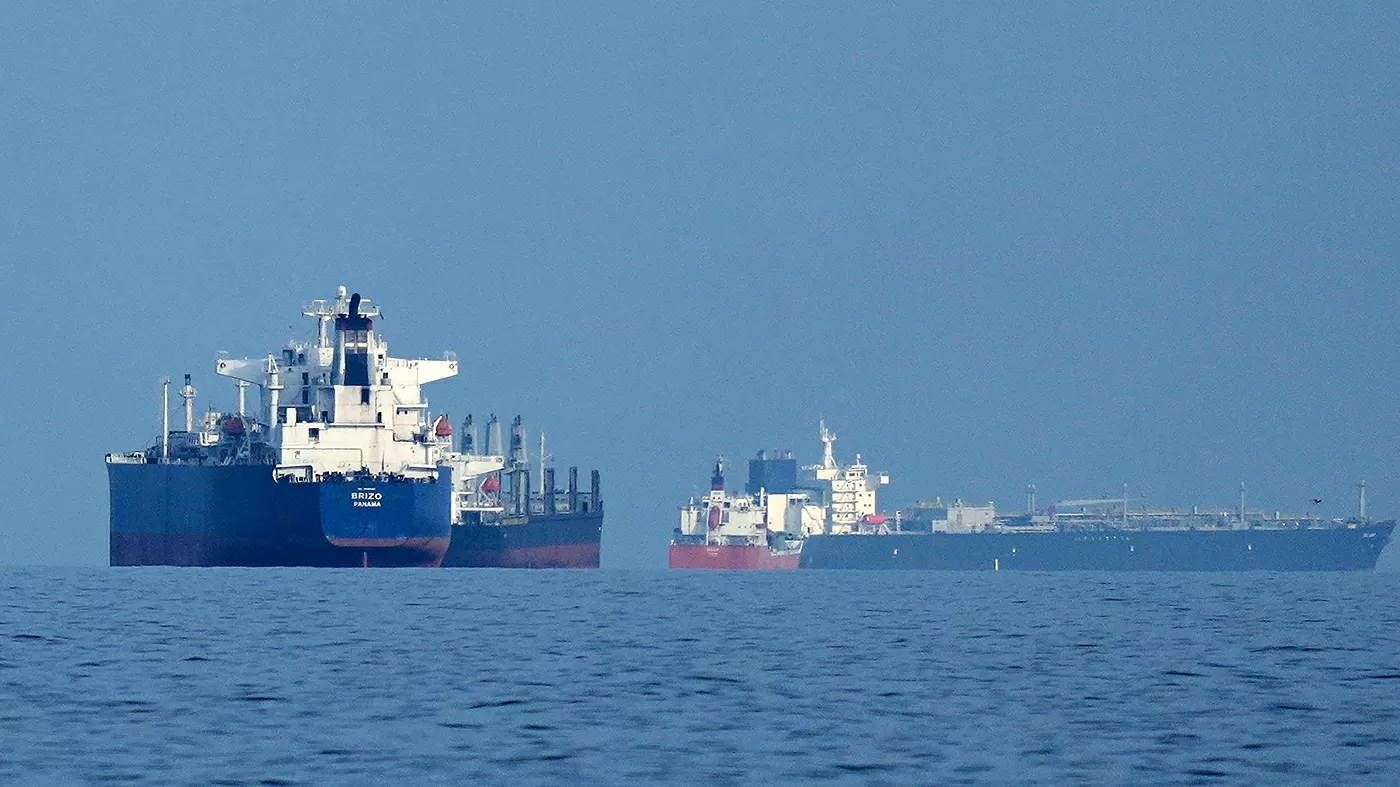
President Trump’s new blockade in the Strait of Hormuz has caused quite a stir in the international community. The move, which involves the U.S. military blocking Iranian ports and stopping ships from entering the key waterway, took effect on Monday. This comes after 21 hours of peace talks over the weekend in Pakistan ended without any resolution. While the blockade has sparked controversy and raised concerns about the potential consequences, it is important to understand the reasoning behind this decision.
The Strait of Hormuz is a vital shipping route that connects the Persian Gulf to the rest of the world. It is responsible for the transportation of one-fifth of the world’s oil supply, making it a critical point of interest for global trade and economy. However, this strategic waterway has also been a source of tension between the U.S. and Iran for years.
Iran has been accused of various acts of aggression in the region, including attacks on oil tankers and seizing ships passing through the strait. These actions have not only caused disruption to global trade but have also threatened the safety of innocent civilians. Despite attempts at diplomacy, Iran has continued to exhibit hostile behavior, prompting President Trump to take action in protecting the interests of not just the U.S., but also its allies.
The decision to impose a blockade in the Strait of Hormuz was not made lightly. It followed a series of escalations between the U.S. and Iran, including the killing of a top Iranian general by the U.S. earlier this year. The blockade is a means of applying pressure on Iran to change its behavior and abide by international laws and norms. It is not an act of aggression, but rather a strategy to prevent further provocations and ensure the safety of all ships passing through the strait.
Despite the concerns being raised, the blockade is a necessary step in maintaining stability in the region. It is not a permanent measure, but rather a temporary one until Iran shows a willingness to engage in peaceful negotiations. The U.S. has made it clear that the blockade will only be lifted if Iran agrees to abide by international laws and ceases its hostile actions.
President Trump’s bold decision to enforce the blockade sends a strong message to Iran and the rest of the world that the U.S. will not tolerate any form of aggression. It also serves as a reminder that the U.S. will protect its own interests and those of its allies. The blockade is a necessary measure to maintain peace and stability in the region and to ensure the free flow of trade through the Strait of Hormuz.
While some may view this blockade as a form of aggression, it is important to understand the intentions behind it. The U.S. is not seeking to start a war or impose its will on others. The blockade is simply a way to ensure that international laws are upheld and that the safety and security of all nations are protected.
In addition, President Trump’s actions have been met with support from many nations, including the United Kingdom, France, and Germany, who have expressed concerns about Iran’s aggressive behavior in the region. This further validates the necessity of this blockade and the need to address Iran’s actions.
President Trump’s new blockade in the Strait of Hormuz may have caused some initial disruption, but it is a step towards maintaining peace and stability in the region. It is a necessary measure to protect the interests of all nations and prevent any further provocations from Iran. The U.S. remains committed to finding a peaceful resolution and hopes that Iran will also choose the path of diplomacy.
