
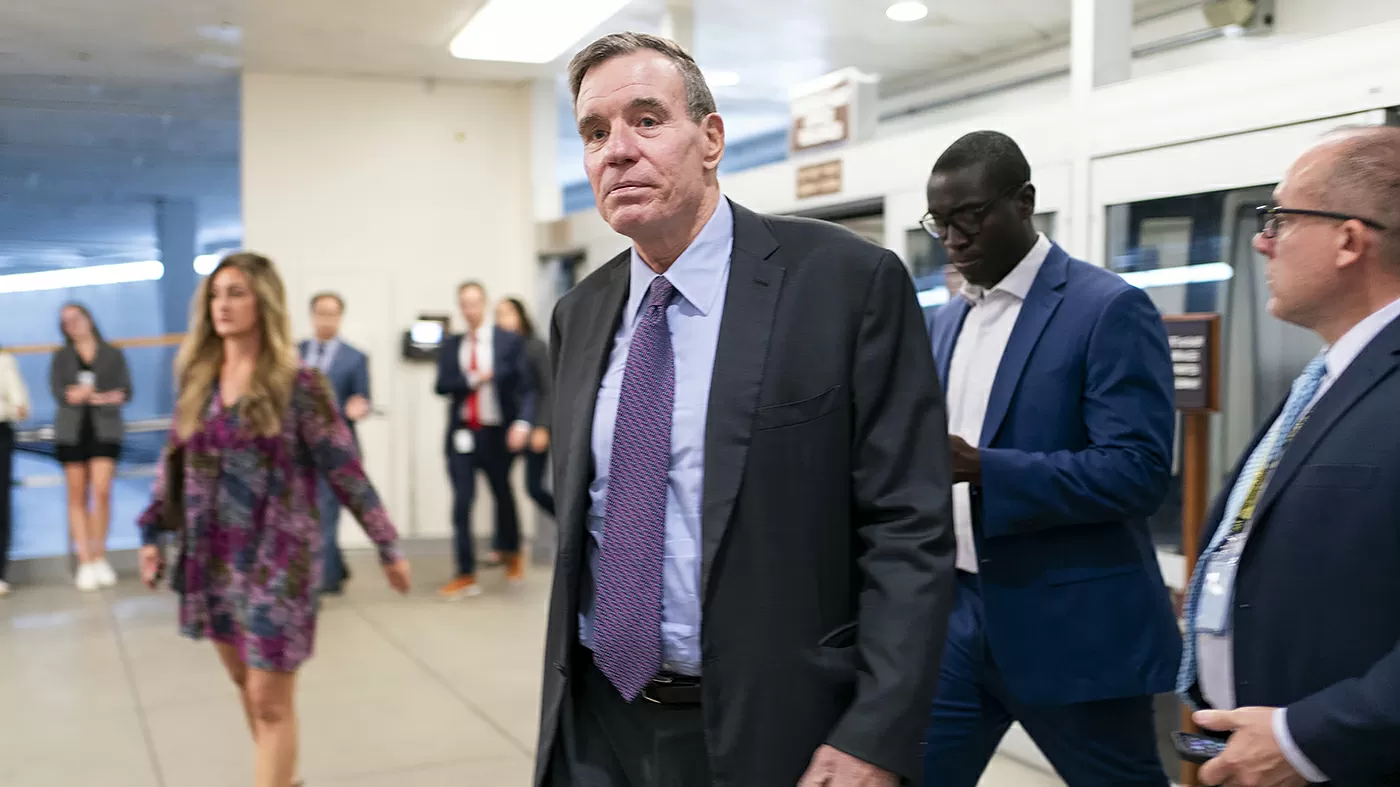
Senator Mark Warner (D-Va.) has expressed confusion over President Trump’s recent announcement of a potential blockade in the Strait of Hormuz. In an interview on Sunday, Senator Warner questioned the logic behind such a move and highlighted the potential consequences for the global economy.
The Strait of Hormuz, located between Iran and Oman, is a crucial waterway for the transportation of oil and natural gas. Roughly one-fifth of the world’s oil supply passes through this narrow stretch of water, making it a vital route for the global energy market. Any disruption to the flow of oil through the strait can have significant impacts on the price of oil and ultimately, the cost of gasoline for consumers.
Despite this, President Trump has proposed a blockade of ships entering the strait, citing ongoing tensions with Iran as the reason behind this decision. However, Senator Warner rightly points out that such a move would have serious consequences for not only the global economy but also for the American people.
Firstly, a blockade in the Strait of Hormuz would undoubtedly lead to a surge in oil prices. This would result in a significant increase in the cost of gasoline for American consumers, who are already struggling with the high gas prices. Senator Warner notes that the average price of gasoline in the United States is currently at $4 a gallon, which is a burden for many families. A blockade would only exacerbate this issue and put further strain on American households.
Moreover, a blockade would also have a ripple effect on the global economy. As mentioned earlier, the Strait of Hormuz is a vital route for the transportation of oil and natural gas, not only for the United States but for many other countries as well. Any disruption to this flow of energy would have a domino effect on the global market, leading to instability and potentially causing a recession.
Senator Warner also raises concerns about the impact of a blockade on the United States’ relationship with its allies. Many countries, including Japan and South Korea, rely heavily on the oil passing through the Strait of Hormuz. A blockade would not only harm their economies but also jeopardize their trust in the United States as a reliable partner. This could have severe consequences for the country’s diplomatic and trade relations.
In light of these potential consequences, Senator Warner’s confusion over the logic behind the proposed blockade is understandable. It is crucial for the United States to carefully consider the ramifications of such a move before taking any action.
Furthermore, Senator Warner also highlights the need for a diplomatic solution to the ongoing tensions with Iran. A blockade would only escalate the situation and could potentially lead to a military conflict. Instead, the United States should focus on finding a peaceful resolution and engaging in dialogue with Iran.
In conclusion, Senator Mark Warner’s concerns about President Trump’s proposed blockade in the Strait of Hormuz are valid and should not be dismissed. The potential consequences of such a move, including higher gas prices, economic instability, and strained relationships with allies, are too significant to ignore. It is essential for the United States to carefully consider all options and prioritize finding a diplomatic solution to the current tensions with Iran. As Senator Warner rightly points out, the American people and the global economy cannot afford the repercussions of a blockade in the Strait of Hormuz.
