
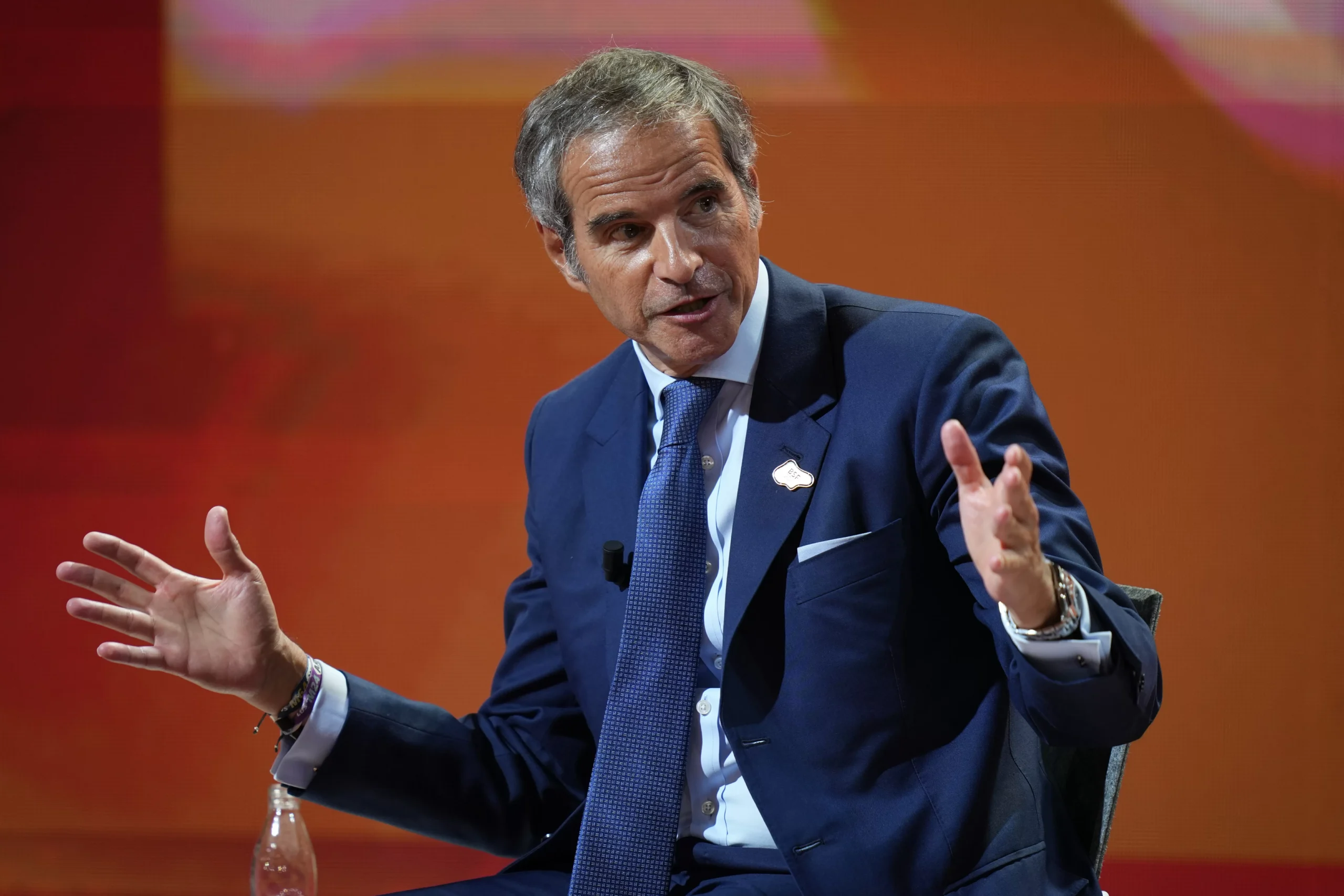
The International Atomic Energy Agency (IAEA) continues to play a crucial role in ensuring the safe and secure use of nuclear energy. On Wednesday, the IAEA Director General Rafael Grossi emphasized the need for a clear, comprehensive agreement with Iran that includes a solid method for monitoring its nuclear development. Speaking to reporters, Grossi stated that an agreement without a proper assessment process would only create an “illusion” of progress.
The IAEA’s mandate is to promote the peaceful use of nuclear energy and prevent the proliferation of nuclear weapons. As part of its mission, the agency conducts regular inspections of nuclear facilities to ensure that states are adhering to their non-proliferation commitments. For years, the IAEA has been working closely with Iran to monitor its nuclear program and validate its compliance with the Joint Comprehensive Plan of Action (JCPOA).
However, since the US withdrawal from the JCPOA in 2018, there have been growing concerns over Iran’s nuclear activities. The country has gradually reduced its commitments to the deal in response to the economic sanctions imposed by the US. Recently, Iran has announced plans to increase its uranium enrichment levels, prompting the IAEA to raise alarms about the country’s nuclear ambitions.
In light of these developments, Grossi’s remarks on the importance of a solid assessment process in any agreement with Iran are not only timely but also crucial. The IAEA Director General stressed that Iran’s wide nuclear program requires continuous monitoring by the agency’s inspectors. Without a clear method for assessment, it would be impossible to verify the scope and scale of Iran’s nuclear activities, which could pose a threat to regional and international security.
Furthermore, Grossi’s statement also addresses the concerns of some countries that have been calling for a “new deal” with Iran. While the IAEA supports diplomatic efforts to find a solution to the ongoing tensions, it is essential to remember that any agreement must include a robust mechanism for evaluating Iran’s nuclear development. Simply put, without proper monitoring, there can be no guarantee that Iran is not pursuing nuclear weapons.
The IAEA’s stance on this matter is also in line with the international community’s consensus on the Iran nuclear deal. In a recent joint statement, France, Germany, and the United Kingdom reaffirmed their commitment to the JCPOA and called on Iran to return to full compliance. They also emphasized the need for a comprehensive and sustainable solution that addresses all issues, including Iran’s nuclear program.
It is worth noting that the IAEA has a proven track record of conducting thorough assessments of countries’ nuclear activities, including Iran. In its reports, the agency provides an objective and unbiased account of the state of nuclear affairs in a particular country, which serves as a crucial reference for the international community. Therefore, it is crucial to ensure that the IAEA has all the necessary tools and authority to carry out its duties effectively.
In conclusion, the remarks made by IAEA Director General Rafael Grossi highlight the agency’s unwavering commitment to promoting the safe and peaceful use of nuclear energy. His call for a clear method for assessing Iran’s nuclear development is a reminder of the IAEA’s crucial role in verifying states’ compliance with their commitments. As the international community continues to seek a solution to the ongoing tensions, it is essential to remember that any agreement with Iran must include a robust mechanism for monitoring its nuclear activities, and the IAEA stands ready to fulfill its role in this regard.
