
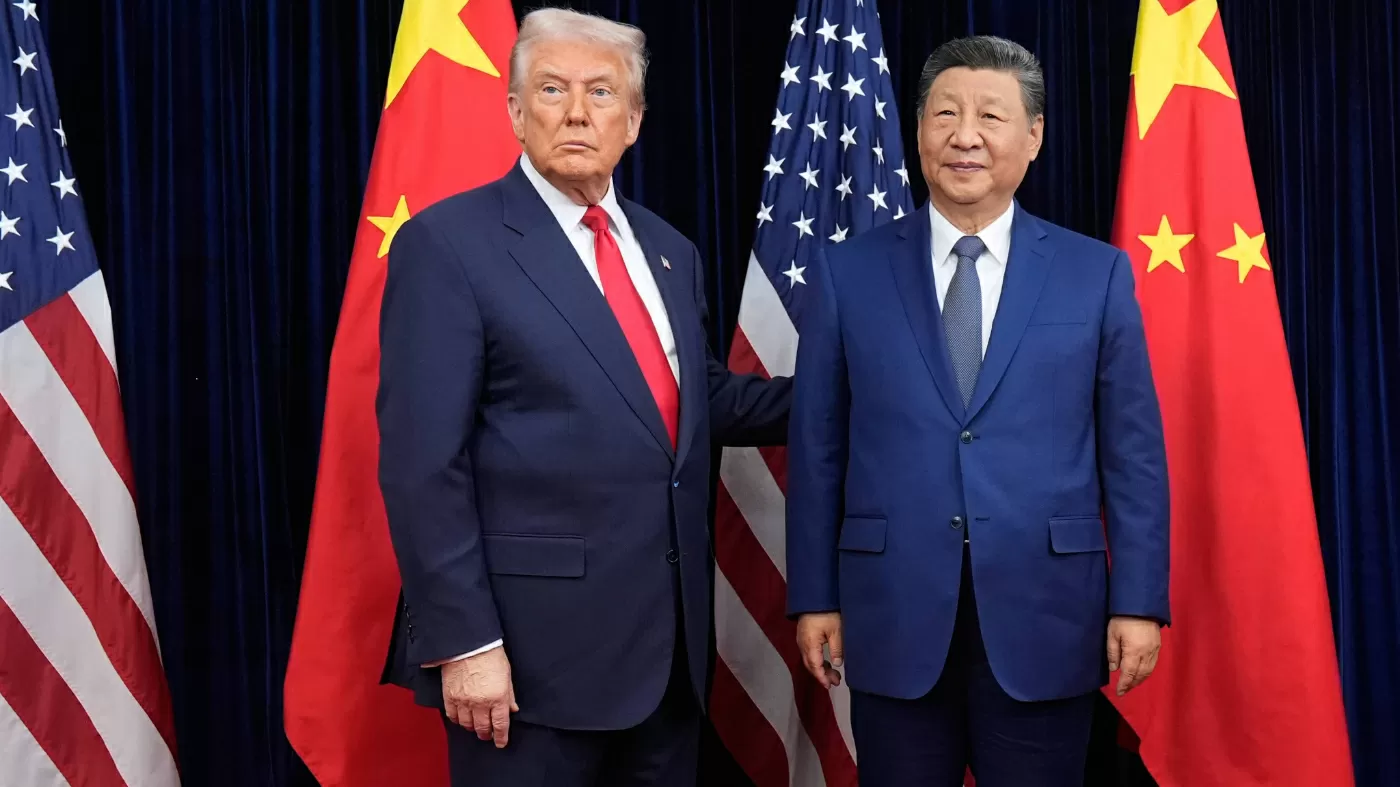
President Trump has once again made headlines with his bold statement on Wednesday, declaring that he is “permanently” opening Iran’s Strait of Hormuz. According to the President, this move has been welcomed by China, who has agreed to stop sending weapons to Tehran in exchange. However, this announcement has raised several questions about the implications and consequences of this decision.
The Strait of Hormuz, located between Iran and Oman, is a vital waterway for global oil transportation. It is estimated that nearly one-fifth of the world’s oil supply passes through this narrow channel. Therefore, any disruption or closure of the strait can have a significant impact on the global economy. In recent months, tensions have been rising in the region, with Iran threatening to close the strait in response to the US sanctions on its oil exports.
President Trump’s statement has come as a surprise to many, as it goes against his administration’s hardline stance on Iran. The US has been pressuring its allies to join them in imposing sanctions on Iran, in an effort to force the country to abandon its nuclear program. However, with this sudden change in stance, it is unclear what the President’s true intentions are.
The President’s claim that China is “happy” about the decision raises further questions. China has been one of the biggest buyers of Iranian oil, and it is unlikely that they would be pleased with the prospect of losing a major supplier. It is also unclear what China’s role would be in this “permanent” opening of the strait. Will they be involved in the management and security of the waterway? Or is this simply a political move to appease China and gain their support in the ongoing trade war with the US?
Moreover, the President’s statement leaves the definition of “opening” the strait open to interpretation. Does it mean that the US will take control of the strait and ensure its safe passage? Or will it be a joint effort with other countries? And most importantly, what will be the impact on Iran’s sovereignty and its relationship with other countries in the region?
The President’s decision has also raised concerns about the potential consequences of this move. Iran has previously threatened to block the strait in response to the US sanctions, and it is unclear how they will react to this announcement. Will they see it as a sign of aggression and retaliate? Or will they view it as a positive step towards easing tensions in the region?
Furthermore, the President’s statement has not been met with a positive response from all quarters. Some experts have raised concerns about the legality of this decision, as the Strait of Hormuz is an international waterway that cannot be controlled by any one country. Others have questioned the timing of this announcement, as it comes at a time when tensions between the US and Iran are at an all-time high.
In conclusion, President Trump’s statement on opening the Strait of Hormuz has raised more questions than it has answered. While it may seem like a positive step towards easing tensions in the region, the lack of clarity and potential consequences of this decision cannot be ignored. It is essential that the US administration provides more details and clarifies their intentions to avoid any further escalation in the already volatile situation. The world will be watching closely as events unfold in the coming days.
