
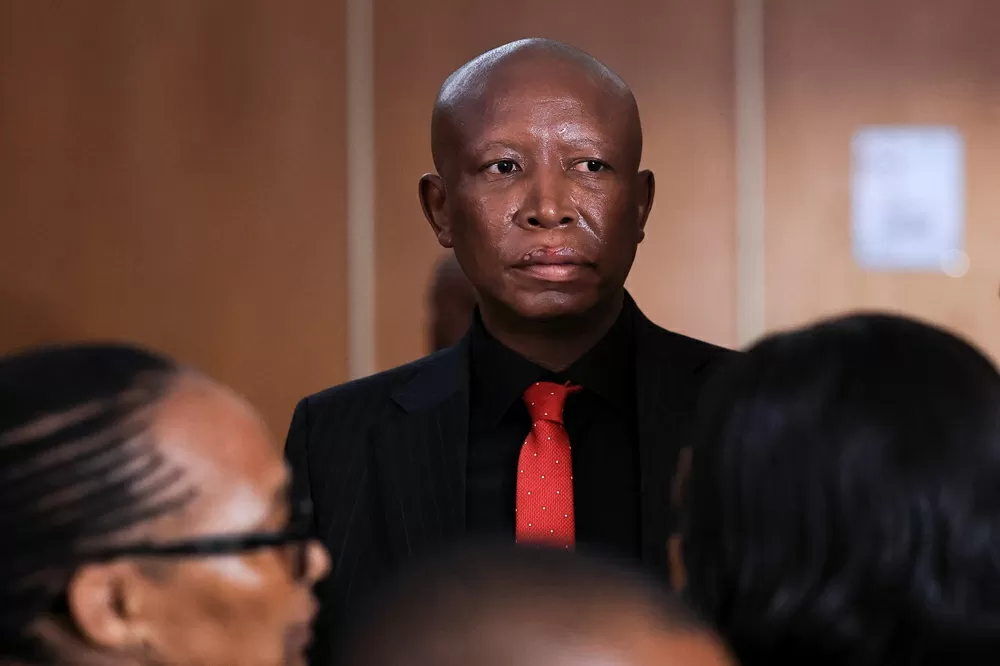
South African politician Julius Malema has been convicted for discharging a firearm in public. The controversial leader of the Economic Freedom Fighters (EFF) party was found guilty by the court for his actions during a rally in 2018. This verdict has sparked a lot of debate and discussion among the public, with some condemning Malema’s actions and others showing support for him. However, as a society, it is important for us to look beyond the headlines and understand the implications of this conviction.
Malema, known for his fiery speeches and strong stance against corruption and inequality, has been a polarizing figure in South African politics. He has been a vocal critic of the ruling African National Congress (ANC) and has often been at the forefront of challenging the status quo. However, his recent conviction has raised questions about his leadership and the impact it may have on the future of the EFF.
The incident in question took place during a rally in the Eastern Cape province in 2018. Malema was seen firing what appeared to be an assault rifle into the air, while addressing a crowd of supporters. This act was met with widespread criticism and condemnation, with many calling it reckless and dangerous. Malema, on the other hand, defended his actions as a symbolic gesture to show that the EFF was ready to fight for the rights of the people.
After a lengthy legal battle, Malema was found guilty of contravening the Firearms Control Act. The court ruled that his actions were not in line with the law and posed a threat to public safety. While some may argue that this conviction is a blow to Malema’s political career, it is important to remember that no one is above the law. As a leader, Malema has a responsibility to uphold the law and set a good example for the citizens of South Africa.
This conviction also serves as a reminder that violence and aggression have no place in our society. In a country that has a history of political violence, it is crucial for leaders to promote peace and unity rather than inciting violence. Malema’s actions were not only illegal but also set a dangerous precedent for future political rallies. It is important for leaders to use their words and actions wisely, as they have a significant influence on the public.
However, this conviction should not overshadow the positive impact that Malema has had on South African politics. He has been a strong advocate for the rights of the marginalized and has brought important issues to the forefront of national discourse. His fearless approach to challenging the government has forced them to address issues such as corruption and economic inequality. Malema’s conviction should not be seen as a reflection of his entire political career, but rather as a lesson for all leaders to act responsibly and within the boundaries of the law.
Moreover, Malema’s conviction should not be used as a tool to discredit the EFF as a political party. The EFF has been a strong voice for the people and has brought much-needed attention to issues that have been ignored by the government. The party’s commitment to fighting for economic freedom and social justice remains unchanged, and this conviction should not deter them from their mission.
In fact, this conviction could be a turning point for Malema and the EFF. It is an opportunity for them to reflect on their actions and approach to politics. As a leader, Malema has a responsibility to lead by example and promote peace and unity. This conviction could be a chance for him to show that he is willing to learn from his mistakes and become a better leader for the people.
In conclusion, Malema’s conviction for discharging a firearm in public is a reminder that no one is above the law. While it may have sparked controversy and debate, it is important for us to look beyond the headlines and understand the implications of this verdict. As a society, we must promote responsible and peaceful leadership, and hold our leaders accountable for their actions. Malema’s conviction should not overshadow the positive impact he has had on South African politics, but rather serve as a lesson for all leaders to act within the boundaries of the law. Let us use this as an opportunity to move forward and build a better, more just society for all.
