
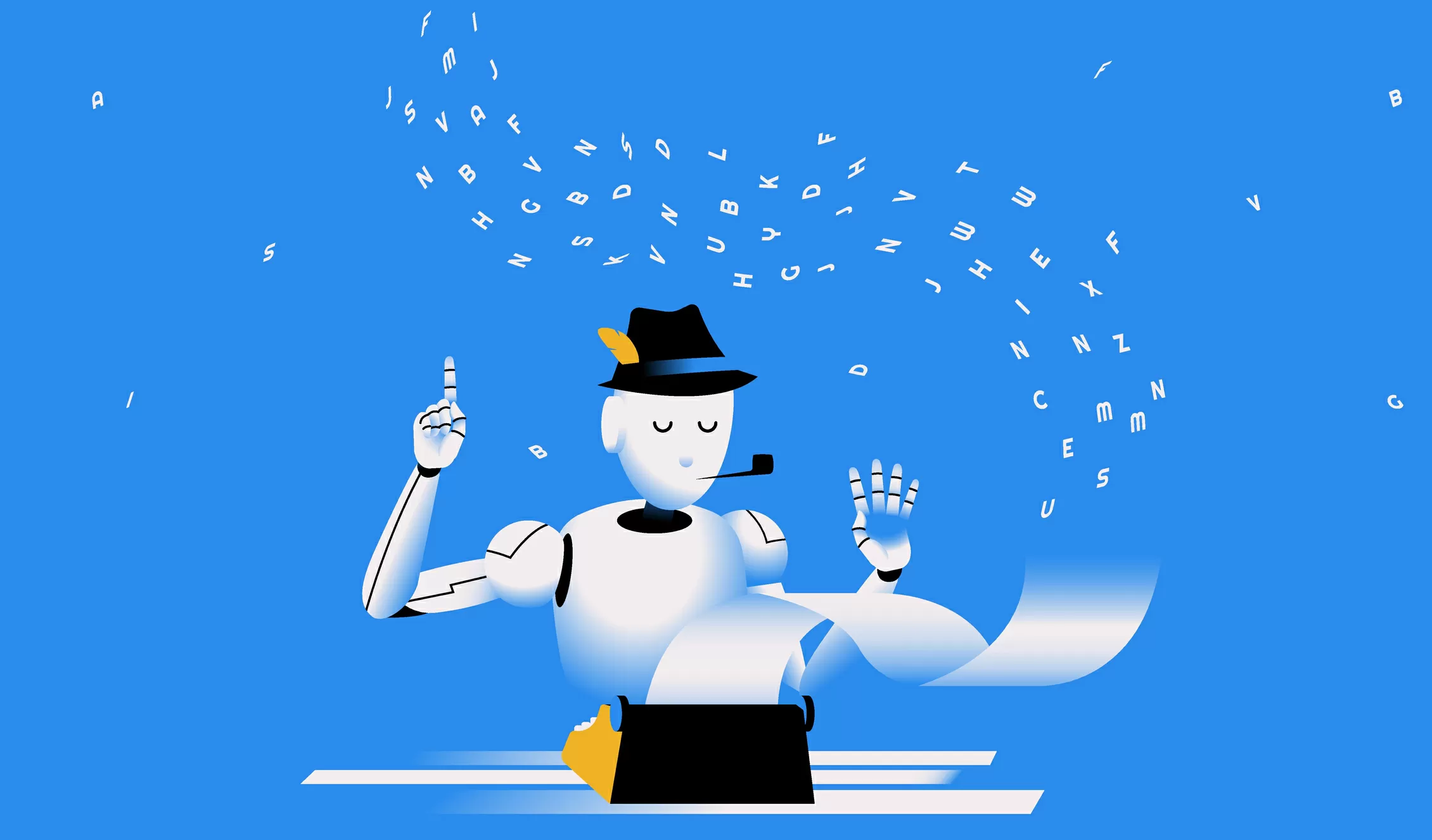
In recent years, we have seen a significant rise in the use of artificial intelligence (AI) in various industries. From self-driving cars to virtual assistants, AI has become an integral part of our daily lives. But one area where AI has made a particularly noticeable impact is in writing.
With the help of AI, we can now generate content at an unprecedented speed and scale. However, this has also led to a rise in the use of AI-generated writing in various forms, such as news articles, product descriptions, and even novels. And with this rise, a particular sentence construction has become increasingly common – “It’s not just this – it’s that.”
At first glance, this sentence may seem like a simple expression of contrast. But upon closer inspection, it reveals a lot about the nature of AI-generated writing. In fact, this sentence construction has become so prevalent that it is now considered a tell-tale sign of synthetic writing. It has become almost a guarantee that the piece of writing is not written by a human but by a machine.
But how did this sentence construction become so ubiquitous in AI-generated writing? And what does it say about the current state of AI technology?
To understand this, we must first look at how AI-generated writing works. AI writing programs use algorithms and machine learning to analyze vast amounts of data and generate text based on that data. These programs are trained on a wide range of writing styles and patterns, including sentence structures, vocabulary, and tone.
However, despite the advancements in AI technology, these programs still struggle to create coherent and natural-sounding sentences. As a result, they often rely on a limited set of sentence constructions, including the infamous “It’s not just this – it’s that.” This sentence structure allows the AI to present two contrasting ideas without having to worry about creating a complex sentence.
Moreover, this sentence construction also serves as a way for AI to mimic human writing. In human writing, we often use similar sentence structures to emphasize a point or to add a dramatic effect. By using this construction, AI-generated writing attempts to imitate human writing and make the text more engaging.
But the overuse of this sentence construction has become a clear indicator of AI-generated writing. It has become so prevalent that it is now used as a tool to identify and filter out AI-generated content. This is especially true in the field of journalism, where authenticity and credibility are crucial.
Furthermore, the use of this sentence construction has also sparked debates about the quality and originality of AI-generated writing. Critics argue that the reliance on a limited set of sentence structures shows the lack of creativity and originality in AI-generated content. They also question the authenticity of the writing, as it is not a product of human thought and emotion.
However, proponents of AI-generated writing argue that this sentence construction is just a small part of a larger picture. They argue that AI technology is continuously evolving, and with advancements in natural language processing and deep learning, we can expect to see more diverse and natural-sounding sentence constructions in the future.
Moreover, they also highlight the benefits of AI-generated writing, such as the ability to produce large volumes of content in a short amount of time and the potential to reduce human error and bias in writing.
In conclusion, the sentence construction “It’s not just this – it’s that” has become a symbol of the rise of AI-generated writing. It serves as a clue that a piece of writing may not be written by a human, but it also highlights the current limitations of AI technology in creating natural and diverse sentence structures. However, with continuous advancements in AI, we can expect to see more sophisticated and human-like writing in the future. And who knows, maybe one day, AI-generated writing will be indistinguishable from human writing.
