
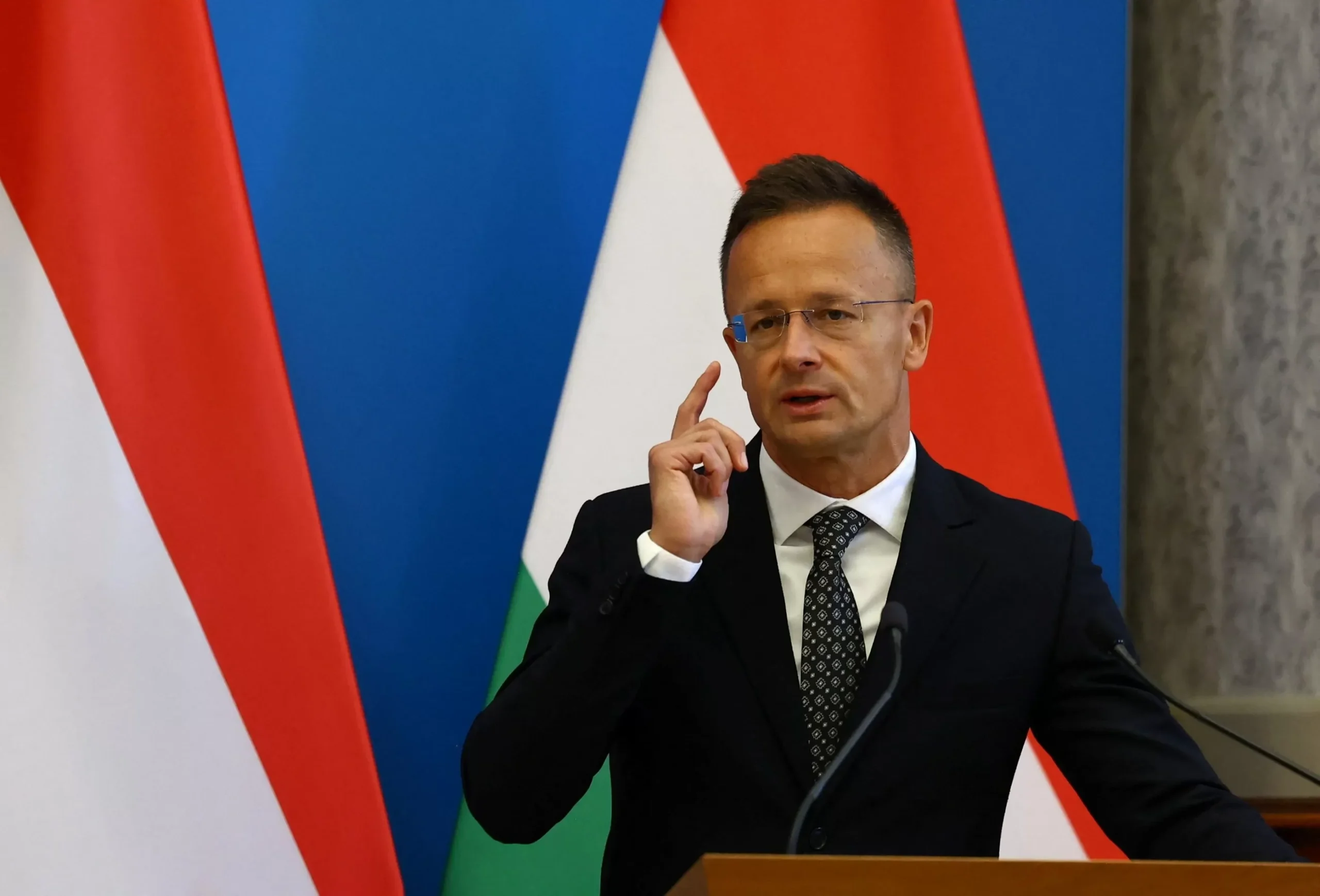
Hungary’s Foreign Minister Warns Against Ukraine’s EU Membership: A Risky Move for the Bloc
In a recent statement, Hungary’s Foreign Minister Péter Szijjártó warned against the potential risks of granting Ukraine membership into the European Union. According to Szijjártó, this move could have “unacceptable risks” for the bloc, including the possibility of being pulled closer to war-torn regions and facing economic instability.
The warning comes as Ukraine has been actively seeking closer ties with the EU, with hopes of eventually becoming a member state. However, Hungary’s concerns highlight the complex political and economic landscape of the region, and the potential consequences of such a decision.
One of the main concerns raised by Szijjártó is the ongoing conflict in eastern Ukraine. The region has been embroiled in a protracted conflict since 2014, with Russia-backed separatists fighting against Ukrainian government forces. The conflict has resulted in thousands of deaths and has caused a deep divide between Ukraine and its neighbor, Russia.
Granting Ukraine EU membership could potentially escalate the conflict, as it would bring the bloc closer to the war-torn region. This could also have a ripple effect on the EU’s relationship with Russia, which has been strained in recent years. As a result, the EU could find itself in a precarious position, caught in the middle of a tense geopolitical situation.
Moreover, Hungary’s foreign minister also highlighted the economic risks of Ukraine’s potential membership. Currently, the EU has a free trade agreement with Ukraine, which has been beneficial for both parties. However, with full membership, Ukraine’s struggling economy could become a burden for the EU. This could lead to economic instability within the bloc, which is already facing challenges due to the ongoing COVID-19 pandemic.
Szijjártó also expressed concerns about the potential influx of Ukrainian migrants into the EU. With full membership, Ukrainians would have the right to live and work in any EU member state. This could lead to a surge in migration, which could have a significant impact on the labor market and social services of EU countries.
Hungary’s concerns are not unfounded, and they highlight the need for careful consideration before granting membership to any country. The EU must take into account the potential risks and consequences of such a decision, and ensure that the bloc’s stability and security are not compromised.
However, it is essential to note that Hungary’s warning should not be seen as a rejection of Ukraine’s aspirations to join the EU. In fact, Szijjártó emphasized that Hungary supports Ukraine’s European integration efforts and is committed to helping the country on its path towards EU membership.
Instead, Hungary’s concerns should be seen as a call for a more cautious and strategic approach towards Ukraine’s potential membership. The EU must work closely with Ukraine to address the ongoing conflict and support the country’s economic and social development. This will not only benefit Ukraine but also strengthen the EU’s relationship with its eastern neighbor.
In conclusion, Hungary’s foreign minister has raised valid concerns about the potential risks of granting Ukraine EU membership. The EU must carefully consider these concerns and work towards finding solutions that will benefit both the bloc and Ukraine. With a strategic and cautious approach, the EU can ensure that Ukraine’s integration into the bloc is a success, bringing stability and prosperity to both parties.
