
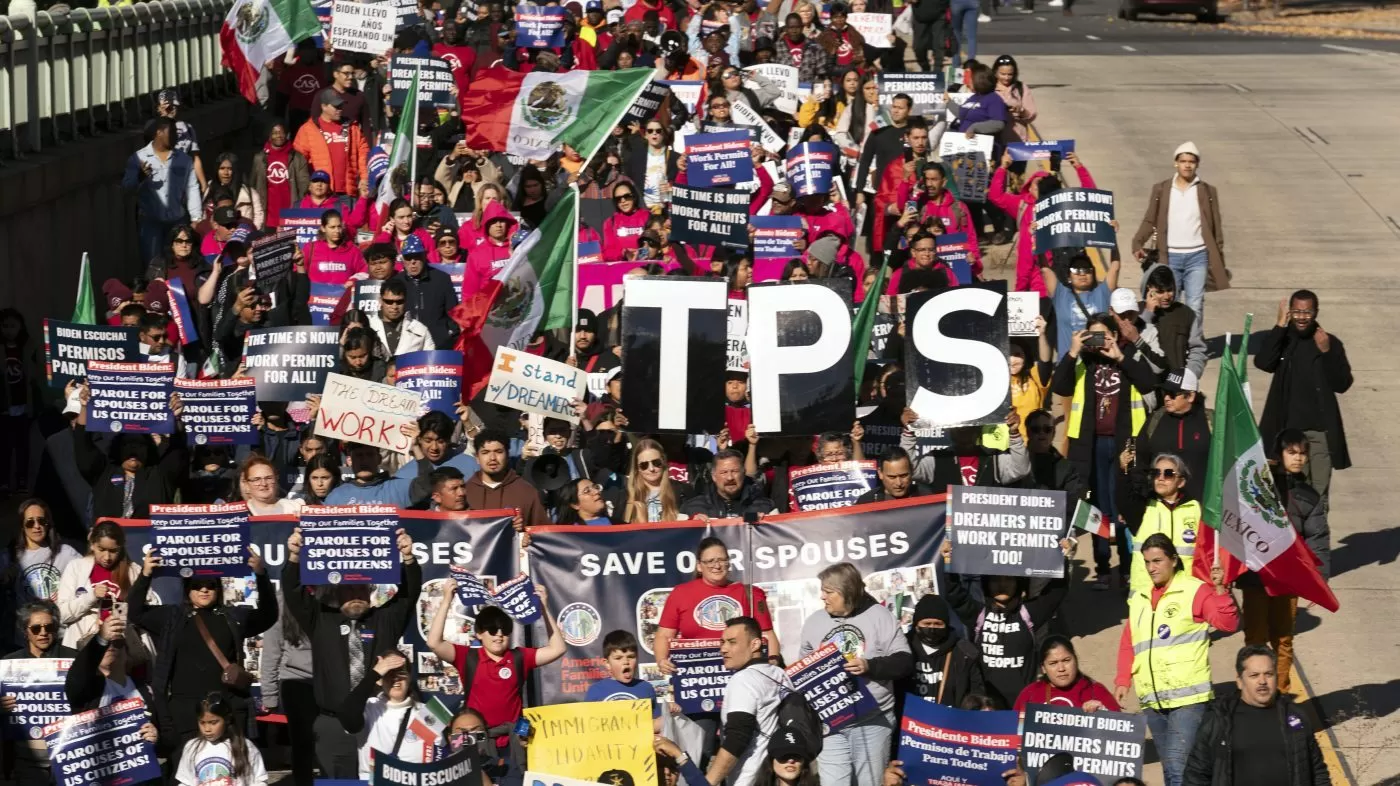
In a major victory for the Haitian community in the United States, a federal judge has blocked the Trump administration’s attempt to revoke temporary protected status (TPS) for hundreds of thousands of Haitians. District Judge Ana Reyes issued a stay on Homeland Security Secretary Kristi Noem’s order to end TPS for Haitians, which was set to go into effect on Tuesday. This decision has brought a sense of relief and hope to the Haitian community, who have been living in uncertainty and fear since the announcement of the revocation.
TPS is a humanitarian program that allows immigrants from certain countries to live and work in the United States temporarily if their home countries are facing political turmoil, natural disasters, or other extraordinary and temporary conditions. Haiti was granted TPS after a devastating earthquake in 2010, and the program has been renewed several times since then. However, the Trump administration announced in 2017 that it would be ending TPS for Haitians, giving them until July 2019 to leave the country or face deportation.
This decision was met with widespread criticism and protests from the Haitian community and immigration advocates. They argued that Haiti is still struggling to recover from the earthquake and is facing additional challenges such as political instability and a recent outbreak of violence. Ending TPS for Haitians would mean sending them back to a country that is not equipped to handle their return and would put their lives in danger.
In her ruling, Judge Reyes acknowledged these concerns and stated that the government’s decision to end TPS for Haitians was based on “racially discriminatory attitudes” and violated the Administrative Procedure Act. She also noted that the government failed to consider the impact of the revocation on the Haitian community and their families in the United States. The judge’s decision to block the revocation of TPS for Haitians is a strong message to the Trump administration that their actions must be based on facts and not discriminatory attitudes.
This ruling has brought a sense of relief and hope to the Haitian community, who have been living in uncertainty and fear for the past two years. Many Haitians have been living in the United States for decades, contributing to their communities and the economy. They have built their lives here and have deep roots in their communities. Ending TPS would mean uprooting them from their homes and separating them from their families.
The decision to block the revocation of TPS for Haitians is a reminder that the United States is a country built on the values of compassion and humanity. It is a country that welcomes immigrants and provides them with opportunities to build a better life for themselves and their families. The Haitian community in the United States has been an integral part of the fabric of this country, and they deserve to be treated with dignity and respect.
This ruling also highlights the importance of the judicial system in upholding the rights of immigrants and protecting them from unjust and discriminatory policies. It is a testament to the power of the people and their voices in advocating for their rights and the rights of their communities. The Haitian community and their allies have shown that when they come together and stand up for what is right, they can bring about positive change.
While this ruling is a significant victory, the fight is not over yet. The Trump administration may appeal the decision, and the fate of TPS for Haitians still hangs in the balance. It is crucial for the government to recognize the contributions of the Haitian community and the need for TPS to be extended until Haiti is in a position to welcome its citizens back. It is also essential for Congress to pass legislation that would provide a pathway to citizenship for TPS recipients, including Haitians.
In the meantime, the Haitian community can take a moment to celebrate this victory and continue to advocate for their rights. This ruling is a reminder that their voices matter, and they have the power to bring about change. Let us hope that this decision will pave the way for a more just and compassionate immigration system in the United States.
