
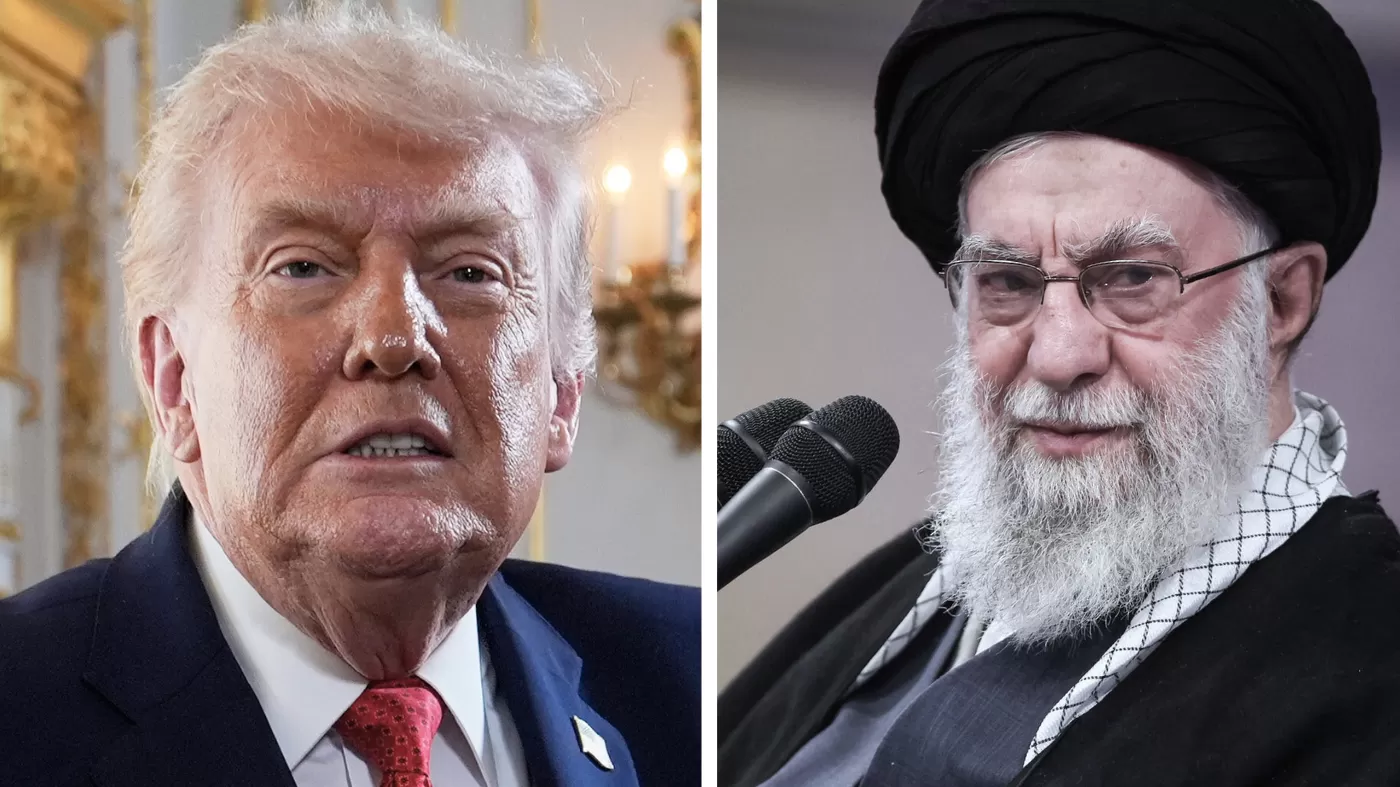
Iran’s Supreme Leader Faces Critical Decision on Nuclear Program Amidst Rising Tensions with US and Israel
Iran’s supreme leader, Ayatollah Ali Khamenei, is facing one of the most crucial decisions of his more than 30 years in power this week. With the clock ticking and tensions escalating, the fate of Iran’s nuclear program hangs in the balance.
The stage is set for a high-stakes standoff between the Islamic Republic and its long-time adversary, the United States. President Trump has made it clear that he wants a new deal with Iran, one that would severely limit the country’s nuclear capabilities. This, he believes, is necessary to ensure regional stability and prevent the regime from obtaining nuclear weapons.
But for Iran, the situation is far more complex. The country is facing mounting pressure from the US, Israel, and other Western powers, who see its nuclear program as a major threat to their interests. At the same time, Iran’s economy is suffering under the weight of harsh sanctions imposed by the US, aimed at crippling its oil exports and cutting off its main source of revenue.
In the midst of all this, Ayatollah Khamenei must make a decision that could shape the future of his country and its relationship with the rest of the world. On one hand, he could choose to strike a deal with President Trump, which could potentially ease the economic burden and open the door for a better relationship with the West. On the other hand, he could reject any deal and continue to pursue the development of nuclear weapons, risking an all-out war with the US and Israel.
For the supreme leader, this is not a simple case of weighing the pros and cons. His decision will also be influenced by a number of other factors, including the deeply entrenched animosity towards the US and Israel, which have been a feature of Iranian politics since the 1979 revolution.
Moreover, Ayatollah Khamenei must also consider the opinions of hardline factions within the Iranian establishment who remain fiercely opposed to any concessions to the US. These hardliners, who have significant influence over the country’s foreign policy, have often characterized any negotiations with the US as a sign of weakness and betrayal towards the ideals of the Islamic Revolution.
In his over three-decade rule, Ayatollah Khamenei has shown a remarkable ability to navigate through challenging situations and maintain a united front against external threats. Now, with the fate of the nuclear program at stake, he must once again demonstrate his skill in managing these competing interests and finding a path forward that will benefit Iran and its people.
It is worth noting that this is not the first time Iran has been at a crossroads when it comes to its nuclear program. In 2015, under the leadership of then-President Hassan Rouhani, Iran signed the Joint Comprehensive Plan of Action (JCPOA) with the US, China, Russia, France, Germany, and the UK. The deal, also known as the Iran nuclear deal, restricted Iran’s nuclear activities in exchange for the lifting of economic sanctions.
The JCPOA was seen as a major diplomatic victory for Iran and was hailed as a sign of its willingness to engage with the international community. However, President Trump withdrew from the deal in 2018, arguing that it was a “horrible, one-sided deal” and pushed for a new, stricter deal with Iran.
Since then, tensions between the two countries have only escalated. The recent assassination of Iran’s top military commander, General Qasem Soleimani, by the US has further heightened tensions and brought the two countries to the brink of war.
Therefore, the decision facing Ayatollah Khamenei is of even greater significance now. If he chooses to reject any deal with the US, it could lead to a further deterioration of relations and potentially a military confrontation. However, a deal that satisfies the US but is perceived as betraying Iran’s interests could also lead to unrest within the country.
As the deadline for this decision approaches, the world is watching with bated breath. The implications of Ayatollah Khamenei’s decision will be far-reaching, not just for Iran, but for the entire region and the international community.
In the face of such monumental pressure, Ayatollah Khamenei must weigh all the factors carefully and make a decision that is in the best interest of Iran and its people. Whatever the outcome may be, one thing is certain
