
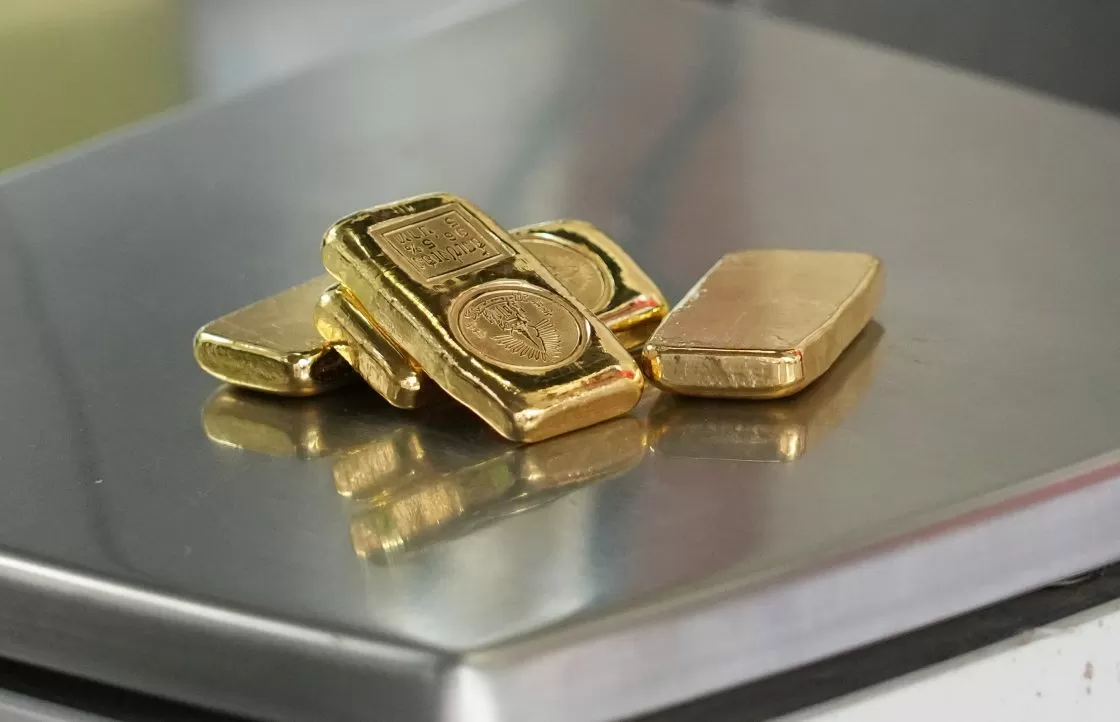
The recent tensions between the United States and Iran have caused a ripple effect across global markets. As the two nations engage in a war of words and threats, investors are left wondering how this conflict will impact their portfolios. In times of uncertainty, many turn to gold as a safe haven, but surprisingly, the precious metal has not been shining so brightly in the midst of this crisis.
Gold has long been considered a safe haven during times of crisis. Its value is not tied to any specific country or currency, making it a reliable hedge against economic and political turmoil. In the past, gold prices have surged during times of conflict, such as the 2008 financial crisis and the 2016 Brexit vote. However, the current Iran conflict has not had the same effect on gold prices.
Despite the escalating tensions between the US and Iran, gold prices have remained relatively stable. In fact, in the first week of January, gold prices actually fell by 1.5%. This has left many investors scratching their heads and wondering why gold, the traditional safe haven, is not living up to its reputation.
One possible explanation for this phenomenon is the strong US dollar. As tensions between the two nations escalated, the US dollar strengthened against other currencies. This makes gold, which is priced in US dollars, more expensive for investors in other countries. As a result, demand for gold may have decreased, causing prices to remain stagnant.
Another factor that may be contributing to the lackluster performance of gold is the current state of the global economy. Despite the ongoing trade war between the US and China, the global economy has been relatively stable. This has reduced the need for investors to seek out safe haven assets like gold. In addition, the stock market has been performing well, which has also reduced the appeal of gold as a safe haven.
Furthermore, the recent US-Iran conflict has not yet reached a full-blown military confrontation. While tensions remain high, there has been no significant escalation that would cause widespread panic and drive investors towards safe haven assets. As a result, gold prices have not seen a significant increase.
However, this does not mean that gold has lost its luster as a safe haven asset. In fact, many experts believe that the current situation is only a temporary blip and that gold prices will eventually rise as the conflict between the US and Iran continues to unfold. As the saying goes, “buy the rumor, sell the fact”. Once the initial shock of the conflict wears off, investors may turn to gold as a safe haven, driving up prices.
Moreover, there are other factors at play that could potentially boost gold prices in the long run. The US-China trade war is still ongoing, and there are concerns about a global economic slowdown. In addition, central banks around the world have been buying up gold, which could also push prices higher.
In conclusion, while gold may not be shining as brightly as expected in the current Iran conflict, it is still a valuable asset for investors to consider. The lackluster performance of gold can be attributed to a combination of factors, including a strong US dollar, a stable global economy, and the absence of a full-blown military confrontation. However, as the conflict continues to roil global markets, gold may eventually prove to be a safe haven once again. As always, it is important for investors to diversify their portfolios and not rely solely on one asset, even if it is considered a safe haven.
