
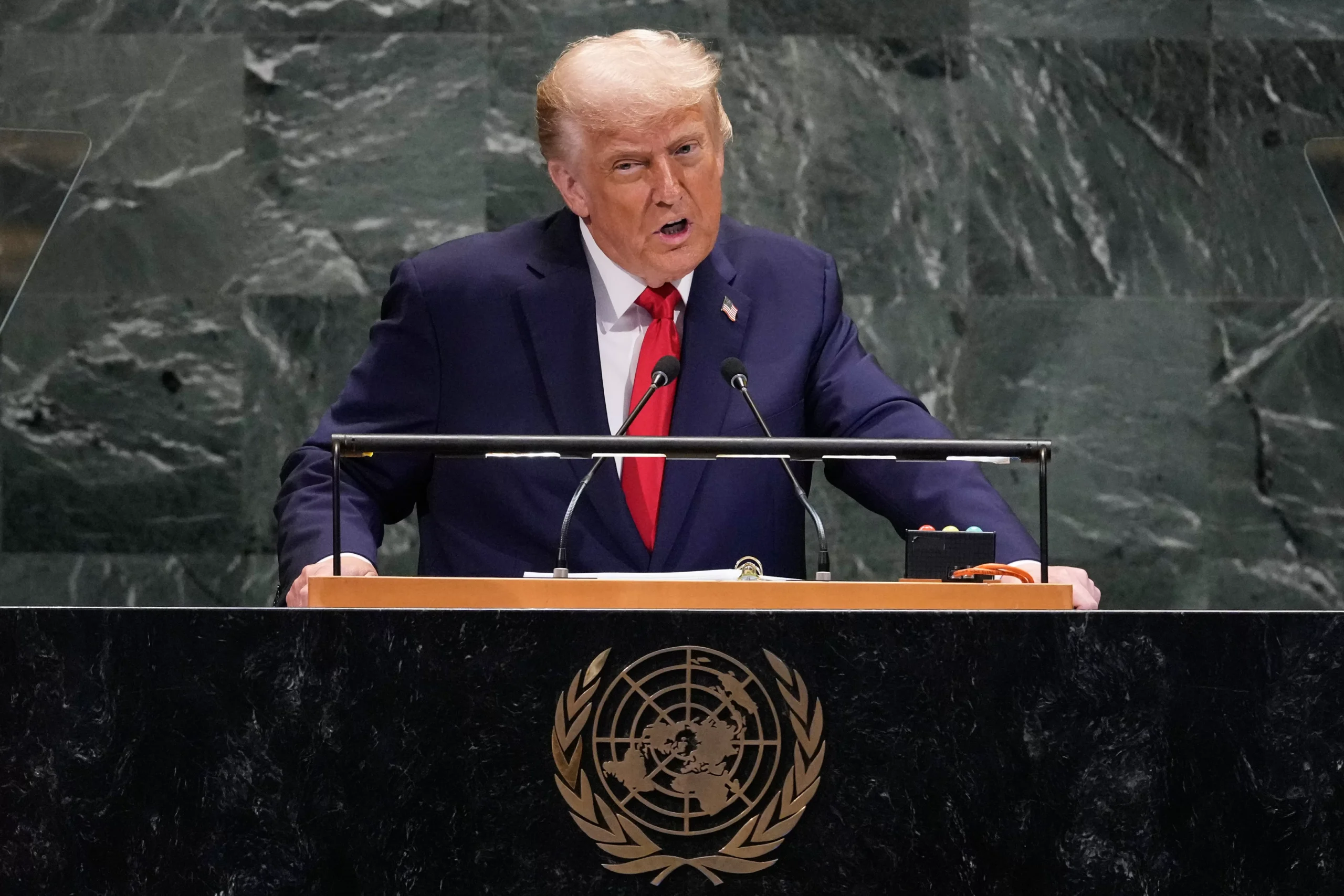
A United Nations panel has recently issued a decision condemning hate speech from President Trump and raising concerns with his administration’s immigration policies. The U.N. Committee on the Elimination of Racial Discrimination has warned that the combination of hate speech from political leaders, including Trump, and intensified immigration crackdowns near schools, hospitals, and faith-based institutions has sparked “grave human rights violations.”
The decision, issued on Wednesday, highlights the growing concern over the impact of hate speech and discriminatory policies on vulnerable communities. The U.N. panel has expressed deep concern over the rise in hate crimes and discrimination against immigrants, refugees, and people of color in the United States.
The panel’s decision comes at a time when the world is witnessing a rise in xenophobia, racism, and intolerance. The U.N. has repeatedly stressed the need for political leaders to promote unity and respect for diversity, rather than fueling hatred and division.
The U.N. Committee on the Elimination of Racial Discrimination has called on the U.S. government to take immediate action to address the alarming situation. The panel has urged the government to condemn and take measures to prevent hate speech and hate crimes, as well as to review and revise its immigration policies to ensure they are in line with international human rights standards.
The U.N. panel’s decision has also highlighted the impact of intensified immigration crackdowns near schools, hospitals, and faith-based institutions. These policies not only violate the rights of immigrants and refugees but also have a detrimental effect on the communities they live in. The fear and uncertainty caused by these policies have a negative impact on the mental and physical well-being of individuals and families.
The U.N. Committee on the Elimination of Racial Discrimination has emphasized the need for governments to uphold the principle of non-discrimination and to ensure that all individuals, regardless of their race, ethnicity, or immigration status, have access to education, healthcare, and other essential services.
The decision has also raised concerns about the impact of these policies on children. The U.N. panel has stressed that children should not be subjected to discrimination or fear of deportation, and their best interests should be a primary consideration in all immigration policies.
The U.N. panel’s decision has been welcomed by human rights organizations and activists, who have been calling for action to address the rise in hate speech and discriminatory policies. They have urged the U.S. government to take the U.N.’s recommendations seriously and to work towards promoting a society that is inclusive and respectful of all individuals.
In response to the decision, the U.S. government has stated that it is committed to upholding human rights and combating discrimination. However, it is essential for the government to take concrete actions to address the concerns raised by the U.N. panel and to ensure that the rights of all individuals are protected.
The U.N. Committee on the Elimination of Racial Discrimination has reminded the U.S. government of its obligations under international human rights law and has called for a dialogue between the government and civil society to address these issues.
In conclusion, the U.N. panel’s decision serves as a reminder that hate speech and discriminatory policies have no place in our society. It is the responsibility of political leaders to promote unity and respect for diversity, rather than fueling hatred and division. The U.N. has called on the U.S. government to take immediate action to address these issues and to uphold the rights of all individuals, regardless of their race, ethnicity, or immigration status. Let us hope that this decision will serve as a wake-up call for governments around the world to take concrete actions to combat hate speech and discrimination and to promote a more inclusive and tolerant society.
