
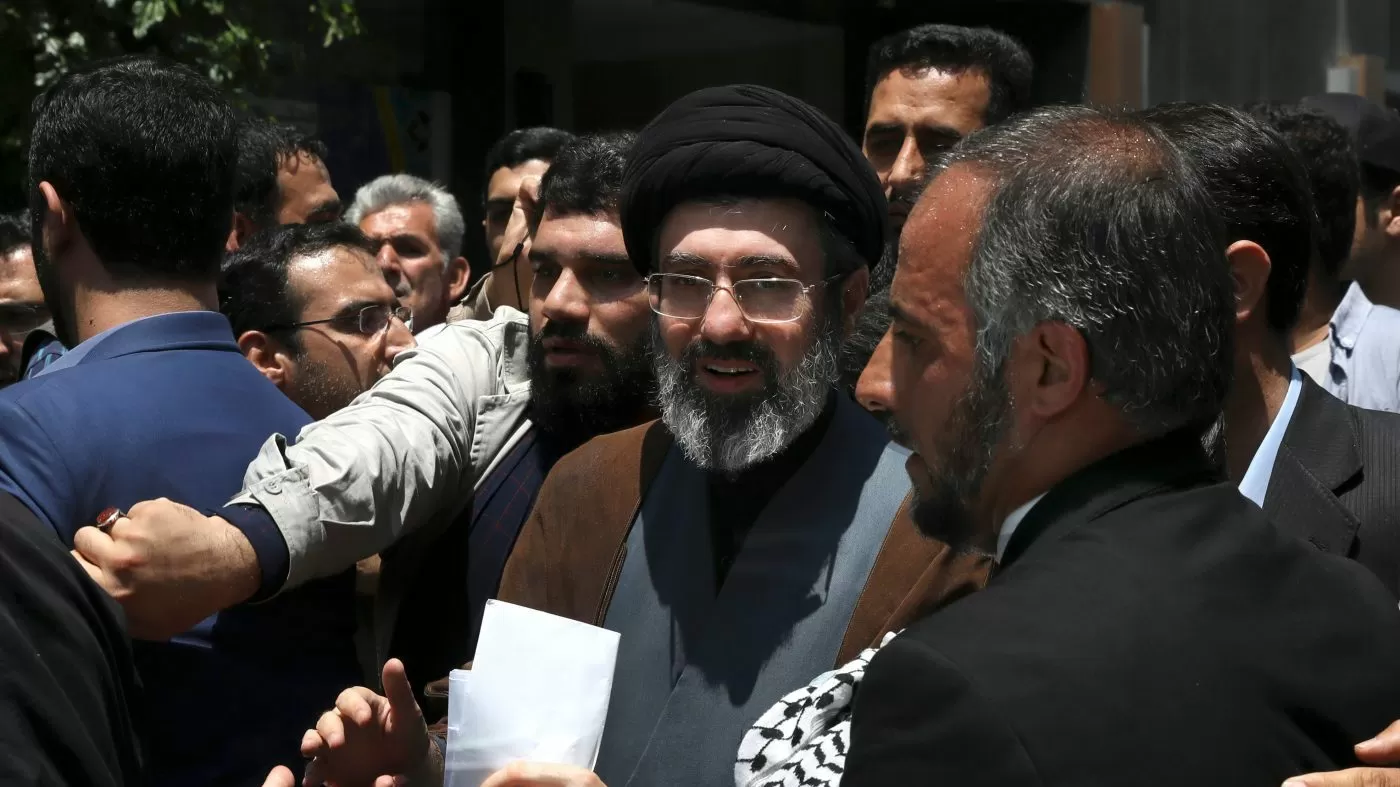
Defense Secretary Pete Hegseth’s recent statement regarding Iran’s new supreme leader has caused quite a stir in the international community. In a press conference held on Friday morning, Hegseth confirmed reports that Mojtaba Khamenei, who took over as the country’s supreme leader after the death of Ayatollah Ali Khamenei, was injured in the early days of the U.S. war against Iran.
Hegseth’s words shed light on the current state of Iran’s leadership, which he describes as “wounded and likely disfigured.” His statement confirms the speculations and rumors that have been circulating since the start of the U.S.-Iran conflict. It also raises the question of whether Iran’s new supreme leader is even capable of effectively leading the country.
The Defense Secretary did not hold back in his assessment of the situation, stating that Iran’s leadership is in a desperate and vulnerable state. He went on to say that they have resorted to hiding, going underground, and cowering like rats. Such strong words may seem harsh, but it reflects the current reality of Iran’s leadership.
The news of Mojtaba Khamenei’s injury has sparked debates and discussions about the future of Iran. Many believe that this is a significant blow to the regime and could potentially weaken its power and influence. After all, a supreme leader who is physically incapacitated is not exactly inspiring confidence among its followers.
Hegseth’s statement also sheds light on the tactics employed by Iran’s leaders. Instead of taking responsibility for their actions and facing the consequences, they have gone into hiding, hoping to escape the wrath of the United States. This cowardly act not only reflects the moral bankruptcy of Iran’s leadership but also their lack of courage to lead their country in times of crisis.
The fact that Iran’s leadership has gone underground raises concerns about their intentions and motives. The new so-called supreme leader, Mojtaba Khamenei, is nowhere to be seen or heard, which begs the question of who is really in control of the country. With the country’s leadership in such disarray, it is no wonder that the people of Iran are feeling uncertain and worried about their future.
The U.S. war against Iran has exposed the true colors of its leaders. They claim to be powerful and unshakable, but when faced with a formidable opponent, they crumble and hide. This does not bode well for the people of Iran, who have been suffering under the regime’s oppressive rule for decades. It is time for them to stand up and demand change from their leaders.
Hegseth’s statement also serves as a warning to other countries who may be considering following in Iran’s footsteps. It sends a clear message that the U.S. will not tolerate any form of aggression or threats to its national security. The U.S. is ready and willing to defend itself and its allies from any hostile actions.
In the face of adversity, the U.S. has shown strength and resilience, while Iran’s leaders have shown their true nature – that of cowards, who are willing to sacrifice their people for their own selfish interests. As the saying goes, “Desperate times call for desperate measures,” and it seems that Iran’s leaders are willing to do whatever it takes to cling onto power, even if it means putting their people in harm’s way.
In conclusion, Defense Secretary Pete Hegseth’s statement regarding Iran’s new supreme leader sheds light on the current state of the country’s leadership. It confirms rumors of Mojtaba Khamenei’s injury and sheds light on their desperate and cowardly actions. The U.S. remains firm in its stance against Iran and sends a warning to other countries. As for the people of Iran, it is time for them to rise up and demand change from their leaders. Only then can they have a brighter and more prosperous future.
