
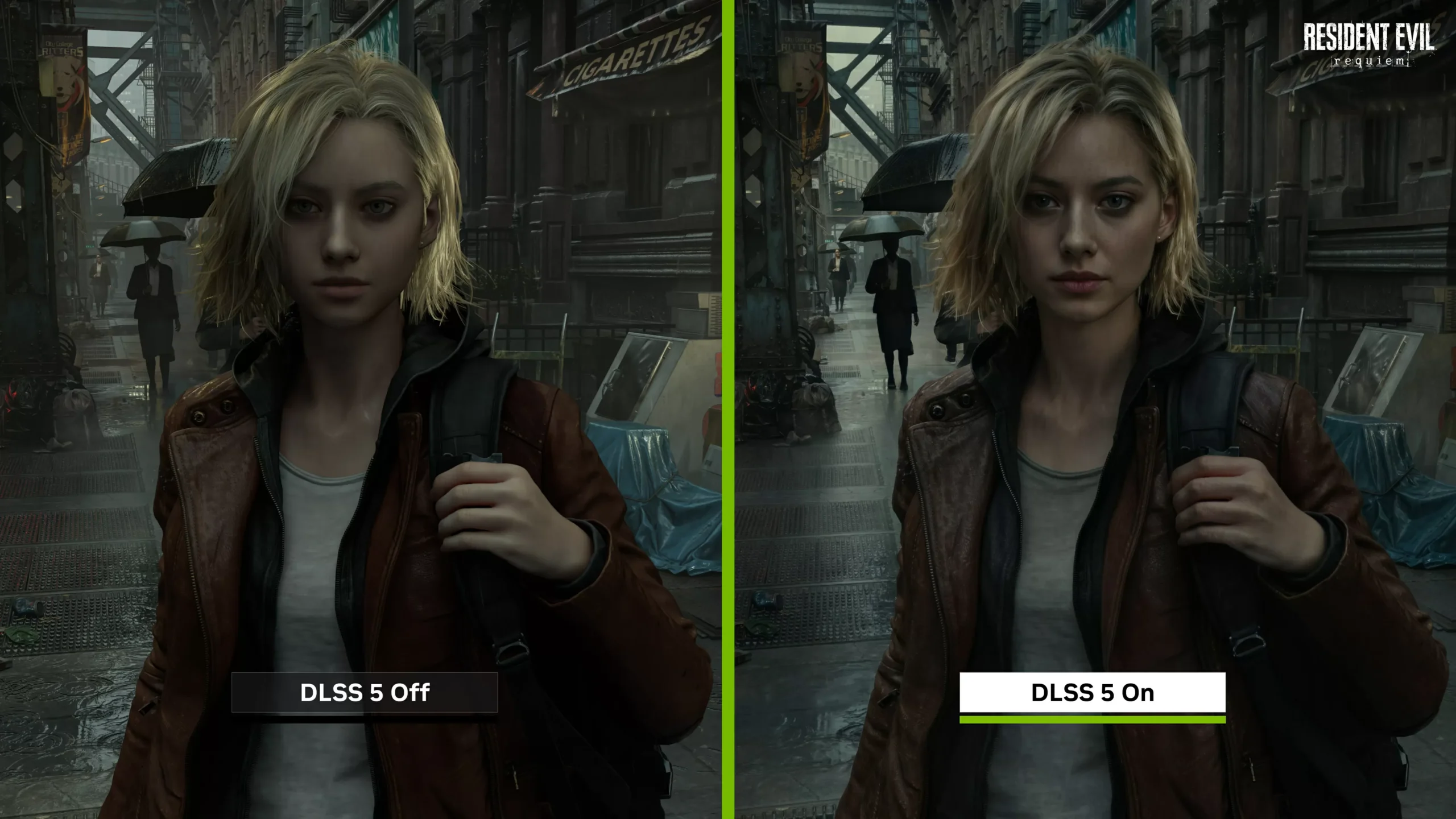
Nvidia, the leading graphics processing company, has recently announced its latest innovation in the world of gaming – DLSS 5. This new technology utilizes generative AI and structured graphics data to enhance the visual quality of video games, making them more realistic and immersive. According to Nvidia’s CEO Jensen Huang, this approach has the potential to revolutionize not just the gaming industry, but also other industries in the future.
DLSS, which stands for Deep Learning Super Sampling, is a technology that uses artificial intelligence to upscale lower resolution images to higher resolutions in real-time. This results in a significant improvement in the visual quality of video games, without compromising on performance. With the launch of DLSS 5, Nvidia has taken this technology to the next level by incorporating generative AI and structured graphics data.
Generative AI is a subset of artificial intelligence that uses algorithms to generate new data based on existing data. In the case of DLSS 5, this means that the AI is trained on a vast amount of high-resolution images, and then it uses that data to generate new images that are even more realistic. This results in a significant improvement in the overall visual quality of the game, making it almost indistinguishable from reality.
In addition to generative AI, DLSS 5 also utilizes structured graphics data, which is essentially data that describes the geometry and materials of objects in a scene. By combining this data with the generative AI, DLSS 5 is able to accurately render objects in a game, resulting in more realistic and detailed graphics. This is a significant improvement from the previous versions of DLSS, which only used motion vectors to upscale images.
The result of this combination of generative AI and structured graphics data is truly impressive. DLSS 5 is able to produce images that are not only sharper and more detailed, but also more natural-looking. This means that gamers can now experience their favorite games in a whole new level of realism, with lifelike textures, lighting, and shadows.
But the impact of DLSS 5 goes beyond just the gaming industry. During the announcement of this technology, Nvidia’s CEO Jensen Huang stated that this approach could eventually spread to other industries as well. With the use of generative AI and structured graphics data, DLSS 5 has the potential to enhance the visual quality of various applications, such as virtual reality, medical imaging, and even film and television.
The gaming industry has always been at the forefront of technological advancements, and DLSS 5 is a testament to that. With the increasing demand for more realistic and immersive gaming experiences, Nvidia has once again raised the bar with this groundbreaking technology. DLSS 5 is not just a game-changer for the gaming industry, but it also has the potential to revolutionize other industries in the future.
Moreover, DLSS 5 also has significant benefits for gamers. By using AI to upscale images, DLSS 5 reduces the workload on the graphics card, resulting in improved performance and smoother gameplay. This means that gamers can now enjoy their favorite games at higher resolutions and frame rates without having to compromise on visual quality.
DLSS 5 is already making waves in the gaming community, with many popular games such as Call of Duty: Warzone, Cyberpunk 2077, and Fortnite already incorporating this technology. And with more and more game developers adopting DLSS 5, it is only a matter of time before it becomes the standard for all future games.
In conclusion, Nvidia’s new DLSS 5 technology is a game-changer for the gaming industry. By utilizing generative AI and structured graphics data, it has taken the visual quality of video games to a whole new level of realism. And with the potential to spread to other industries, DLSS 5 has the power to revolutionize the way we experience various applications in the future. As gamers, we can’t wait to see what other innovations Nvidia has in store for us in the future.
