
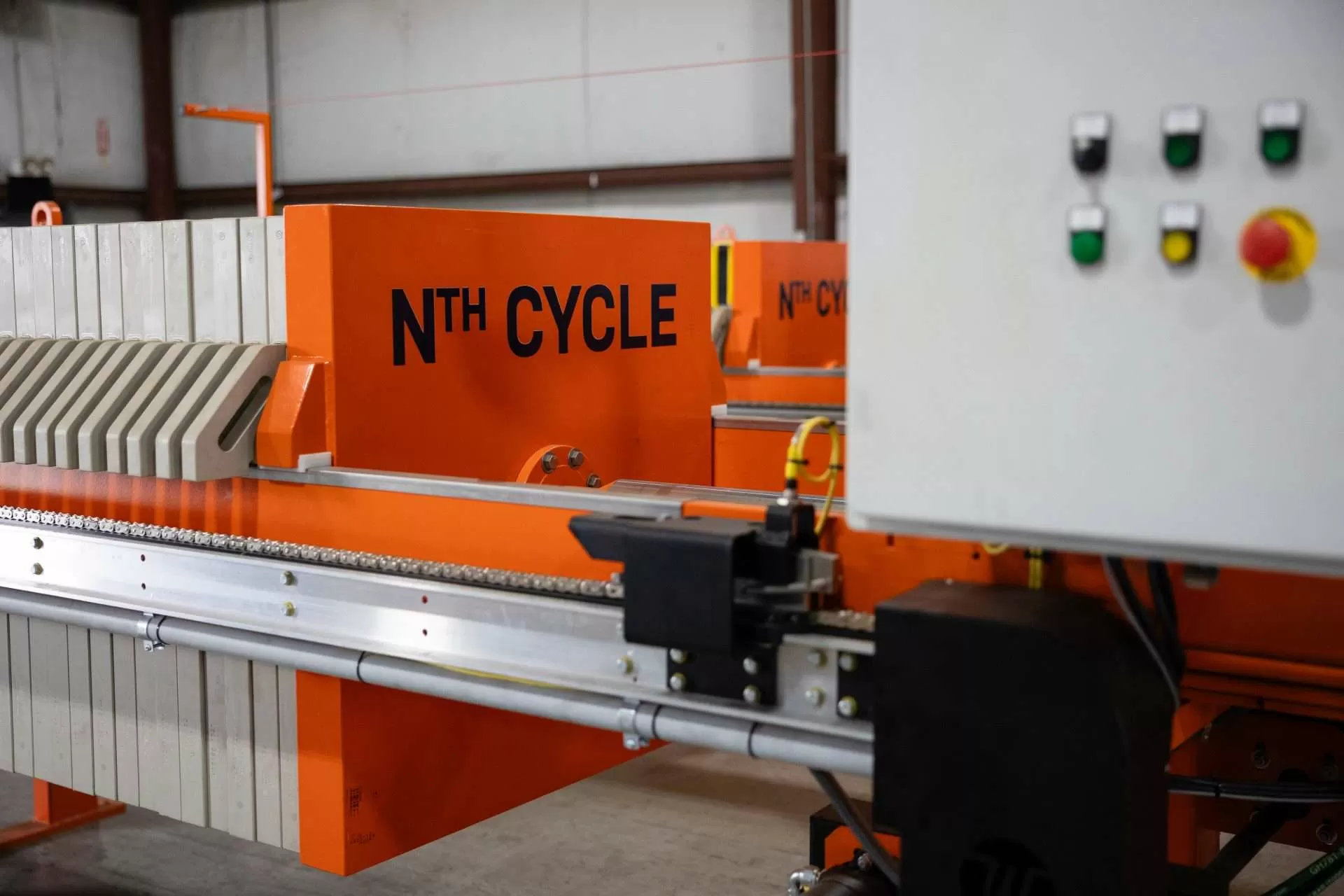
In today’s world, where technology is advancing at a rapid pace, the need for critical minerals has become more important than ever. These minerals, which are essential for the production of high-tech devices and renewable energy, are in limited supply and their extraction and refining processes can have a negative impact on the environment. However, a startup company called Nth Cycle is on a mission to change that.
Based in the United States, Nth Cycle is taking a unique and innovative approach to nickel refining, with the aim of making it a viable practice in not just the U.S. but also in Europe. The company believes that its modular approach to refining critical minerals can revolutionize the industry and lead to a more sustainable future.
So, what exactly is Nth Cycle’s modular approach and how does it differ from traditional refining methods? Let’s delve deeper into the company’s vision and how it plans to achieve it.
First and foremost, Nth Cycle’s modular approach involves breaking down the refining process into smaller, more manageable steps. This allows for greater control and efficiency, as well as the ability to customize the process for different types of minerals. This is in contrast to the traditional approach where the entire refining process is done in one large facility, often resulting in wastage and environmental harm.
The company’s co-founder and CEO, Megan O’Connor, explains, “Our goal is to create a small, modular plant that can be placed near a mine site, eliminating the need for transportation and reducing the overall carbon footprint. This not only makes the process more sustainable, but it also creates local job opportunities and boosts the economy.”
In addition to its modular approach, Nth Cycle utilizes a new technology called electro-extraction to separate and purify the minerals. This process uses electricity instead of chemicals, making it cleaner and more environmentally friendly. It also results in a more pure form of the mineral, which is crucial for its use in high-tech devices.
The company’s focus on sustainability and efficiency has caught the attention of investors and industry experts. In fact, Nth Cycle recently received a $3 million investment from the U.S. Department of Energy’s Advanced Research Projects Agency-Energy (ARPA-E). This is a testament to the potential of the company’s approach and its impact on the critical minerals industry.
Considering the growing demand for critical minerals, Nth Cycle’s approach could not have come at a better time. The U.S. and Europe, in particular, are heavily reliant on other countries for their supply of these minerals, and this dependence poses a threat to their economic and national security. By making the refining process more viable and sustainable in these regions, Nth Cycle aims to reduce this dependence and establish a more self-sufficient supply chain.
Moreover, the company’s modular approach also allows for the recovery of valuable by-products, such as cobalt and lithium, which are in high demand for the production of batteries for electric vehicles. This adds another dimension to Nth Cycle’s contribution towards a greener and more sustainable future.
With their innovative approach and the support of investors and industry experts, Nth Cycle is well on its way to achieving its mission. The company has already formed partnerships with major mining companies and is in the process of building its first commercial-scale plant in the U.S.
In conclusion, Nth Cycle’s modular approach to nickel refining has the potential to revolutionize the critical minerals industry and pave the way for a more sustainable future. The company’s dedication towards sustainability, efficiency, and local economic development is commendable and sets a positive example for other companies in the industry. With their continued success and expansion, Nth Cycle is proving that it is possible to create a greener and more self-sufficient supply chain for critical minerals.
