
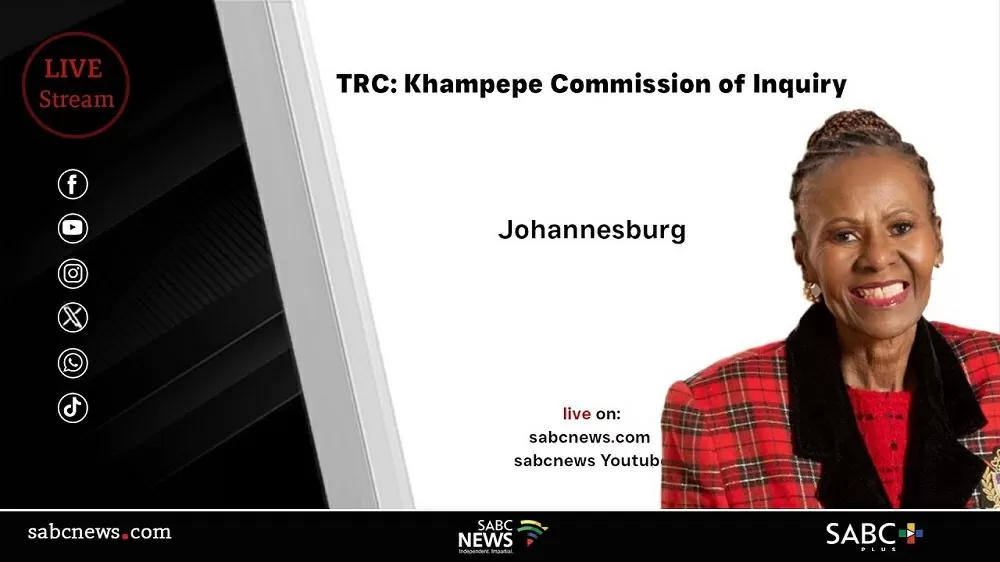
TRC Cases Inquiry Khampepe Commission Continues in Newtown, Johannesburg
The Truth and Reconciliation Commission (TRC) Cases Inquiry Khampepe Commission has been making significant strides in uncovering the truth behind some of the most heinous crimes committed during the apartheid era. The commission, headed by Justice Sisi Khampepe, has been holding public hearings in Newtown, Johannesburg, as part of its ongoing investigation.
The hearings, which began on Monday, have been a crucial step in the pursuit of justice for victims and their families. The commission has been tasked with investigating cases that were not fully dealt with by the TRC, which was established in 1995 to help South Africa come to terms with its past and promote reconciliation.
The Khampepe Commission has been hearing testimonies from victims, perpetrators, and witnesses, shedding light on the atrocities that were committed during the apartheid era. The commission’s mandate is to provide a platform for those who were denied the opportunity to testify before the TRC, and to ensure that their voices are heard.
One of the most significant cases being investigated by the Khampepe Commission is the death of anti-apartheid activist, Ahmed Timol. Timol was arrested in 1971 and was allegedly pushed out of a window by security police while in detention. The apartheid government claimed that Timol had committed suicide, but his family has been fighting for justice for over four decades. The commission has been hearing testimonies from witnesses who were present on the day of Timol’s death, and their accounts have been crucial in uncovering the truth.
The commission has also been looking into the death of Neil Aggett, a trade unionist who died in police custody in 1982. Aggett’s family has been waiting for justice for 38 years, and the commission’s investigation has brought them one step closer to closure. The commission has been hearing testimonies from former detainees who were held with Aggett, shedding light on the conditions in detention and the treatment of political prisoners.
The Khampepe Commission has been praised for its thorough and transparent approach to the investigations. Justice Khampepe has been commended for her dedication and commitment to uncovering the truth and bringing closure to the families of victims. The commission has also been praised for its efforts to ensure that all voices are heard, including those of perpetrators who have come forward to testify.
The public hearings have also been an opportunity for South Africans to reflect on their past and to acknowledge the pain and suffering that was inflicted on so many. The commission has been a reminder that the wounds of the past are still present and that the pursuit of justice and reconciliation is an ongoing process.
The Khampepe Commission has also been a platform for victims to share their stories and to find healing. Many have expressed their gratitude for finally being given the opportunity to tell their side of the story and to have their experiences acknowledged.
The commission’s work is far from over, and there is still much to be done. But the progress made so far is a testament to the commitment of the commission and its dedication to uncovering the truth and promoting reconciliation.
The Khampepe Commission’s public hearings in Newtown, Johannesburg, have been a significant step towards achieving justice for victims of apartheid-era crimes. The commission’s work has been commendable, and its efforts to uncover the truth have been met with praise and support from all sectors of society.
As South Africans, we must continue to support the commission in its efforts to bring closure to the families of victims and to promote reconciliation in our country. The Khampepe Commission is a reminder that the pursuit of justice and reconciliation is a collective responsibility, and we must all play our part in achieving it.
