
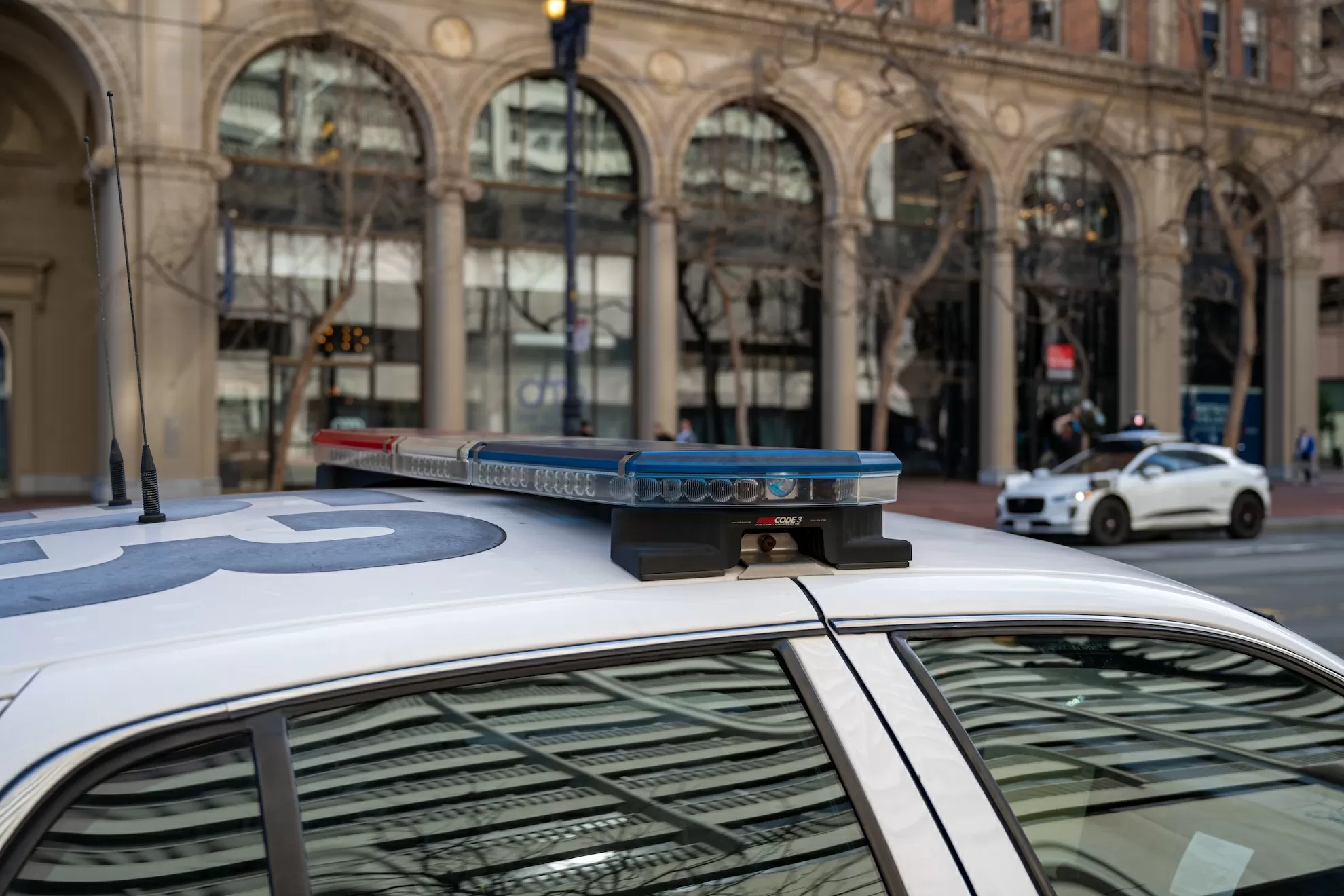
First responders are the unsung heroes of our society, always ready to jump into action during emergencies and save lives. But in recent times, their duties have expanded to include a new responsibility – taking control of Waymo vehicles during emergency situations.
Waymo, a subsidiary of Alphabet Inc., is a self-driving technology company that has been testing its autonomous vehicles on public roads since 2017. These vehicles use a combination of sensors, cameras, and artificial intelligence to navigate and make decisions on the road. While the technology has shown promising results, it is not yet perfect, and sometimes, human intervention is necessary.
TechCrunch, a leading technology news website, recently reported that first responders have had to take control of Waymo vehicles and move them during emergency situations, including in at least two active crime scenes. This revelation has sparked a debate about the safety and reliability of self-driving cars in emergency situations.
One of the incidents mentioned by TechCrunch involved a Waymo vehicle that was parked at a gas station in Chandler, Arizona, when a man attempted to steal the car. The vehicle’s sensors detected the man and came to a stop, but the doors remained locked, trapping the suspect inside. The police were called, and they had to manually move the car to access the suspect and make an arrest.
In another incident, a Waymo vehicle was involved in a hit-and-run accident in Mountain View, California. The vehicle was not at fault, but the driver of the other car fled the scene. The police had to take control of the Waymo vehicle to move it out of the way and clear the road for other vehicles.
These incidents highlight the need for first responders to be trained in handling self-driving cars during emergencies. While the technology is still in its early stages, it is essential to have protocols in place for such situations. Waymo has been working closely with local authorities to develop these protocols and provide training to first responders.
In an official statement, Waymo stated, “We have been working with local law enforcement and first responders to ensure they are familiar with our technology and how to interact with our vehicles in emergency situations.” The company also emphasized that their vehicles are equipped with a manual override feature, allowing first responders to take control of the car if needed.
The use of self-driving cars in emergency situations is a relatively new concept, and it is understandable that there may be some challenges and concerns. However, it is important to note that these incidents are isolated and do not reflect the overall safety record of Waymo vehicles. In fact, according to the company, their vehicles have driven over 20 million miles on public roads and have been involved in only 47 minor accidents, all of which were caused by human error.
Moreover, the potential benefits of self-driving cars in emergency situations cannot be ignored. These vehicles can navigate through traffic and reach the scene of the emergency faster than a human driver, potentially saving precious minutes in life-threatening situations. They can also transport injured individuals to the hospital while first responders focus on providing medical assistance.
The use of self-driving cars in emergency situations is still in its early stages, and there is still much to learn and improve upon. But with proper training and protocols in place, first responders can effectively handle these vehicles and use them to their advantage in emergency situations. Waymo’s commitment to working with local authorities and providing training is a step in the right direction.
In conclusion, the recent incidents involving first responders taking control of Waymo vehicles during emergencies may have raised some concerns, but it is important to remember that these are isolated incidents. The overall potential of self-driving cars in emergency situations is immense, and with proper training and protocols, they can be a valuable tool for first responders. As technology continues to advance, we can only expect these vehicles to become even more reliable and efficient in handling emergency situations.
