
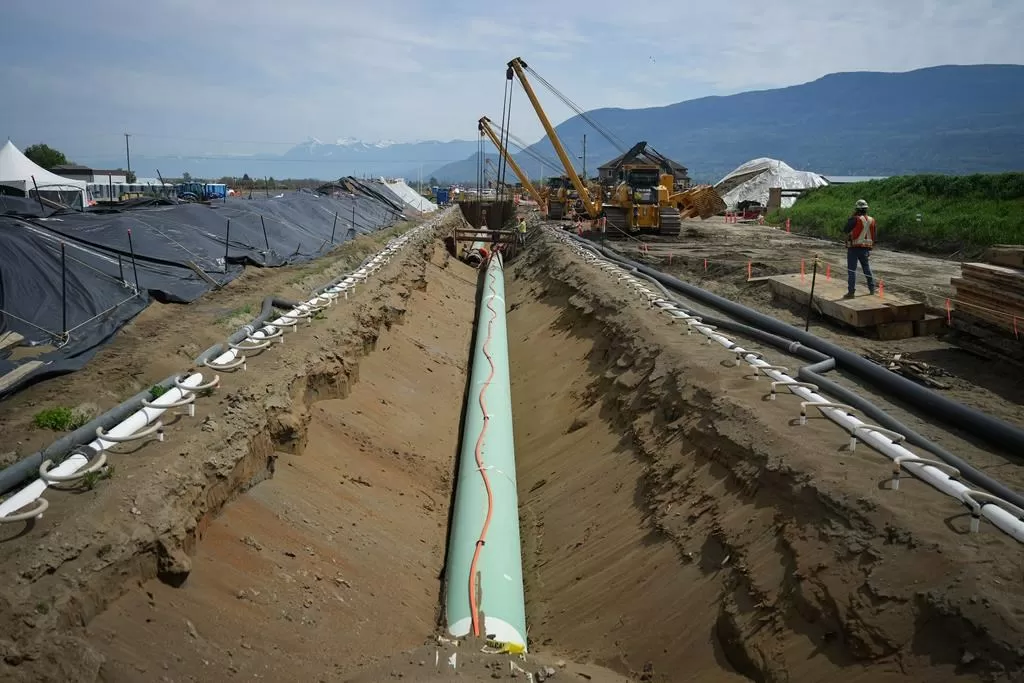
The completion of Trans Mountain Expansion Project (TMX) has brought about significant changes in the oil industry. One of the most prominent changes is the significant decrease in the price-gap between the light U.S. and heavy Alberta crude blends. According to recent studies, there has been a whopping 37.5% decrease in the average price-gap between these blends in the 18 months following the completion of TMX. This is a remarkable achievement that has far-reaching implications for the energy sector.
For those unfamiliar with the oil industry, the price-gap refers to the difference in the price of various crude oil blends. Light and heavy crude blends are two types of oil that are commonly traded in the market. The light U.S. crude blend is known for its higher quality and easier refining process, while the heavy Alberta blend is less refined and contains more impurities. Historically, the price-gap between these two blends has been quite significant, which has had a major impact on the oil trade.
However, the completion of TMX has brought about a significant change in this dynamic. The project, which is a major expansion of the existing Trans Mountain pipeline, has increased the capacity for transporting heavy Alberta crude from 300,000 barrels per day to 890,000 barrels per day. This has not only increased the supply of heavy crude but has also reduced its transportation costs. Consequently, the demand for this blend has increased, causing the price-gap to narrow significantly.
The impact of this development on the energy sector cannot be overstated. One of the key benefits of the narrowed price-gap is the increased competitiveness of Canadian crude in the global market. With the previous price-gap, it was difficult for Canadian crude to compete with other blends, especially the light U.S. crude. However, with the reduction in the price-gap, Canadian crude has become more attractive to buyers, leading to increased exports and revenues for the country.
Moreover, the narrower price-gap has also had a positive impact on Canadian oil producers and the economy as a whole. With the increased demand and higher prices for Canadian crude, oil producers are able to generate more profits and invest in new projects. This has not only created more jobs and boosted the economy but has also increased Canada’s energy independence and reduced its reliance on foreign oil.
Another important implication of the narrowed price-gap is the potential reduction in price volatility. With a narrower gap, there is less room for drastic price fluctuations, providing more stability to the market. This is beneficial for both producers and consumers, as it allows for more accurate pricing and planning.
It is also worth noting that the reduction in the price-gap is not just a one-time occurrence, but a trend that is expected to continue in the future. The increased capacity of TMX and the consequent increase in the supply of heavy crude will help keep the price-gap narrow, ensuring a competitive edge for Canadian oil in the global market.
In conclusion, the completion of TMX has had a significant and positive impact on the energy sector, particularly in narrowing the price-gap between light U.S. and heavy Alberta crude blends. This achievement is a testament to the importance and success of this major infrastructure project. The reduced price-gap has not only increased competitiveness and stability in the market but has also brought about economic benefits for the country. With the trend expected to continue in the future, Canada’s energy sector is poised for growth and success.
