
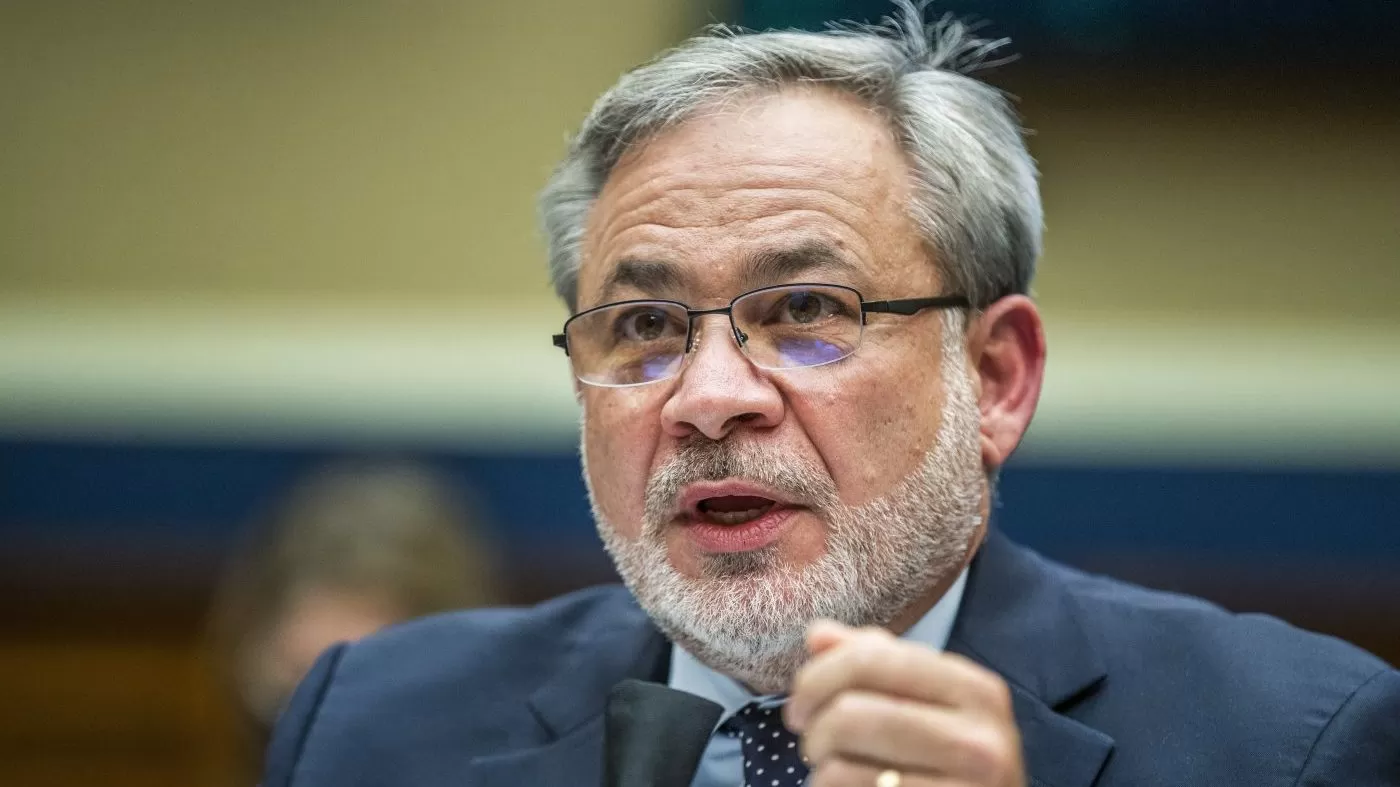
In a recent interview with Fox Business Network’s Stuart Varney, former Energy Secretary Dan Brouillette expressed his concern over the current state of affairs between the United States and Iran. Brouillette, who served as a member of President Trump’s cabinet during his first term, warned that if the U.S. ends the conflict without reopening the Strait of Hormuz, Iran will get “exactly what it wants.”
The Strait of Hormuz is a vital waterway located between the Persian Gulf and the Gulf of Oman, through which one-fifth of the world’s oil supply passes. Since the U.S. withdrew from the Iran nuclear deal in 2018, tensions have been high between the two countries, and Iran has repeatedly threatened to block the Strait of Hormuz if its demands are not met.
Brouillette stated that it is “hard to believe” that President Trump would consider ending the conflict without ensuring the safety of the Strait of Hormuz. He emphasized that Iran’s goal is to disrupt global oil trade and drive up oil prices, and if the U.S. allows this to happen, it would be a major win for Iran.
The former Energy Secretary also pointed out the potential consequences of a blocked Strait of Hormuz. He stated that it would not only affect the U.S. but also countries around the world that are heavily dependent on oil imports from the Middle East. It would lead to a significant increase in oil prices, which would have a domino effect on the global economy, causing inflation and hurting the average consumer.
Brouillette’s warning serves as a reminder that the conflict between the U.S. and Iran goes beyond politics and has a direct impact on the lives of people around the world. It is essential for the U.S. to consider the potential consequences of any actions taken in this conflict carefully.
President Trump has repeatedly stated that his administration’s goal is to bring Iran back to the negotiating table and secure a new and better deal. However, with tensions only escalating, it is crucial for the U.S. to have a clear and effective strategy to achieve this goal.
Brouillette’s remarks also shed light on the importance of the Strait of Hormuz and the need to protect it from any disruption. As one of the busiest and most critical waterways in the world, any attempts to block it should be taken seriously and dealt with strategically.
Furthermore, Brouillette’s warning serves as a reminder of the impact of the U.S. energy policies on global affairs. As the world’s largest producer of oil, the decisions made by the U.S. government have a significant impact on the global energy market. It is essential for the U.S. to consider this responsibility and act in the best interest of not only its own citizens but also the rest of the world.
In conclusion, former Energy Secretary Dan Brouillette’s warning about the potential consequences of ending the conflict with Iran without reopening the Strait of Hormuz should not be taken lightly. It highlights the need for a well-thought-out and strategic approach to resolving the conflict and protecting essential global waterways. We can only hope that the U.S. government will consider these factors carefully and take the necessary steps to maintain peace and stability in the region.
