
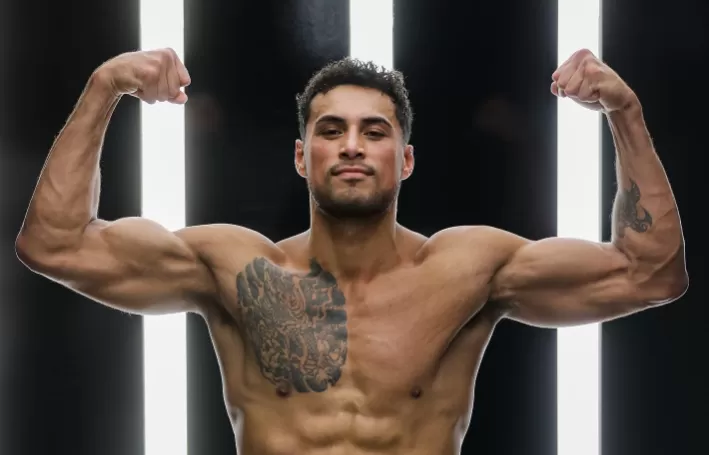
Carlos Ulberg’s Tattoos: The Powerful Visual Identity of a Rising UFC Star
Dominick Reyes, one of the top light heavyweight fighters in the UFC, was on a 9-fight win streak before his last fight. But it was Carlos Ulberg who managed to put an end to that streak with a stunning finish, proving that he is a force to be reckoned with in the division. With a 56% KO/TKO rating, Ulberg has made his mark in the UFC and established himself as a formidable opponent. However, there is more to this fighter than just his impressive record and in-ring skills. Before every fight, Ulberg carries a visual identity that sets him apart from the rest. This Saturday, as he steps into the Octagon once again, let’s take a closer look at the meaning behind his tattoos and the significance they hold for this rising UFC star.
Samoan Heritage
Born and raised in Auckland, New Zealand, Ulberg is of Samoan descent. His Samoan heritage is something that he is immensely proud of and it is reflected in his tattoos. The traditional Samoan tatau, also known as pe’a, is a form of tattooing that covers the body from the waist to the knees. It is a symbol of strength, courage, and identity for the Samoan people. Ulberg’s chest and arms are adorned with intricate Samoan designs, each with its own meaning and significance. These tattoos are a tribute to his culture and a way for him to carry a piece of his heritage with him into the Octagon.
The Chest Tattoo
One of Ulberg’s most striking tattoos is the one on his chest. It is a large, bold design that covers his entire chest and extends down to his stomach. This tattoo is a representation of his family and their importance in his life. The central motif is a Samoan warrior, symbolizing Ulberg’s strength and warrior spirit. Surrounding the warrior are smaller motifs that represent his parents, siblings, and other family members. This tattoo is a constant reminder for Ulberg to stay connected to his roots and to always fight for his family.
The Arm Tattoos
Ulberg’s arms are also covered in intricate Samoan designs, each with its own meaning. On his right arm, he has a tattoo of a turtle, which is a symbol of longevity and strength. It is a reminder for Ulberg to stay focused and to never give up, no matter how tough the fight may be. On his left arm, he has a tattoo of a shark, which is a symbol of courage and power. It represents Ulberg’s fighting spirit and his ability to overcome any challenge that comes his way. These tattoos not only add to Ulberg’s visual identity but also serve as a source of motivation and strength for him.
The Process of Getting Inked
For Ulberg, getting a tattoo is a deeply spiritual and cultural experience. The traditional Samoan tatau is a painful and lengthy process, but one that is filled with meaning and significance. The tattoos are hand-tapped, using a tool called a ‘moli’, which is made up of a wooden handle and several sharp needles. The process can take days, even weeks, to complete and requires immense patience and endurance. This traditional method of tattooing is a dying art form and Ulberg is proud to be keeping it alive through his tattoos.
The Power of Visual Identity
In the world of combat sports, visual identity is a powerful tool. It not only sets a fighter apart from the rest but also adds to their persona and helps them connect with their fans. Ulberg’s tattoos are a reflection of his heritage, his values, and his journey as a fighter. They represent his strength, courage, and determination, both inside and outside the Octagon. In a sport where mental strength is just as important as physical strength, Ulberg’s tattoos serve as a constant reminder of his roots and the values he holds dear.
In Conclusion
As Carlos Ulberg prepares to step into the Octagon once again, his tattoos will be on full display, adding to his already formidable presence. But beyond the visual appeal, these tattoos hold a deep meaning and significance for Ulberg. They are a reflection of his Samoan heritage, his family, and his journey as a fighter. They serve as a constant source of motivation and strength, helping him overcome any challenge
