
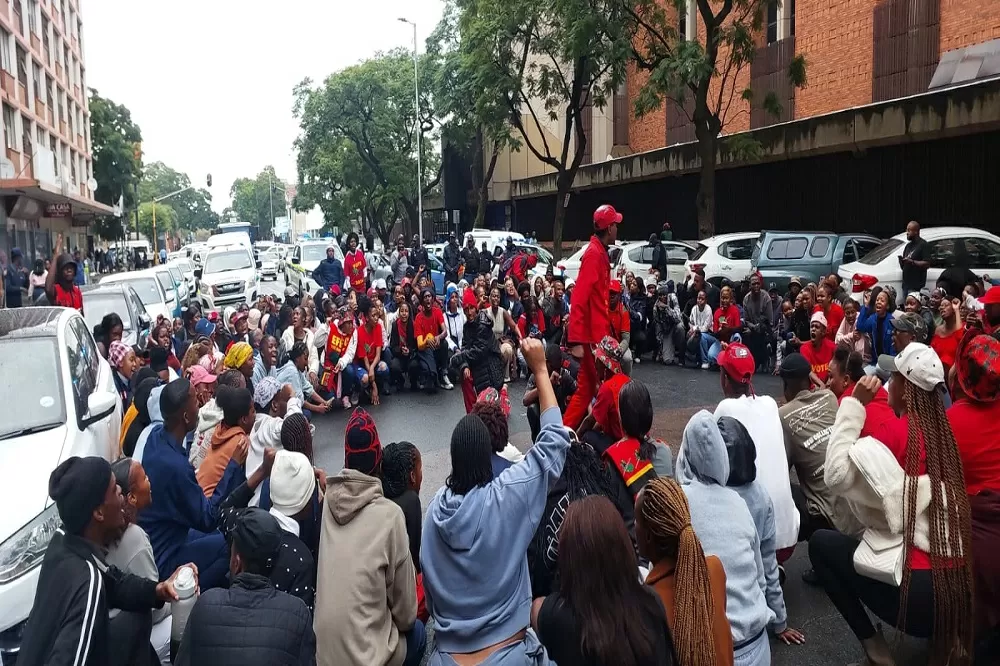
Elvis Chiwawa, the President of the South African Students’ Association (SASA), has called for the extension of National Student Financial Aid Scheme (NSFAS) funding to include all students. This proposal comes as a response to the ongoing issue of financial exclusion faced by many students in South Africa.
In a recent interview, Chiwawa emphasized the need for equal opportunities in education for all students, regardless of their financial background. He stated that “education is a fundamental right and should not be limited to those who can afford it. Every student deserves the chance to pursue their dreams and contribute to the development of our country.”
Currently, NSFAS provides financial assistance to students from low-income households, covering tuition fees, accommodation, and other related expenses. However, many students who do not fall under this category are still struggling to finance their education. This has resulted in a high dropout rate and has hindered the academic progress of many promising students.
Chiwawa believes that extending NSFAS funding to all students will not only benefit individuals but also have a positive impact on the country’s economy. He explained that “by investing in the education of our youth, we are investing in the future of our nation. With a well-educated and skilled workforce, we can drive economic growth and reduce poverty.”
The call for the extension of NSFAS funding is not a new one. In 2017, the Fees Must Fall movement brought attention to the issue of financial exclusion and called for free education for all. While the government has made efforts to address this issue, there is still a long way to go in ensuring that every student has access to quality education.
Chiwawa’s proposal has received support from various student organizations and political parties. The Democratic Alliance (DA) has also voiced their support for the extension of NSFAS funding, stating that “education should not be a privilege but a right for all South Africans.”
However, there are concerns about the sustainability of such a move. The current NSFAS budget is already under strain, and extending funding to all students may require additional funding from the government. Chiwawa acknowledges this but believes that it is a necessary investment. He stated that “the benefits of an educated society far outweigh the costs. It is time for the government to prioritize education and make it accessible to all.”
The proposal has also sparked a debate on the role of the private sector in funding higher education. Some argue that the burden should not solely fall on the government, and the private sector should also contribute to the education of future employees. However, Chiwawa believes that the primary responsibility lies with the government, and they should take the lead in ensuring equal access to education for all.
In conclusion, the call for the extension of NSFAS funding to include all students is a step towards achieving equal opportunities in education. It is a move that will not only benefit individuals but also contribute to the development of the country. As Chiwawa rightly said, “education is the key to unlocking our full potential and building a better South Africa for all.” It is now up to the government to take action and make education accessible to every student in the country.
