
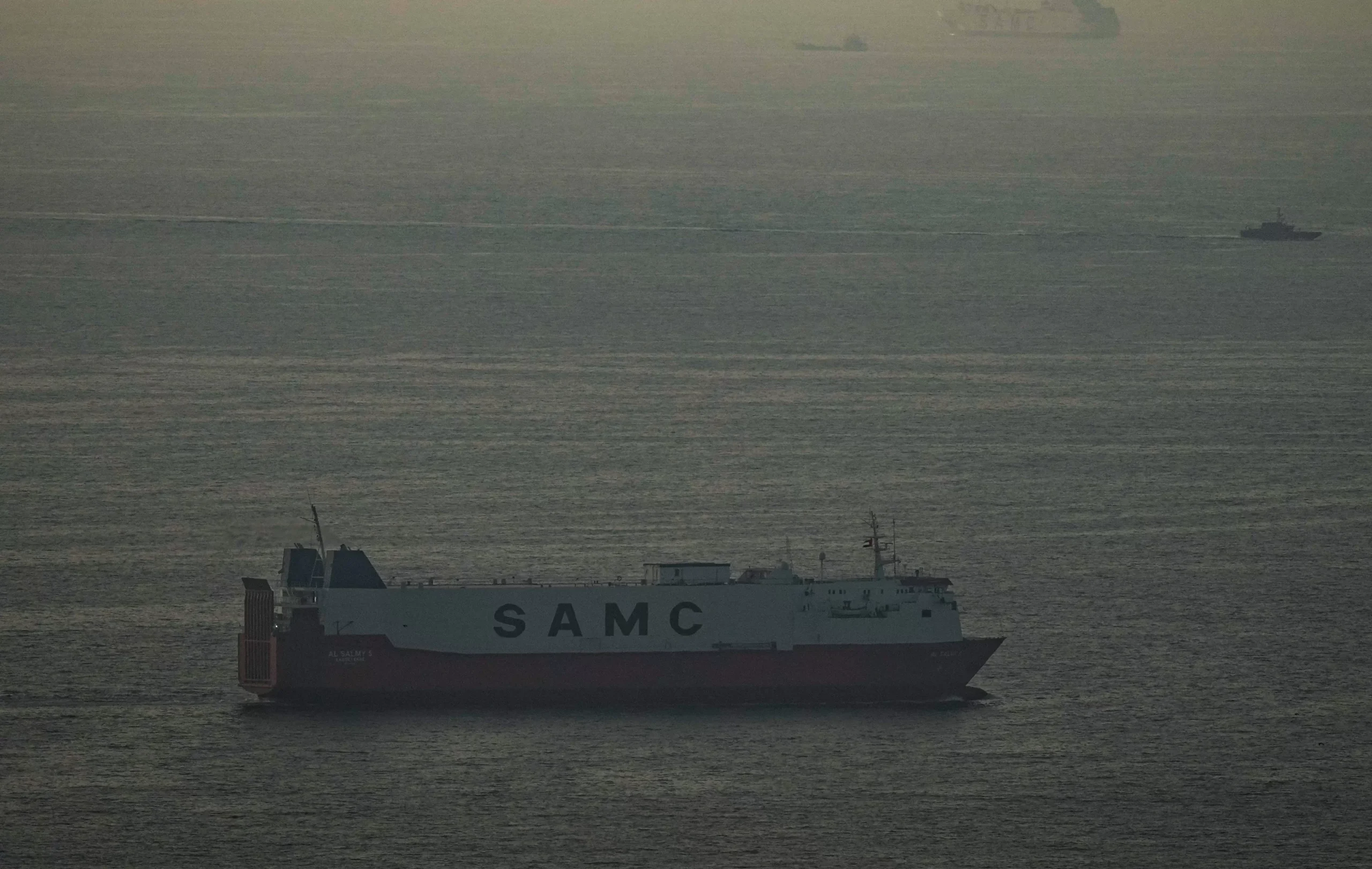
Iran and the United States have once again found themselves at odds, with tensions rising in the Gulf of Oman. The U.S. has seized an Iranian cargo ship and declared a naval blockade in the Strait of Hormuz, while President Trump has announced a new strategy to put pressure on Iran by boarding their ships.
The situation began on Friday when the U.S. Navy seized an Iranian vessel, claiming that it was carrying weapons and possibly violating international sanctions. This action by the U.S. has been met with strong criticism and condemnation from Iranian officials.
Iran’s military has threatened to retaliate against the U.S., stating that such aggressive actions will not be tolerated. In a statement, Iran’s Revolutionary Guard Corps declared that any attack on Iranian vessels would be met with a “decisive response.” This tense exchange of threats has escalated the already tense relationship between the two nations.
The U.S. has responded by declaring a naval blockade in the Strait of Hormuz, a strategic waterway that handles one-fifth of the world’s oil supply. This move is seen as an attempt to further squeeze Iran’s economy, which is already suffering under heavy sanctions imposed by the U.S. in recent years.
In addition, President Trump has announced that the U.S. will increase economic pressure on Tehran by boarding Iranian-linked ships. This new policy is a continuation of the “maximum pressure” approach of the U.S. towards Iran, which has been in place since Trump withdrew from the nuclear deal in 2018.
While these developments have raised concerns about a potential military conflict between the U.S. and Iran, both nations have expressed their desire for a peaceful resolution. The U.S. has emphasized that its actions are in line with international law and are aimed at preventing the proliferation of weapons.
On the other hand, Iran has reiterated its commitment to international maritime conventions and has urged the U.S. to pursue diplomatic solutions rather than resorting to aggression.
Despite the tensions, there is hope for a de-escalation of the situation. In a recent phone call between the foreign ministers of Iran and the U.S., both sides expressed their willingness to engage in dialogue and find a peaceful resolution to their differences.
It is essential for both nations to exercise restraint and refrain from further provocative actions. The recent exchange of threats and actions only serves to increase tensions and could potentially lead to a dangerous conflict in the region.
The U.S. and Iran must work towards finding a diplomatic solution to their disputes, rather than resorting to military tactics. Dialogue and cooperation are the key to resolving differences and maintaining peace and stability in the Gulf region.
The international community also has a crucial role to play in this situation. The escalating tensions between the U.S. and Iran have raised concerns among other nations, and it is essential for them to actively engage in efforts to defuse the situation.
In conclusion, the recent events in the Gulf of Oman have once again highlighted the fragile relationship between Iran and the U.S. While tensions continue to rise, it is crucial for both nations to maintain open lines of communication and work towards finding a peaceful resolution. The world is watching, and it is essential for all parties involved to prioritize dialogue and cooperation to prevent the situation from escalating further.
