AI Identifies More Than 1,300 Unusual Objects in Hubble Space Telescope Images
Artificial intelligence has combed through decades of Hubble Space Telescope data, revealing hundreds of unusual celestial objects that astronomers had missed....
Artificial intelligence has revolutionized the way we live and work, and now it is making its mark in the field of astronomy. In a groundbreaking project, AI has combed through decades of Hubble Space Telescope data, revealing hundreds of unusual celestial objects that were previously missed by astronomers. This remarkable achievement is a testament to the power of AI and its ability to unlock hidden discoveries within vast astronomical archives.
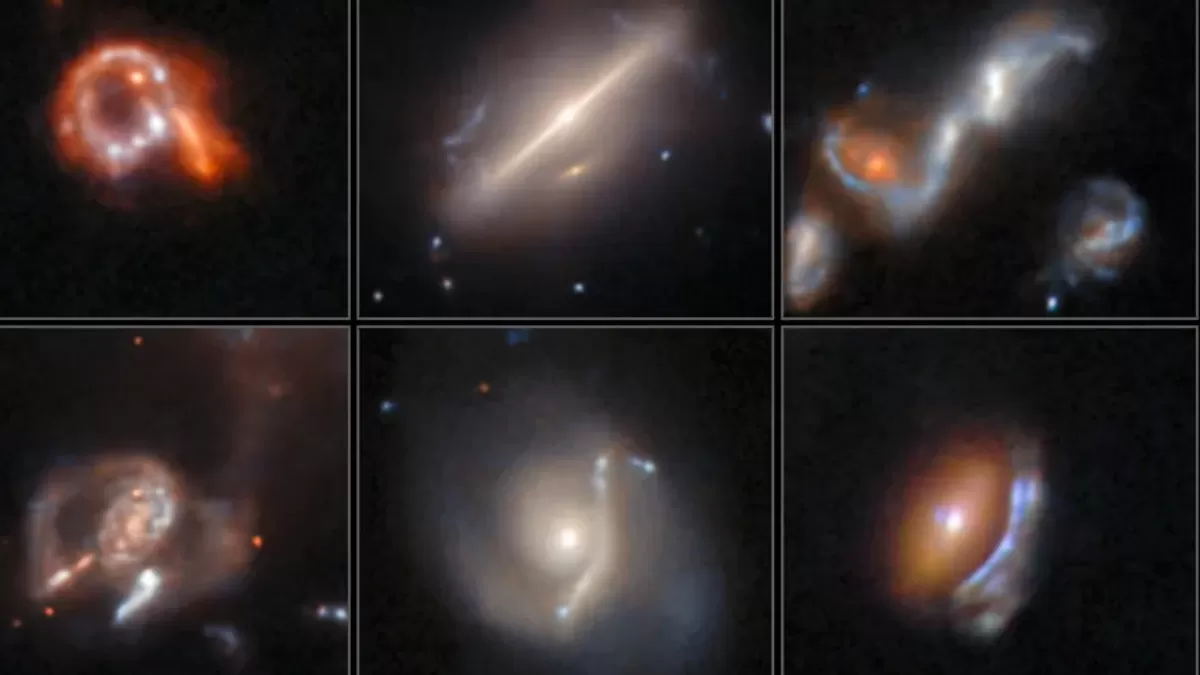
The European Space Agency (ESA) launched the AnomalyMatch neural network, which scanned around 100 million image cutouts in just a matter of days. This impressive feat has flagged more than 1,300 anomalies, including colliding galaxies, rare gravitational lenses, and jellyfish galaxies. These findings demonstrate how AI can efficiently and rapidly assist scientists in exploring the universe.
The Hubble Space Telescope, launched in 1990, has been instrumental in capturing stunning images of our universe. It has provided us with a wealth of data, but analyzing this vast amount of information has been a daunting task for astronomers. This is where AI comes in. With its ability to process large amounts of data at a rapid pace, AI has proven to be a valuable tool in the search for new discoveries.
The AnomalyMatch neural network was trained on a dataset of known objects, such as galaxies, stars, and asteroids, to identify anomalies in the Hubble images. It uses a technique called deep learning, where the AI system learns from the data and improves its performance over time. This allows it to identify even the most subtle anomalies that may have been overlooked by human astronomers.
One of the most exciting discoveries made by the AI system is the identification of colliding galaxies. These are galaxies that are in the process of merging with each other, creating spectacular cosmic collisions. These events are rare and difficult to detect, but the AI system was able to spot them with ease. This discovery will provide valuable insights into the formation and evolution of galaxies.
Another significant finding is the detection of rare gravitational lenses. These are massive objects in space that bend and distort light, creating a magnifying effect. This phenomenon allows astronomers to see distant objects that would otherwise be too faint to observe. The AI system has identified several of these lenses, which will help scientists study the distant universe in more detail.
The AI system has also identified a type of galaxy known as "jellyfish galaxies." These galaxies have long tails of gas and stars, giving them a jellyfish-like appearance. These galaxies are thought to be the result of a galaxy falling into a cluster of galaxies, causing its gas to be stripped away. The discovery of these galaxies will provide valuable insights into the dynamics of galaxy clusters.
The success of this project highlights a new era in astronomy, where machines and scientists work together to explore the universe. With the help of AI, astronomers can now efficiently sift through vast amounts of data and identify anomalies that may have gone unnoticed. This partnership between humans and machines will undoubtedly lead to more discoveries and a deeper understanding of our universe.
The use of AI in astronomy is not limited to just the Hubble Space Telescope. Many other telescopes, such as the upcoming James Webb Space Telescope, will also benefit from this technology. With its advanced capabilities, the James Webb Telescope will generate even more data, and AI will play a crucial role in analyzing it.
The success of this project also has implications beyond the field of astronomy. The techniques and methods used by the AI system can be applied to other areas of research, such as medicine, climate science, and finance. This highlights the potential of AI to revolutionize various fields and drive innovation.
In conclusion, the collaboration between AI and astronomers has proven to be a game-changer in the search for new discoveries in our universe. The project's success has shown that AI can efficiently and rapidly analyze vast amounts of data, leading to the identification of hundreds of unusual celestial objects. This is just the beginning, and we can only imagine what other secrets of the universe AI will help us uncover in the future.