AI Takes the Wheel as Perseverance Rover Navigates Mars on Its Own
NASA’s Perseverance rover has achieved a major milestone by navigating Martian terrain using artificial intelligence alone. In December 2025, AI-generated route...
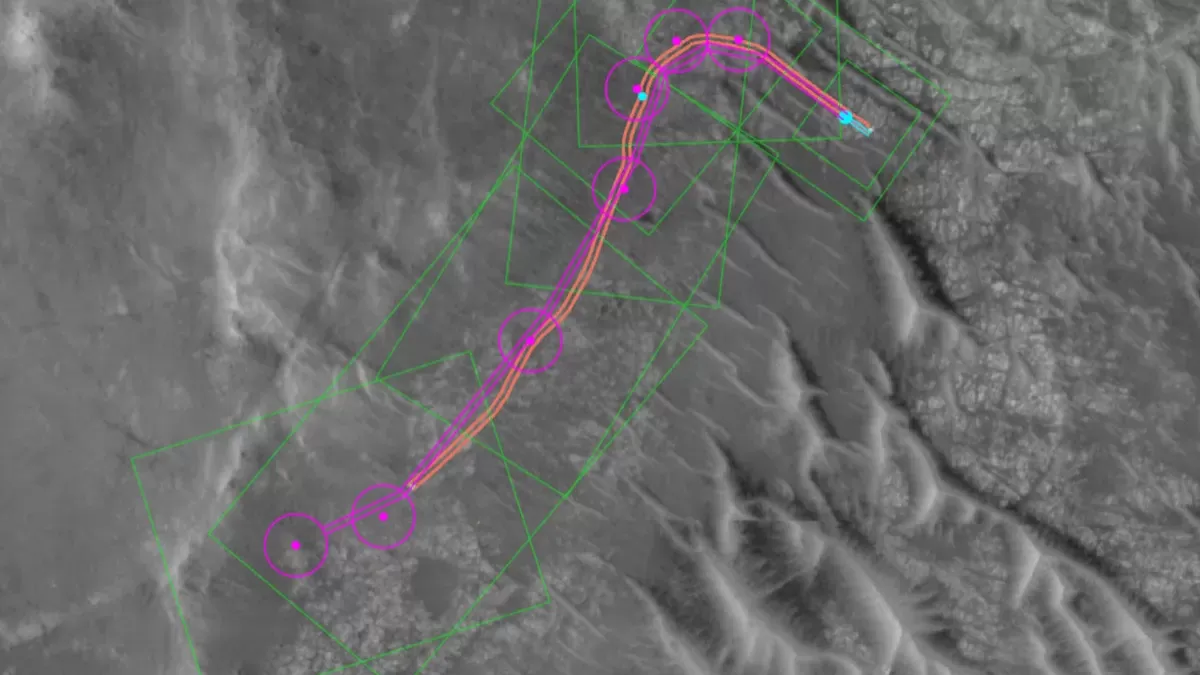
NASA's Perseverance rover has once again made history by achieving a major milestone on its mission to explore the red planet. In December 2025, the rover successfully navigated the treacherous terrain of Jezero Crater using artificial intelligence (AI) alone. This groundbreaking achievement has proven that autonomous navigation can significantly speed up exploration and increase the scientific returns of future planetary missions.
The Perseverance rover, also known as the Mars 2020 rover, was launched by NASA in July 2020 with the primary goal of searching for signs of ancient microbial life on Mars. Equipped with state-of-the-art instruments and advanced technology, the rover has been making remarkable progress in its mission since its landing on the Martian surface in February 2021.
One of the most challenging aspects of exploring Mars is navigating its rugged and unpredictable terrain. The Perseverance rover has been relying on its onboard cameras and sensors to navigate its way around the planet. However, this process can be time-consuming and limits the rover's ability to cover a larger area. This is where the use of AI comes in.
In December 2025, the Perseverance rover successfully completed a 1.5-mile journey across Jezero Crater using AI-generated routes. This was the first time that a rover has navigated Martian terrain using AI alone, without any human intervention. The AI system, known as AutoNav, analyzed images taken by the rover's cameras and generated a safe route for the rover to follow. This allowed the rover to move at a faster pace and cover more ground, ultimately increasing its scientific output.
The success of this autonomous navigation system has far-reaching implications for future planetary missions. It not only reduces the time and effort required for navigation but also allows for more efficient use of resources. With AI-generated routes, the rover can avoid potential hazards and focus on exploring areas of scientific interest, leading to a higher success rate in finding evidence of ancient life on Mars.
Moreover, the use of AI in space exploration is not limited to just navigation. It has the potential to revolutionize various aspects of space missions, from data analysis to decision-making. With the vast amount of data collected by rovers and spacecraft, AI can help scientists sift through the information and identify patterns and anomalies that may have gone unnoticed otherwise. This can lead to new discoveries and a deeper understanding of the universe.
The successful use of AI in the Perseverance rover's mission is a testament to the advancements in technology and the capabilities of human ingenuity. It also highlights the importance of collaboration between different fields, such as space exploration and artificial intelligence. The development of AI systems for space missions requires a multidisciplinary approach, with experts from various fields working together to create innovative solutions.
The use of AI in space exploration is not without its challenges. The technology is still in its early stages, and there is a need for further research and development to improve its capabilities. However, the success of the Perseverance rover's autonomous navigation is a significant step towards harnessing the full potential of AI in space exploration.
NASA's Perseverance rover has once again proven that with determination and innovation, we can overcome any obstacle in our quest to explore the unknown. The use of AI in space missions has opened up new possibilities and has the potential to revolutionize the way we explore the universe. As we continue to push the boundaries of space exploration, the integration of AI will undoubtedly play a crucial role in our future endeavors.
In conclusion, the successful navigation of the Perseverance rover using AI alone is a remarkable achievement that has set a new standard for future planetary missions. It has shown that with the help of advanced technology, we can overcome the challenges of space exploration and achieve groundbreaking results. As we eagerly await the discoveries that the Perseverance rover will make in the coming years, we can be confident that AI will continue to play a vital role in our journey to unravel the mysteries of the universe.