Astronomers Capture First Detailed View of Hot Gas Swirling Around Black Holes
Japan’s XRISM X-ray observatory has delivered the first detailed maps of hot gas swirling around supermassive black holes in the Virgo and Perseus galaxy cluste...
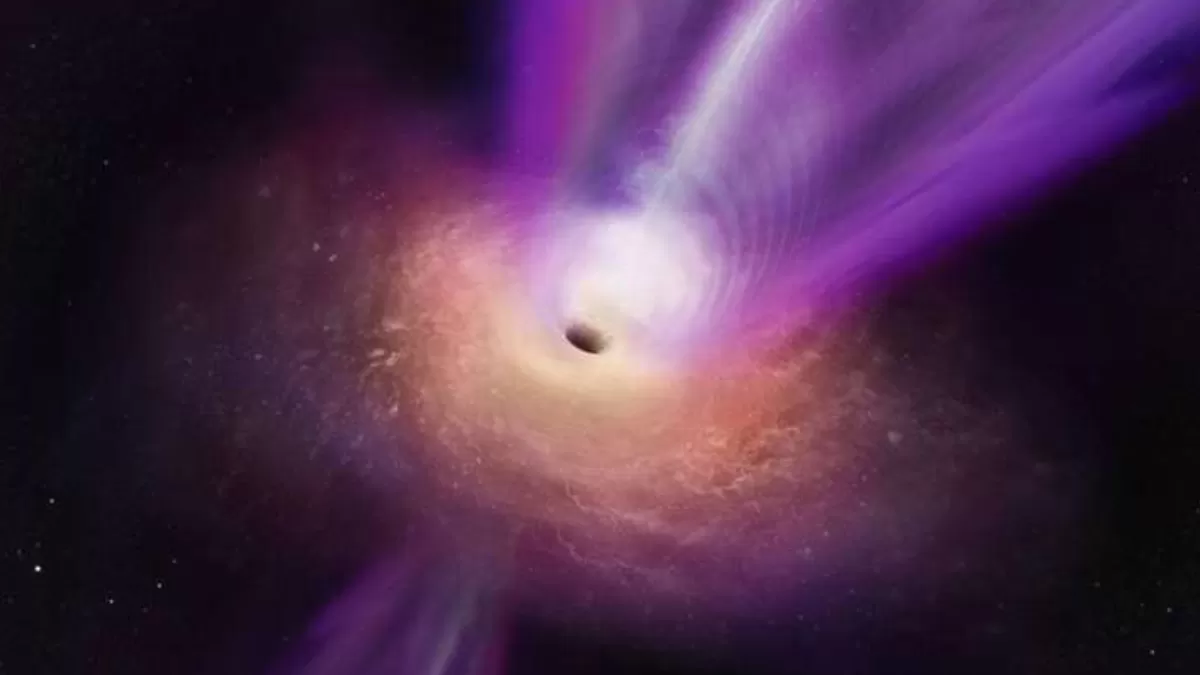
Japan's XRISM X-ray observatory has recently made a groundbreaking discovery that has reshaped our understanding of how galaxies evolve. The observatory has delivered the first detailed maps of hot gas swirling around supermassive black holes in the Virgo and Perseus galaxy clusters. These maps reveal intense turbulence, similar to cosmic storms, driven by the powerful jets of black holes. This churning of gas heats it up, preventing it from cooling and collapsing into new stars. This discovery explains why the cores of these galaxy clusters remain surprisingly star-poor.
The XRISM (X-Ray Imaging and Spectroscopy Mission) is a joint project between the Japan Aerospace Exploration Agency (JAXA) and NASA. It was launched in February 2021 and is the first X-ray observatory to be equipped with a microcalorimeter, a highly sensitive instrument that can measure the energy of individual X-ray photons. This advanced technology has allowed scientists to study the hot gas in galaxy clusters with unprecedented detail.
Galaxy clusters are the largest structures in the universe, consisting of hundreds or even thousands of galaxies held together by gravity. At the center of these clusters, there are supermassive black holes, which can have a mass equivalent to billions of suns. These black holes are known to emit powerful jets of high-energy particles, which can travel at nearly the speed of light. However, until now, the exact impact of these jets on the surrounding gas was not fully understood.
The XRISM observations have revealed that the hot gas in the Virgo and Perseus galaxy clusters is in a constant state of turbulence, caused by the interaction between the black hole jets and the gas. This turbulence is similar to the chaotic movements of a storm, and it heats up the gas to temperatures of millions of degrees. This heating process is crucial as it prevents the gas from cooling and collapsing into new stars. Without this turbulence, the cores of these galaxy clusters would be much more star-rich.
This discovery has significant implications for our understanding of how galaxies evolve. It has long been a mystery why the cores of galaxy clusters, which are the most massive structures in the universe, are relatively star-poor. The XRISM data has provided a crucial piece of the puzzle, showing that the intense turbulence caused by black hole jets is the key factor in keeping these regions star-poor.
Dr. Koji Mukai, the project scientist for XRISM at NASA's Goddard Space Flight Center, explains, "The hot gas in galaxy clusters is like a soup, and the black hole jets are like a blender. They stir up the soup and make it too hot for stars to form." This analogy perfectly captures the role of black hole jets in regulating star formation in galaxy clusters.
The XRISM observations have also shed light on the complex relationship between black holes and their host galaxies. It is now believed that the intense turbulence caused by black hole jets not only prevents star formation in galaxy clusters but also affects the growth of galaxies. This is because the hot gas in galaxy clusters is the fuel for star formation, and when it is heated up by black hole jets, it cannot cool down and form new stars. This process can significantly impact the evolution of galaxies over time.
The XRISM mission is still in its early stages, and scientists are excited about the potential for more groundbreaking discoveries in the future. The observatory is expected to provide more detailed maps of other galaxy clusters, allowing scientists to study the impact of black hole jets on a larger scale. This will further enhance our understanding of the role of black holes in shaping the universe.
The success of the XRISM mission is a testament to the collaboration between JAXA and NASA. The advanced technology and expertise of both agencies have made this groundbreaking discovery possible. The data from XRISM will continue to provide valuable insights into the mysteries of the universe and help us understand the complex processes that govern the evolution of galaxies.
In conclusion, the XRISM X-ray observatory has delivered the first detailed maps of hot gas swirling around supermassive black holes in the Virgo and Perseus galaxy clusters. These maps have revealed intense turbulence, driven by black hole jets, which heats up the gas and prevents it from cooling and forming new stars. This discovery has reshaped our understanding of how galaxies evolve and has provided crucial insights into the relationship between black holes and their host galaxies. The XRISM mission is a remarkable achievement and a significant step forward in our quest to unravel