ESA’s Solar Orbiter Reveals How Magnetic Avalanches Trigger Solar Flares
New observations from ESA’s Solar Orbiter show that solar flares can be triggered by cascading magnetic disturbances. During a close solar pass, the spacecraft...
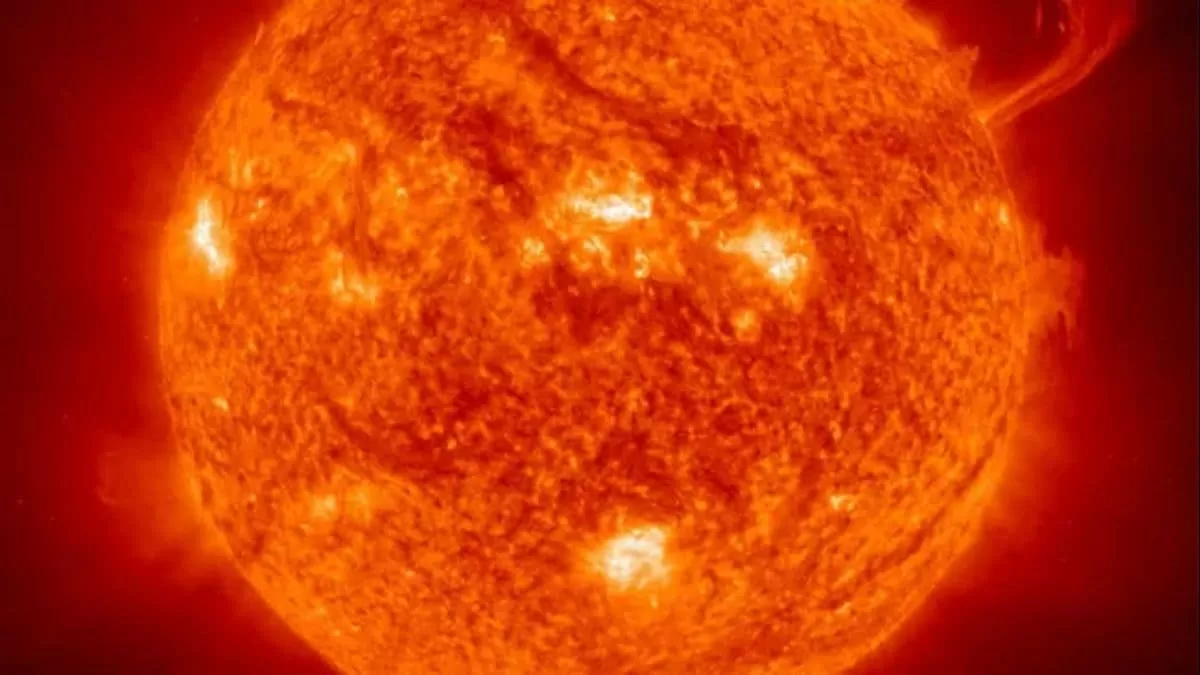
New Observations from ESA's Solar Orbiter Reveal the Surprising Cause of Solar Flares
Solar flares have long been a mystery, with scientists struggling to understand what triggers these powerful bursts of energy from the Sun. But now, thanks to new observations from ESA's Solar Orbiter, we have a better understanding of what causes these spectacular events.
During a close pass of the Sun, the spacecraft captured detailed images of twisted magnetic fields that were constantly breaking and reconnecting. These cascading magnetic disturbances, also known as "magnetic avalanches," were found to be the main cause of solar flares.
This groundbreaking discovery has provided crucial insights into the mechanisms behind solar flares and how the Sun releases vast amounts of energy.
Solar flares are sudden eruptions of energy from the Sun's surface that can release as much energy as billions of hydrogen bombs. They are often accompanied by intense bursts of radiation and charged particles, which can have significant impacts on Earth's space environment and technologies such as satellite communications and power grids.
For decades, scientists have been studying solar flares to better understand their origins and predict when they might occur. However, the exact trigger of these explosive events has remained elusive.
But now, thanks to ESA's Solar Orbiter, we have a new understanding of solar flares. The spacecraft, which was launched in February 2020, has been studying the Sun up close, providing stunning images and data that have revolutionized our understanding of our closest star.
During its first close pass of the Sun in June 2020, the spacecraft captured images of twisted magnetic fields that were constantly breaking and reconnecting. These magnetic disturbances are a common occurrence on the Sun, but what makes them significant is the way they amplify small instabilities into powerful solar flares.
Dr. David Long, the lead author of the study published in the journal Nature Astronomy, explained, "The twisted magnetic fields on the Sun are like rubber bands that can stretch and snap, releasing huge amounts of energy when they reconnect. What our observations have shown is that these cascading magnetic disturbances can trigger a small instability to turn into a massive solar flare."
The images captured by the Solar Orbiter provide a level of detail that has never been seen before. They show how the twisted magnetic fields peel away and then snap back into place, creating a chain reaction of cascading magnetic avalanches.
Dr. Long added, "It's like watching a domino effect, where each cascading event triggers the next one until it results in a powerful flare. This is something we never could have seen from Earth, and it's only thanks to the Solar Orbiter that we now have this new understanding."
The findings from this study have significant implications for our understanding of the Sun and its role in shaping our space environment. By better understanding the triggers of solar flares, scientists can improve their predictions and forecasts, ultimately helping to protect our technological systems from the potentially damaging effects of these events.
Dr. Holly Gilbert, NASA project scientist for the Solar Orbiter, highlighted the importance of these new findings, saying, "Understanding the processes that lead to solar flares is crucial if we want to be able to predict them and protect our infrastructure from their effects. The Solar Orbiter is providing us with unprecedented views of the Sun, and these new observations are a testament to the spacecraft's capabilities."
The Solar Orbiter is expected to continue its close pass of the Sun, providing even more detailed images and data that will help scientists unravel the secrets of our closest star. It is set to make its next close pass of the Sun in February 2022, and scientists are eagerly waiting to see what new discoveries it will bring.
As we continue to study and learn more about our Sun, we are constantly reminded of how little we know about this powerful and ever-changing star. But thanks to groundbreaking missions like the Solar Orbiter, we are slowly unraveling its mysteries and gaining a deeper understanding of the fundamental processes that shape our solar system.
These new observations from the Solar Orbiter have brought us one step closer to unlocking the secrets of solar flares, and with each new discovery, we are reminded of the immense power and beauty of our Sun. With continued research and exploration, we can only imagine what other surprises the Sun has in store for us.