Hubble Reveals How Blue Straggler Stars Stay Young in Ancient Clusters
Astronomers using the Hubble Space Telescope have uncovered new clues to the mystery of blue straggler stars—unusually hot, bright stars found in ancient globul...
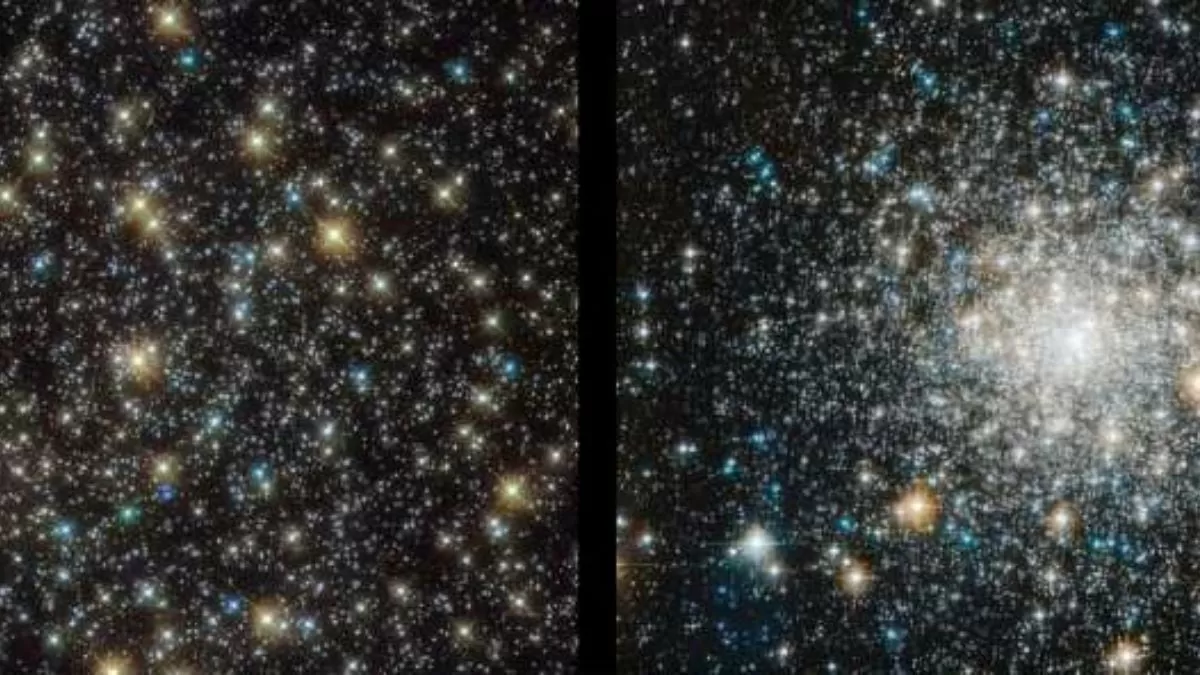
Astronomers have always been fascinated by the intriguing phenomenon of blue straggler stars. These anomalously hot and bright stars are found in ancient globular clusters, defying the traditional understanding of stellar evolution. But thanks to the Hubble Space Telescope, we are slowly unraveling the mystery of these enigmatic stars.
In a recent study published in The Astrophysical Journal, astronomers using the Hubble Space Telescope have uncovered new clues to the mystery of blue straggler stars. By studying the ultraviolet light from 48 globular clusters, scientists have been able to shed light on the formation process of these curious stars.
Globular clusters are densely packed groups of stars that orbit around a common center. They are among the oldest objects in the universe, and their study can provide valuable insights into the early stages of stellar evolution. Blue straggler stars, in particular, have been a source of fascination for astronomers due to their unusual properties. These stars are hotter and brighter than others in the cluster, and they seem to defy the aging process of stars.
The traditional explanation for blue straggler stars was that they were formed through stellar collisions. However, this theory was challenged when astronomers discovered that these stars are more common in sparse clusters, which are less likely to have collisions. This led to the theory that blue stragglers may form through binary star interactions, where two stars merge to create a single, more massive star.
To investigate this theory, a team of astronomers led by Dr. Francesca D'Antona and Dr. Annibale D'Ercole from the National Institute of Astrophysics in Italy carried out a detailed study of 48 globular clusters using the Hubble Space Telescope. By analyzing the ultraviolet light from these clusters, they were able to identify the presence of blue straggler stars and determine their frequency in different types of clusters.
Their findings were consistent with the binary star interaction theory. They found that blue straggler stars are more common in sparse clusters, supporting the idea that they form through binary star interactions rather than stellar collisions. This is a significant breakthrough in our understanding of these mysterious stars.
But the study also raised some interesting questions. The team found that the frequency of blue stragglers varied greatly between different clusters. In some clusters, they found a large number of these stars, while in others, they were almost non-existent. This suggests that there may be other factors at play in the formation of blue straggler stars, and further research is needed to fully understand their origins.
One possible explanation for this variation is the age of the cluster. Blue straggler stars are thought to be younger than other stars in the cluster, and their numbers may decrease as the cluster ages. Another factor could be the presence of a black hole in the center of the cluster, which could disrupt the interactions between binary stars and prevent the formation of blue stragglers.
The study also revealed that the majority of blue straggler stars in sparse clusters were formed through mergers between two low-mass stars. This is in contrast to dense clusters, where blue stragglers are thought to form through the collision of two massive stars. This difference in formation processes further supports the idea that the environment of the cluster plays a crucial role in the creation of blue straggler stars.
The Hubble Space Telescope has been a game-changer in our understanding of the universe. Its high-resolution images and sophisticated instruments have allowed us to peer deeper into space and unravel the mysteries of the cosmos. This latest study on blue straggler stars is just one example of the groundbreaking research that the Hubble has facilitated.
The findings of this study have opened up new avenues for research, and astronomers are eager to explore the origin of blue straggler stars further. With the upcoming launch of the James Webb Space Telescope, we can expect even more exciting discoveries in the field of astrophysics.
In conclusion, the recent study using the Hubble Space Telescope has provided new insights into the mystery of blue straggler stars. By studying their frequency in different types of clusters, astronomers have been able to confirm the theory that these stars form through binary star interactions. This is a significant step forward in our understanding of these enigmatic stars and the processes that govern the evolution of the universe.