James Webb Captures Stunning Infrared Image of the Helix Nebula Eye of God
The James Webb Space Telescope has captured a detailed infrared image of the Helix Nebula, also known as the “Eye of God.” The glowing ring of gas around a whit...
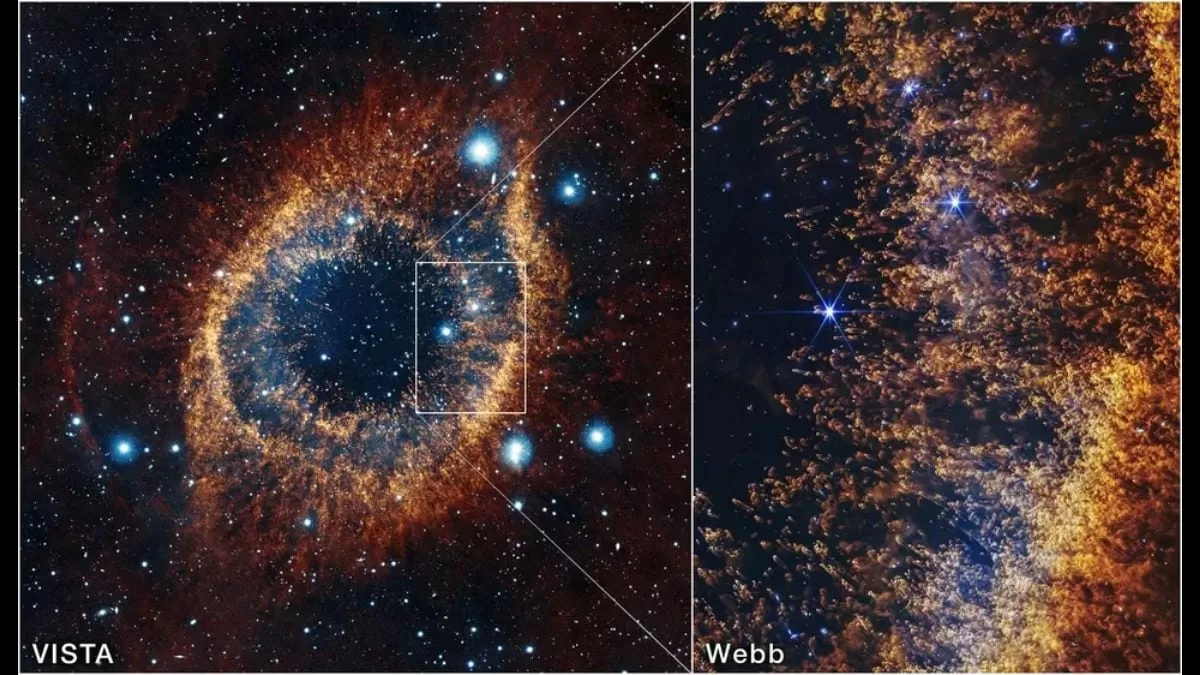
The James Webb Space Telescope, NASA's highly anticipated successor to the Hubble Space Telescope, has once again amazed the world with its stunning images of the universe. In its latest feat, the telescope has captured a detailed infrared image of the Helix Nebula, also known as the “Eye of God”. This breathtaking image reveals a glowing ring of gas around a white dwarf star, providing valuable insights into the fate of Sun-like stars.
The Helix Nebula, located in the constellation Aquarius, is one of the closest and brightest planetary nebulae to Earth. It is often referred to as the “Eye of God” due to its striking resemblance to a large, all-seeing eye. This celestial wonder has always captivated astronomers and space enthusiasts alike, and now, thanks to the James Webb Space Telescope, we can see it in unprecedented detail.
The image captured by the telescope shows the Helix Nebula in a whole new light, quite literally. By using infrared light, the telescope was able to penetrate through the thick layers of dust and gas that surround the nebula, revealing intricate details that were previously hidden from view. The resulting image is a mesmerizing display of swirling filaments and knots, created by the collision of stellar winds with the older material surrounding the white dwarf star at the center.
This new image has provided scientists with a wealth of information about the Helix Nebula and its star. By studying the filaments and knots, astronomers can better understand the complex processes that occur when a star reaches the end of its life. The Helix Nebula is a prime example of a planetary nebula, which is formed when a star, similar in size to our Sun, runs out of fuel and sheds its outer layers. The white dwarf star at the center of the Helix Nebula is the leftover core of the star, and its intense ultraviolet radiation is responsible for illuminating the surrounding gas and dust, creating the stunning visual we see today.
But what makes this image even more remarkable is that it provides a glimpse into the future of our own Sun. In about five billion years, our Sun will also run out of fuel and go through a similar process, eventually becoming a white dwarf star. By studying the Helix Nebula, scientists can gain a better understanding of what will happen to our Sun and the fate of other Sun-like stars in the universe.
The James Webb Space Telescope, with its advanced technology and powerful instruments, has once again proven to be an invaluable tool for space exploration and research. It has opened up a whole new world of possibilities and has given us a deeper understanding of the universe we live in. The telescope's ability to capture such stunning images of distant objects is a testament to the incredible capabilities of human ingenuity and determination.
This latest image of the Helix Nebula is just the beginning of what the James Webb Space Telescope has to offer. With its larger mirror and improved sensitivity, the telescope will be able to capture even more detailed images and gather valuable data about our universe. It will continue to push the boundaries of our knowledge and inspire future generations to explore the wonders of space.
In conclusion, the James Webb Space Telescope has once again astounded us with its incredible capabilities. The detailed infrared image of the Helix Nebula, also known as the “Eye of God”, is a testament to the telescope's power and potential. This image not only showcases the beauty of the universe but also provides valuable insights into the fate of Sun-like stars. With the James Webb Space Telescope, the possibilities are endless, and we can't wait to see what other wonders it will reveal to us in the future.