NASA’s GNEISS Mission Will Map Electric Currents Behind the Aurora
NASA’s GNEISS mission will launch from Alaska in early 2026 to probe the electric currents that drive auroras. Two rockets will fly through glowing auroral arcs...
NASA's GNEISS Mission: Uncovering the Mysteries of Auroras and Protecting Our Modern World
In early 2026, NASA's GNEISS (Geospace Environment Explorer for Neutral Ionospheric Composition and Electrodynamics) mission will launch from Alaska to embark on a groundbreaking journey to study the electric currents that drive the mesmerizing auroras. This mission, which stands for Geospace Environment Explorer for Neutral Ionospheric Composition and Electrodynamics, is set to revolutionize our understanding of space weather and its impact on Earth's modern technological infrastructure.
The GNEISS mission will consist of two rockets that will fly through the glowing auroral arcs, releasing sub-payloads that will act as a CT scan of the auroral region. These sub-payloads will emit radio signals that will be used to map the electron density and direction, providing scientists with valuable data to improve space weather forecasting.
Auroras, also known as the Northern and Southern Lights, are one of the most spectacular natural phenomena on Earth. They occur when charged particles from the Sun interact with the Earth's magnetic field, creating colorful displays of light in the sky. While they may be a sight to behold, these auroras are also a result of intense electric currents that can have a significant impact on our modern world.
With the increasing reliance on technology in our daily lives, the need for accurate space weather forecasting has become more crucial than ever. Space weather events, such as solar flares and coronal mass ejections, can disrupt satellite communications, GPS systems, and even power grids on Earth. These disruptions can have severe consequences, including financial losses and potential risks to human life.
The GNEISS mission aims to address this issue by providing scientists with a better understanding of the electric currents that drive auroras. By mapping the electron density and direction, researchers will be able to create more accurate models of the Earth's ionosphere, the upper part of the atmosphere where auroras occur. This will allow for more precise space weather forecasting, giving us the ability to better protect our satellites and communication systems during periods of intense solar activity.
The GNEISS mission is not only significant for its potential impact on space weather forecasting, but also for its contribution to our overall understanding of the Earth's ionosphere. This region of the atmosphere is still largely unexplored, and the data collected from this mission will provide valuable insights into its composition and dynamics.
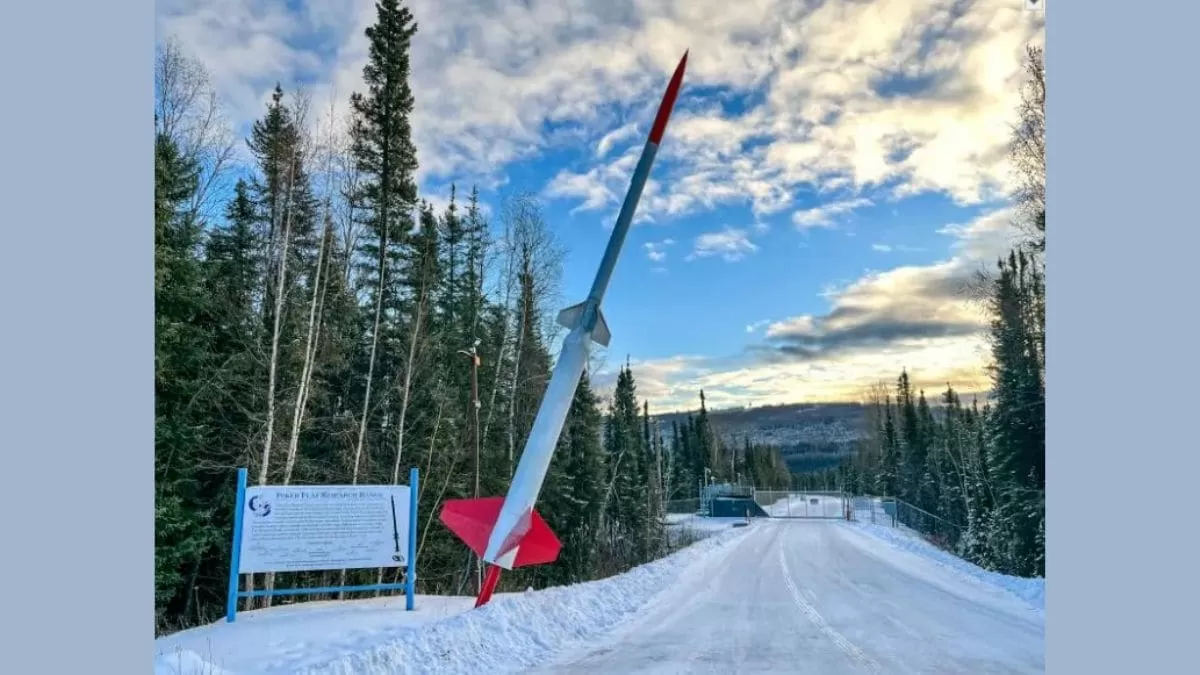
The launch site for the GNEISS mission, located in Poker Flat, Alaska, was specifically chosen for its proximity to the auroral region. This will allow for a more in-depth study of the electric currents that drive auroras, providing scientists with a unique opportunity to unravel the mysteries of this natural phenomenon.
The GNEISS mission is a collaborative effort between NASA and several international partners, including the Japan Aerospace Exploration Agency and the European Space Agency. This global cooperation highlights the importance of this mission and its potential impact on the world.
The data collected from the GNEISS mission will not only benefit scientists and researchers but also have practical applications for everyday life. Improved space weather forecasting will help airlines avoid routes that are affected by space weather events, reducing the risk of disruptions and delays. It will also aid in protecting our power grids, which are vulnerable to space weather disturbances.
In conclusion, NASA's GNEISS mission is an exciting and groundbreaking endeavor that will provide us with a better understanding of the electric currents that drive auroras. This mission has the potential to revolutionize our space weather forecasting capabilities and better protect our modern world from the impacts of intense solar activity. As we eagerly await the launch of the GNEISS mission in 2026, we can look forward to a future where our technological infrastructure is better equipped to withstand the forces of nature.