Scientists Identify 45 Earth-Like Planets Beyond Our Solar System
Using data from Gaia mission and NASA Exoplanet Archive, scientists identified 45 rocky planets in habitable zones. These worlds, including TRAPPIST-1 e and Pro...
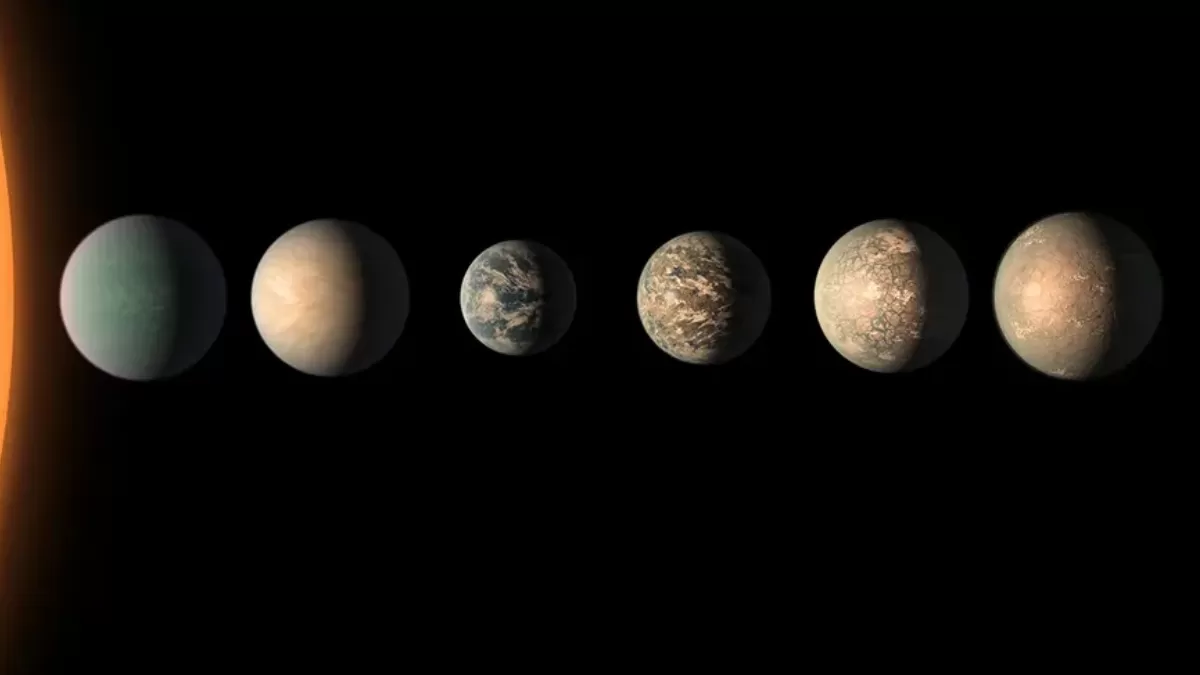
In the vast expanse of the universe, the search for extraterrestrial life has always been a fascinating and intriguing endeavor for scientists and space enthusiasts alike. And now, thanks to the data gathered by the Gaia mission and NASA's Exoplanet Archive, the search has become even more exciting with the identification of 45 rocky planets in habitable zones.
These planets, including TRAPPIST-1 e and Proxima b, have been deemed as prime targets in the search for extraterrestrial life due to their potential to harbor liquid water and sustain life. This groundbreaking discovery has sparked a renewed sense of hope and curiosity in the scientific community, as well as the general public.
The Gaia mission, launched by the European Space Agency in 2013, has been instrumental in providing precise measurements of the positions, distances, and motions of over 1.3 billion stars in our Milky Way galaxy. This data has been crucial in identifying potential exoplanets and their habitable zones. The NASA Exoplanet Archive, on the other hand, is a database that collects and analyzes data from various space missions, including the Kepler and TESS missions, to identify and characterize exoplanets.
The combination of data from these two sources has allowed scientists to narrow down the search for habitable rocky planets. The 45 planets identified are all within the habitable zones of their respective stars, meaning they are at a distance where liquid water could exist on their surface. This is a crucial factor in the search for extraterrestrial life, as water is considered a key ingredient for the existence of life as we know it.
Among these 45 planets, two have caught the attention of scientists and the public alike - TRAPPIST-1 e and Proxima b. TRAPPIST-1 e is one of the seven planets orbiting the ultra-cool dwarf star TRAPPIST-1, located 39 light-years away from Earth. This planet has been deemed as one of the most Earth-like exoplanets discovered so far, with a similar size and potential to sustain life. Proxima b, on the other hand, is a planet orbiting the closest star to our sun, Proxima Centauri, just 4.2 light-years away. This planet is also within the habitable zone and has the potential to have liquid water on its surface.
The discovery of these 45 rocky planets in habitable zones is a significant leap forward in the search for extraterrestrial life. It not only expands our understanding of the potential for life in the universe but also provides a new set of targets for future missions and studies. With the advancements in technology and space exploration, it is now more feasible than ever to study these planets and potentially find signs of life.
But why are these planets considered prime targets in the search for extraterrestrial life? Apart from being in the habitable zone, these planets also have other favorable conditions that make them potential candidates for life. For instance, TRAPPIST-1 e and Proxima b are both rocky planets, similar to Earth, and are at a distance from their stars that allows for moderate temperatures, making it possible for liquid water to exist. These factors increase the likelihood of these planets having the necessary conditions to support life.
Moreover, the Gaia mission and NASA Exoplanet Archive have also provided valuable information about the atmospheres of these planets, giving scientists a better understanding of their potential habitability. The data suggests that some of these planets may have Earth-like atmospheres, further increasing their potential to sustain life.
The discovery of these 45 rocky planets in habitable zones gives us a glimpse into the vast possibilities of life in the universe. It also brings us one step closer to answering the age-old question - are we alone in the universe? While the search for extraterrestrial life is still ongoing and may take years, if not decades, to find concrete evidence, this discovery has reignited our curiosity and motivation to explore the unknown.
In conclusion, the identification of 45 rocky planets in habitable zones, including TRAPPIST-1 e and Proxima b, is a significant achievement in the search for extraterrestrial life. It not only expands our knowledge of the universe but also opens up new avenues for future research and exploration. The possibilities of finding life beyond our planet are now more realistic than ever, and this discovery serves as a reminder of the wonders and mysteries that await