US Treasury Chief Warns Iran of Unprecedented Financial Isolation Strategy
Scott Bessent announces the US will sever all economic ties with Iran and isolate nations partnering with the country financially in unprecedented action.
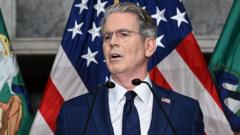
US Treasury Secretary Announces Unprecedented Economic Measures Against Iran
The United States is preparing to implement what officials describe as the most comprehensive Iran financial isolation campaign in history. Scott Bessent, serving as Treasury Secretary, has declared that the administration intends to completely sever all economic ties with Tehran while simultaneously targeting any nation that maintains financial relationships with the Islamic Republic.
Comprehensive Strategy to Disrupt Economic Relations
The Treasury Department's new approach represents a dramatic escalation in pressure tactics directed at Iran's economy. Bessent emphasized that this initiative goes beyond traditional sanctions frameworks, encompassing a multi-layered strategy designed to eliminate Iran's access to international financial systems and global trade networks. The official stated that American authorities will work systematically to disconnect Iranian institutions from worldwide commerce and banking infrastructure.
This economic strategy marks a significant shift in how the US intends to address what it considers threats emanating from Tehran. Rather than focusing solely on targeted sectoral restrictions, the administration has opted for a more expansive approach that would limit Iran's ability to conduct any meaningful international business transactions.
International Cooperation and Third-Country Isolation
A critical component of this Iran financial isolation plan involves penalizing nations that choose to maintain economic partnerships with Iran. Bessent made clear that countries engaging in financial transactions or trade agreements with Tehran would themselves face economic consequences and international isolation. This aspect of the policy aims to create a global consensus that supporting Iran economically carries significant costs.
The Treasury Secretary's statement signals that Washington intends to leverage its dominant position in global financial markets to enforce compliance with its Iran policy. Nations and corporations operating within the dollar-denominated financial system would face the prospect of sanctions or exclusion from American markets should they pursue business opportunities in Iran.
Implications for Global Trade and Geopolitical Relations
The announcement regarding this intensified financial offensive Iran approach has significant implications for international trade patterns and diplomatic relationships. Countries that have maintained neutral or cooperative stances with Iran—including several European nations and Asian economies—now face pressure to choose between engagement with the Islamic Republic or preservation of economic relationships with the United States.
This policy represents an escalation from previous administration approaches, which focused on specific sectors such as oil, banking, and aviation. The new framework proposed by the Treasury Department would theoretically restrict all forms of economic interaction between Iran and the global economy, effectively creating a comprehensive embargo.
Economic Consequences for Iran's Financial Systems
Iran's banking sector and financial institutions would be primary targets of this renewed US Treasury Iran policy initiative. The disconnection from international payment systems, correspondent banking relationships, and currency exchange mechanisms would severely constrain Iran's ability to finance imports or receive revenues from exports. This disruption would directly impact ordinary Iranians through potential shortages of essential goods and economic hardship.
The strategy also targets Iran's ability to access foreign currency reserves and convert domestic currency into internationally tradeable assets. By preventing Iranian banks from accessing the SWIFT international banking system and similar financial infrastructure, the US aims to create conditions that make ordinary business transactions impossible.
Historical Context of Economic Pressure
The Treasury Department's announcement builds upon decades of American sanctions policy toward Iran, ranging from asset freezes imposed following the 1979 revolution to more recent comprehensive international sanctions strategy frameworks implemented during the previous administration. However, officials characterize the current approach as more far-reaching and systematic than previous efforts.
Prior administrations have employed sectoral sanctions targeting specific industries while maintaining limited channels for humanitarian trade and certain economic interactions. The new policy announced by Bessent appears designed to eliminate such exceptions and create a total economic blockade framework.
Global Response and Uncertainty
The announcement of this unprecedented financial offensive Iran strategy has already generated responses from international partners and Iran itself. Some nations have expressed concern about the broader implications of such sweeping economic measures, while others have indicated willingness to cooperate with American objectives. The policy's ultimate effectiveness will depend largely on the degree of international compliance and enforcement mechanisms established by Washington.
Treasury officials have indicated that implementation of this comprehensive economic isolation approach will occur through executive actions and coordination with allied nations. The administration intends to present the Iran economic restriction strategy as essential to national security interests and regional stability considerations.


