Helium-3: The Lunar Resource Transforming Energy Prospects
Explore helium-3, the rare isotope driving lunar mining interest. Learn why this moon resource could revolutionize future energy solutions and global demand.
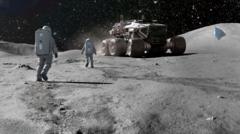
Understanding Helium-3 and Its Significance
Helium-3 represents one of the most promising extraterrestrial resources in contemporary space exploration. This rare isotope of helium has captured the imagination of scientists, engineers, and investors worldwide due to its potential applications in advanced energy production. As terrestrial supplies remain scarce and expensive, helium-3 has emerged as a strategic objective for future space-based mining operations, particularly those targeting the lunar surface.
The element itself is a stable, non-radioactive isotope that differs fundamentally from its more common counterpart, helium-4. While helium-3 exists in limited quantities on Earth, primarily as a byproduct of nuclear weapons production and tritium decay, the moon harbors substantially larger natural deposits accumulated over billions of years through solar wind interaction with the lunar regolith.
Current Applications and Market Demand
Present-day applications for helium-3 include specialized detection equipment, semiconductor manufacturing, and research applications in physics laboratories. The scientific community utilizes helium-3 in cryogenic systems and advanced particle detection experiments. However, the most transformative potential lies in fusion energy production, where helium-3 could theoretically fuel deuterium-helium-3 fusion reactors with minimal radioactive waste generation.
Market forecasts predict substantial increases in helium-3 demand throughout this decade and beyond. Current global supplies struggle to meet existing requirements, with production bottlenecks limiting availability for research institutions and industrial applications. Prices for helium-3 have escalated dramatically, with estimates suggesting costs exceeding $100,000 per liter for high-purity samples. This extraordinary expense has prompted serious consideration of extraterrestrial acquisition strategies.
Why the Moon Represents an Ideal Source
The lunar environment contains approximately one million metric tons of helium-3 distributed throughout the top layers of regolith, accumulated through direct solar wind bombardment over approximately 3.8 billion years. The moon's lack of atmospheric protection meant that charged helium-3 particles embedded themselves directly into the lunar soil surface without atmospheric interference, creating vast natural repositories.
Compared to Earth's limited reserves, lunar helium-3 abundance represents an essentially inexhaustible supply for centuries of potential utilization. Extraction would involve surface mining operations, similar to conventional mineral extraction, followed by processing and transport back to Earth or local lunar facilities.
Mining Operations and Technical Challenges
Proposed lunar helium-3 mining operations would require establishing permanent or semi-permanent facilities on the moon's surface. Equipment would need to excavate regolith, heat it to separate helium-3 isotopes through established separation techniques, and compress the extracted gas for transport. Temperature-controlled containment vessels would preserve the helium-3 during return journeys to Earth.
Technical obstacles remain substantial. Lunar operations require significant infrastructure investment, life support systems for human workers, and equipment capable of functioning in the harsh lunar environment with extreme temperature fluctuations ranging from -173°C to 127°C. Power generation on the moon presents additional challenges, as solar panels operate intermittently during lunar night periods lasting approximately fourteen Earth days.
Economic Viability and Future Prospects
Economic analyses suggest that helium-3 extracted from the moon could justify the enormous capital expenditures required for lunar base development, equipment deployment, and operational costs. A single lunar mining facility could potentially generate billions of dollars annually in helium-3 sales, assuming successful development of fusion reactors capable of utilizing this isotope commercially.
Space agencies including NASA and international partners have conducted preliminary assessments of lunar helium-3 mining feasibility. Private aerospace companies have also expressed interest in establishing commercial lunar operations, viewing helium-3 extraction as a potential revenue stream supporting broader space infrastructure development.
Timeline and Implementation Strategy
Industry experts project that meaningful helium-3 extraction from the moon could commence within fifteen to thirty years, contingent upon successful fusion reactor development and sustained investment in lunar infrastructure. Initial phases would focus on establishing proof-of-concept mining operations, followed by gradual scaling of production capacity as technical capabilities improve and market demand grows.
The transition from concept to operational mining represents a complex undertaking requiring coordination across government agencies, private corporations, and international partners. International space law frameworks would need clarification regarding resource extraction rights and ownership claims on celestial bodies.
Helium-3 stands poised to become a transformative resource for future energy generation, with the moon representing humanity's most accessible and abundant natural repository. Continued technological advancement in fusion energy and space infrastructure development will determine whether lunar helium-3 mining becomes a reality within coming decades.


